
Study at the University of Warwick
Coaching pour admission en Bachelor et Master et préparation aux tests par une équipe d’experts

Located 5.5 kilometers outside of the center of Coventry, England, the green campus of the University of Warwick covers 290 ha (720 acres). Although the university was founded in 1965, it quickly found its way to the top 10 of UK for its undergraduate student experience, based on teaching quality and learning resources, academic level of accepted students, employment prospects, research quality and retention rates (The Complete University Guide). Moreover, it joined the prestigious Russell Group of 24 public research universities in 1994.
Additionally, the University of Warwick joined the prestigious Russell Group of 24 Public Research Universities in 1994.
Warwick boasts 25,600 full-time students and 2,400 academic and research staff. About 27% of the student body comes from overseas and over 114 countries are represented in the student body. About 6,300 students live in housing across a range of undergraduate and postgraduate residences. All of the residences provide a dining, residential tutors and a warden responsible for student welfare.

A Few Words About The University of Warwick
Academics at Warwick are organized into the Faculties of Arts, Medecine, Science and Social Sciences, which together have 29 academic departments. The University of Warwick excels in several academic disciplines and is particularly well reputed for economics and management.The Complete University Guide ranked Warwick’s Economics department 3rd overall in its rankings for 2019. Fully 19 of the 27 subjects offered by Warwick were ranked within the top 10 nationally in 2019, with Creative Writing taking first place.
In 2015 revealed that the university received 25,071 undergraduate applications and made 18,380 offers in 2014-15 for an acceptance rate of 15.8%. Particular competitive courses include Law, Economics and courses within the Warwick Business School.
In 2017, the university was one of only a few universities (along with Cambridge, >Imperial College, >LSE, Oxford, >St Andrews, and >UCL) to have no courses available in Clearing, a process that matches students with available courses late in the summer before starting university. As you might expect, Warwick is very selective and it is necessary to achieve at least a ‘mention bien’ in the baccalaureat, or A Levels grades AAB-A*AA in order to be considered for entry.
The campus has seen impressive growth over the past several years as Warwick has inaugurated a new Mathematics and Statistics Building, a new Computer Science Building, new Business School buildings, the Digital Laboratory, the new Heronbank Residences and an expanded Sports Center, and the projects continue. Campus life is lively and the University of Warwick Students’ Union is one of the largest students’ unions in the UK. It currently has over 260 societies and 67 sports clubs including basketball, rowing and ice hockey. Students also run a radio station Radio Warwick (RAW) and publish a student newspaper, The Boar.
University House is one of the main student-centered buildings housing both University administration and the “Learning Grid”, the self-described “innovative and flexible work space”.
Warwick is also open to the community, the country and the world. The Warwick Arts Centre, a multi-venue arts complex in the university’s main campus, is the largest venue of its kind in the UK outside London. It attracts around 300,000 visitors a year to over 3,000 individual events spanning contemporary and classical music, drama, dance, comedy, films and visual art. The Warwick Business School offers some degree programs in The Shard in central London. In addition, Warwick is the only European university participating in the Center for Urban Science and Progress, an applied science research institute led by >New York University and NYU-Poly. Finally, Warwick students benefit from a number of opportunities to study abroad and may even obtain a double degree. The University’s partners include Columbia, >UC Berkeley, HKU, Peking University and Sciences Po Paris.
Notable Warwick alumni include Nobel Prize in Chemistry (1975) winner Sir John Cornforth who was a Professor at Warwick, Guðni Th. Jóhannesson, President of Iceland, Chief Economist at the Bank of England; David Davis, and Tony Wheeler, creator of the Lonely Planet travel guides
When do you have to start preparing for the University of Warwick
The deadline for applying to the University of Warwick is fixed at January 15th in your final year.
Always bear in mind the work involved in the preparation needed for the admission to Warwick, it is strongly recommended start preparing your candidate file from the beginning of your final year in order to maximize your chances of success.


How do I apply?
The selection process at the University of Warwick is divided into multiple steps that we describe to you below :
- Passing a standardised English testYou will also be asked to demonstrate an excellent control of the English language and you must therefore pass a standardized English test like the IELTS.
- The Conditional Offer in AdmissionFinally, if your application is accepted in the selection process, you will then receive a ‘conditional’ admissions offer. This means that you will only definitely be admitted on the condition that you obtain the minimum result at Baccalaureate (most often a ‘Good’ reference in the French Baccalaureate) and in a standardized English test (generally between 6.5 and 7.5 in the IELTS).
- The candidate file on UCASYou must first submit your application on the UCAS platform, the equivalent of Parcoursup in England. This file comprises a cover letter (Personal statement) as well as a letter of recommendation from one of your teachers.
What is the profile of the students at the University of Warwick?
Because of the high selectivity of the university, we recommend that you only apply for these universities if you can get solid academic results and if you are sure to obtain at least a reference of “Bien” at the Baccalaureate.
Furthermore, you must also demonstrate an excellent control of the English language.
Certain courses at Warwick like Engineering and Management receive a great number of applications every year and therefore demand in general a minimum of 15 or 16/20 at Baccalaureate

Are you ready to study at Warwick?
We’re here to help you.


Study at Durham University

The University of Durham is #4 in the UK, according to The Sunday Times Good University Guide 2018, and is one of the ‘Russell Group’ of elite British universities. Founded in 1832, Durham is recognized as the 3rd oldest university in England. It is situated in the historic city of Durham in North East England, a town which also boasts a famous castle and magnificent cathedral. Due to its academic excellence, historic setting, and college system, Durham is sometimes grouped with the universities of Oxford and Cambridge, colloquially referred to as ‘Doxbridge.’ Famous alumni include the current Archbishop of Canterbury, the head of the Church of England, former “James Bond” actor Roger Moore, and one of England’s first feminist authors, Anne Brontë.
Academic Matters
The University of Durham has a wide range of study options, from Anthropology to Physics to Sports Science to Finance.
Students in their first year also can choose ‘open modules’ either inside or outside their main department. So, for example, a student of Biosciences could take a module in Chinese language or Middle Eastern history. This is an invaluable opportunity to deepen a particular interest in your own subject, or to learn about something completely different from your main course of study and so widen your general knowledge and culture. For a list of current ‘open modules’ please see here.
Students at Durham also have the opportunity to study abroad for a year, as the University has links with over 120 universities across the world. To read some testimonials from students who have spent a year abroad, please see this page.
The main university library holds over 1.6 million items and access to over 6 million e-books and e-journals, and in exam season is open 24/7.
Teaching at Durham is within your department rather than your college.
To order the 2020 undergraduate prospectus, please click here.
Campus Life
The college system, almost unique in British universities, provides a close-knit community and easy opportunities to socialise and make close friendships. There are 16 colleges, each with their own share cooking and social spaces.
For more organized social activities, the University has over 200 Student Union Societies, and 26 theatre organisations who put on some 90 productions every year. For sport-inclined students, there are college and university sports teams which practice 18 different sports. Musicians are well catered for: The Times and Sunday Times Good University Guide 2019 and Complete University Guide 2019 both list the University of Durham as having the #1 music department in the country, and there are a wide range of ensembles, from choir to DJing, with over 80 concerts performed annually.
There is really something for everyone.
How to Apply to Durham University
The University of Durham, along with Oxford and Cambridge, is a collegiate university, and has 16 colleges. Applicants apply to a college (or can make an open application, where they are assigned a college). The list of colleges and their codes can be found here.
As with all UK universities, candidates apply through UCAS. On UCAS, candidates upload a letter of motivation (Personal Statement); one of their teachers must also upload a letter of recommendation and provide predicted exam marks for the student. Students may only submit one Personal Statement for all the universities they apply for (maximum of 5 choices). The Personal Statement, no more than 4,000 characters, should explain why students want to study their chosen course, what aspects particularly interest them, what steps they have already taken to engage with the subject (reading, conferences, internships etc), and, if possible, what aspects they are looking forward to studying.
International students will also need to send a scan of their qualifications, including English language tests, to the Recruitment and Admissions Office, along with their UCAS personal identification number and date of birth. Evidence of a recognised standardised English language proficiency test may include the IELTS or the TOEFL.
For the specific requirements of your choice of degree programme, please visit the course page of your chosen course.

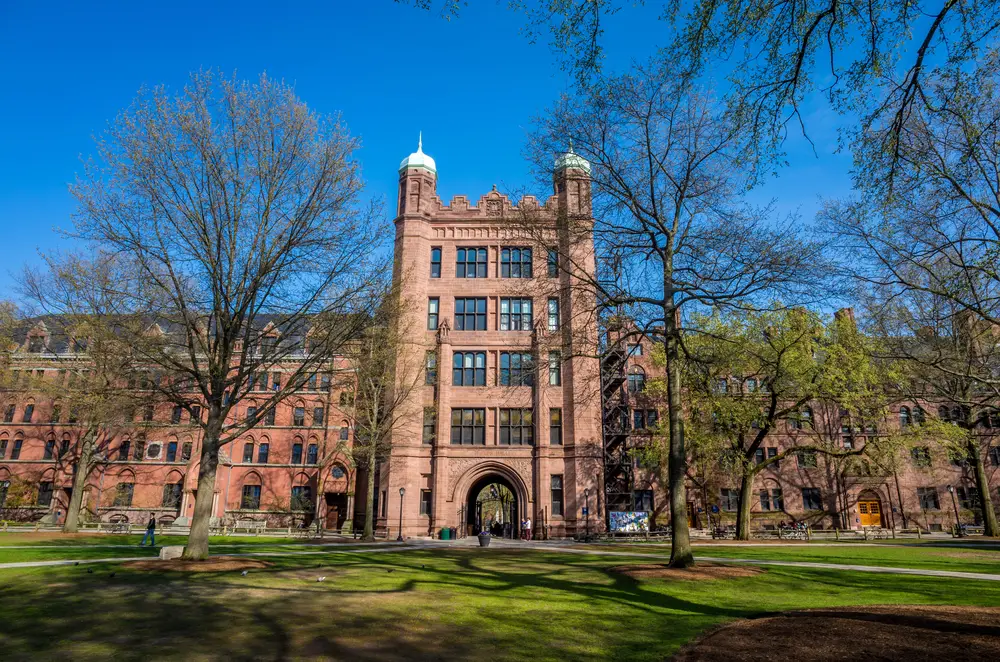
Can I visit the university of Durham?
To register your interest to attend an Open Day, click here.

Fees
Following the UK’s exit from the European Union, students from the EU, EEA and Swiss nationals will no longer be eligible for host fee status or financial support from Student Finance England (more information here).
EU students in 2025/2026 will pay the overseas fee for the duration of their course.
When taking into account the cost of any university, you should also consider the cost of living.
Durham provides an estimate for the cost of living, which can be found on its website. Students should plan to budget between £1,000 and £1,600 for each month of living and studying in Durham. This amount should be budgeted for 6-9 months of the year, depending on whether you will stay at Durham during the holidays.
From this, you might predict an annual average budget of around £10,000 per year, including accommodation, transport, personal expenses etc.
Are you ready to study at Durham?
We’re here to help you and support you in your university goals!