Studying at Cornell University
Explore undergraduate and graduate study at Cornell: choosing a school, preparing your application and planning your budget.
Choosing where to apply
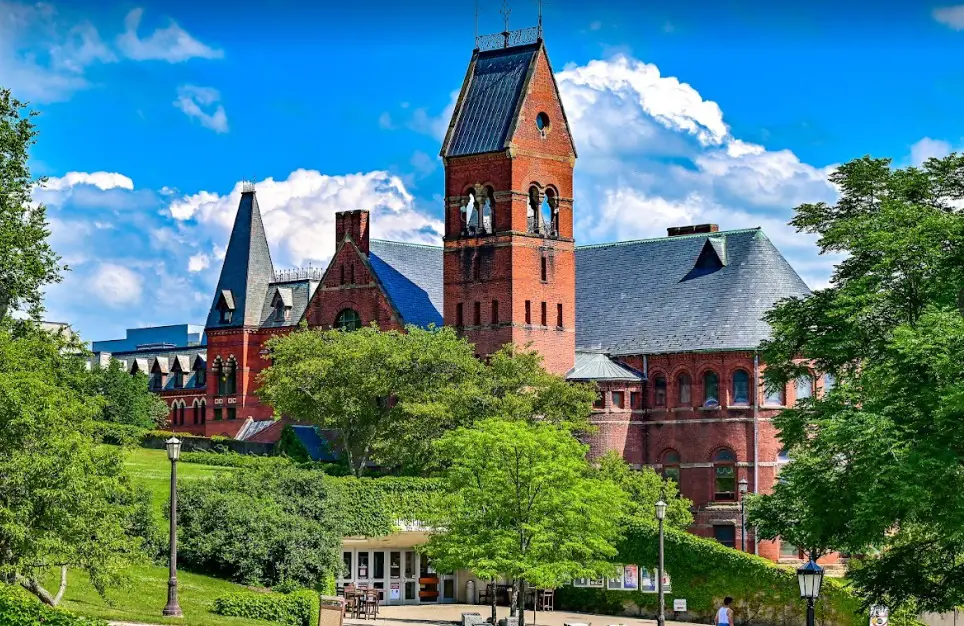
Cornell is an Ivy League university in Ithaca, New York. For undergraduate admission, your choice of college or school shapes the requirements you need to meet and the academic interests you explain in your application.
Compare the curriculum, prerequisites and learning opportunities of your intended programme before choosing. A university-wide reputation or an overall admission rate cannot tell you whether a particular course is the right fit.
Eight undergraduate admitting colleges and schools
- Agriculture and Life Sciences
- Architecture, Art, and Planning
- Arts and Sciences
- David A. Duffield College of Engineering
- Human Ecology
- Jeb E. Brooks School of Public Policy
- SC Johnson College of Business
- Industrial and Labor Relations
SC Johnson includes the Dyson and Nolan undergraduate schools. Bowers Computing and Information Science offers programmes across Cornell but is not a separate admitting college. Explore Cornell’s academic options.
Undergraduate application
Apply to one Cornell college or school through the Common Application. Prepare your school records, recommendations and the written responses required by your chosen school.
SAT or ACT
Applicants for first-year entry from fall 2026 onward must submit SAT or ACT scores. Transfer applicants follow a different policy. Read the current testing requirements.
International applicants must also meet Cornell’s English-language requirements. Review the accepted evidence and exemptions before booking a test.
Application dates
- Early Decision: November 1. This is a binding application plan.
- Regular Decision: January 2.
Check the calendar for your entry cycle, including supporting documents, programme supplements and financial-aid deadlines. The deadlines for different materials may not be identical.
Tuition and living costs
Your budget should cover tuition, housing, meals, books and personal expenses, with travel and health insurance considered as appropriate. Costs depend on the academic year and student category.
Use the university’s published figures for your situation instead of an undated estimate. Exchange-rate movements can also change the cost in your home currency.
Financial aid for international applicants
International undergraduate admission is need-aware: requesting financial aid can be a factor in the admission decision.
If you expect to need aid during your undergraduate studies, apply for it when you apply for admission, following the CSS Profile instructions and the published deadlines. Aid depends on Cornell’s assessment of demonstrated financial need; it is not an automatic award for every applicant.
Master’s and doctoral programmes
Graduate admission requirements depend on the degree and field. Check the relevant programme for academic prerequisites, application deadlines, recommendations, statements, English proficiency and any GRE or GMAT policy.
Do not assume that one GPA threshold or one tuition rate applies to every Cornell graduate programme. Graduate School tuition rates distinguish research and professional degrees.
Graduate funding
Doctoral funding can combine fellowships with research or teaching assistantships. Funding for research master’s and professional degrees is limited and varies by programme.
Read your funding offer carefully: check what it covers, its duration and any conditions attached to it.
Prepare a clear, personal application
Start by matching your interests and academic preparation to the school you want to join. Allow time to request documents, prepare any required tests and write responses that reflect your own experiences.
Your Dream School can help you organise these steps and build a coherent application plan.
Discuss your study plansStudy at HEC Paris
Tout ce qu’il faut savoir pour réussir votre admission

Why Study at HEC Paris?

HEC Paris stands in a class of its own among French and European business schools. Founded in 1881 by the Paris Chamber of Commerce and Industry, it has consistently held the top position in French rankings and competes head-to-head with London Business School, INSEAD, and the Ivy League schools in global prestige. For international students considering France, HEC Paris represents the absolute pinnacle of business education in the country.
The school’s campus in Jouy-en-Josas, a leafy suburb about 20 km southwest of central Paris, offers a residential experience rare among European business schools. The 140-hectare wooded campus includes student residences, sports facilities, restaurants, and a vibrant associative life with over 100 student clubs. This creates an immersive, cohort-driven community experience that is often compared to elite US business schools. Despite the suburban setting, Paris and its professional ecosystem are easily accessible via the RER C train line (approximately 35 minutes to central Paris).
What truly distinguishes HEC Paris is its unmatched network. The HEC alumni association counts over 70,000 members worldwide, including a disproportionate number of Fortune 500 CEOs, heads of state, and entrepreneurs. In France, the “HEC” brand opens virtually every door : from strategy consulting firms like McKinsey and BCG to luxury conglomerates such as LVMH and Kering, investment banks including Rothschild and Lazard, and the highest levels of the French civil service. Internationally, HEC Paris is the most recognised French school by far, with strong employer connections across Europe, Asia, the Middle East, and North America.
HEC Paris is extremely selective. The Grande École programme admits approximately 380 students per year, with the international track (administered separately from the French concours) seeing acceptance rates below 10%. Strong GMAT/GRE scores, excellent academics, and meaningful extracurricular or professional experience are essential. The MBA programme is even more selective, accepting roughly 260 students from over 4,000 applicants annually.
HEC Paris Programmes for International Students

The Grande École Programme : HEC’s Flagship
The Grande École programme (officially the Master in Management, or MiM) is HEC Paris’s signature offering and the most sought-after business degree in France. Ranked #1 worldwide for Masters in Management by the Financial Times in multiple years, this programme is the fast track to elite careers in consulting, finance, luxury, technology, and entrepreneurship. It runs over two to three years, with the first year covering core management fundamentals and the second dedicated to specialisations and professional experience.
International students can enter the Grande École through the international admissions track, which is separate from the French classe préparatoire concours. This track evaluates candidates based on academic transcripts, a competitive GMAT or TAGE MAGE score, motivation letters, and a rigorous oral interview (typically conducted in Paris or by video). The average admitted GMAT score hovers around 710-730, while TAGE MAGE candidates generally need 350+ out of 600 to be competitive. HEC also values diverse profiles : students with engineering, science, humanities, or arts backgrounds are actively encouraged to apply.
MSc Specialised Programmes
HEC Paris offers several highly ranked MSc programmes taught entirely in English, each designed for students who want deep expertise in a specific business domain. These include MSc International Finance (ranked #1 globally by the Financial Times), MSc Strategic Management, MSc Marketing, MSc Sustainability and Social Innovation, MSc Data Science for Business (joint with École Polytechnique), and MSc Innovation and Entrepreneurship. Each programme lasts 10 to 16 months and includes a professional thesis or internship component. These MScs attract students from top universities worldwide and offer strong career outcomes, particularly in Paris, London, and global financial centres.
Campus Life at HEC Paris
🏛️ Campus & Facilities
The Jouy-en-Josas campus spans 140 hectares of parkland and features a state-of-the-art learning centre, the newly renovated “HEC Village” student housing, multiple restaurants and cafés, a gymnasium, tennis courts, and a lake. The campus has undergone significant investment in recent years, including new academic buildings and a digital learning hub. On-campus housing is available (and encouraged) for first-year Grande École and MBA students, fostering a tight-knit community atmosphere. The campus also hosts the HEC Innovation and Entrepreneurship Centre, where student startups are incubated.
🌍 International Student Experience
HEC Paris is profoundly international, with students from over 130 nationalities. The MBA programme is roughly 90% international, while the Grande École’s international intake has grown steadily and now represents about 40% of each cohort. English is the working language for most programmes and campus activities, though French proficiency is a significant advantage for career opportunities in France. The school runs a robust buddy system and orientation programme for international arrivals, and the International Student Association (BDE International) organises cultural events, trips, and networking. HEC also has exchange agreements with 120+ partner universities worldwide.
Admissions Requirements and How to Apply
Grande École (MiM) : International Track
- Bachelor’s degree (any discipline)
- GMAT (700+ recommended) or TAGE MAGE (350+ recommended)
- English proficiency: TOEFL 100+ or IELTS 7.0+
- Motivation letter and CV
- Two academic or professional references
- Oral interview (30 min, in-person or remote)
- Application fee: €150
- Rounds: typically 4 rounds, October-May
MBA Programme
- Bachelor’s degree (any discipline)
- GMAT (average 690, 730+ preferred) or GRE equivalent
- Minimum 3 years professional experience (average: 6 years)
- English proficiency (TOEFL/IELTS if non-native)
- Two professional recommendation letters
- Video essay (online platform)
- Panel interview (in-person or virtual)
- Rolling admissions with 4 rounds
Tuition Fees and Cost of Living at HEC Paris
HEC Paris offers extensive financial support. For the Grande École, need-based and merit-based scholarships can cover up to 100% of tuition : the HEC Foundation awards over €12 million annually in grants. MBA students can access the HEC MBA Scholarship (up to €24,000), Forte Foundation Fellowships (for women), and the Eiffel Excellence Scholarship (French government-funded, covering living expenses for international students). MSc students are eligible for programme-specific merit awards. Additionally, French banks offer preferential student loans (prêts étudiants) at very low rates, often with no repayment until after graduation.
Career Outcomes and Employment After HEC Paris
HEC Paris consistently delivers some of the strongest career outcomes of any business school in Europe. For Grande École graduates, the top-recruiting sectors are management consulting (approximately 30% of the class, with firms like McKinsey, BCG, and Bain hiring heavily from HEC), finance and banking (20%, including Goldman Sachs, JP Morgan, Rothschild, and Lazard), technology (15%, with Google, Amazon, and Microsoft among top recruiters), and luxury and consumer goods (10%, led by LVMH, L’Oréal, and Kering). HEC’s Career Centre organises over 200 company events per year, from on-campus presentations to networking dinners and case study competitions.
For MBA graduates, the salary uplift is substantial : the average post-MBA salary reaches approximately €125,000 three years after graduation, representing a significant return on the programme investment. HEC MBA alumni frequently move into C-suite and senior leadership roles within 10-15 years. The school’s entrepreneurship track is also world-renowned: HEC-founded startups collectively raise hundreds of millions in venture funding each year, and the HEC Incubator has supported over 600 startups since its creation. Notable HEC alumni include François-Henri Pinault (CEO of Kering), Pascal Soriot (CEO of AstraZeneca), and multiple French presidents and ministers.
Visa and Work Permits for International Students
International students accepted to HEC Paris receive support from the school’s dedicated International Affairs office for visa and residence permit applications. Non-EU students will need a long-stay student visa (VLS-TS), which serves as your residence permit for the first year. During your studies, you can work up to 964 hours per year (roughly 20 hours per week). After graduating, you are eligible for a one-year post-graduation job-seeker visa (Autorisation Provisoire de Séjour, or APS), which allows you to work full-time while seeking employment in France. If you secure a job offer with a salary above approximately €40,000 per year (roughly 1.5x the French minimum wage), you can convert to a full work permit. HEC’s strong employer relationships mean that many international graduates successfully transition from student visa to professional status in France.
Get Expert Guidance for Your HEC Paris Application
Your Dream School offers personalised HEC Paris admissions coaching
Our expert consultants have guided hundreds of students through the HEC Paris admissions process : from Grande École to MBA and MSc programmes. We provide comprehensive support including TAGE MAGE and GMAT preparation, essay and motivation letter review, interview coaching, and application strategy. Whether you are applying from a French prépa or an international university, we know exactly what HEC looks for and how to position your candidacy for success.
Explore More About Studying in France
Study in France Guide
Complete guide to studying abroad in France as an international student.
Study at ESSEC
ESSEC Business School : programmes, admissions, costs, and careers.
TAGE MAGE Guide 2026
Everything about the test required for French business school admission.
Our Google reviews



A few key figures about Your Dream School
They got in with Your Dream School
Reassurance is what matters most when choosing your guidance.
« Helping me get an admit to the MiM at HEC Paris, LBS and ESCP. If you want the best business schools in the world, contact Your Dream School! »
« Being supported by Your Dream School gave me a framework and a structure. I was accepted to the majority of the universities I applied to : very happy to start studying in London next year! »
« …I managed to get my offer to UCL in London, one of the best English universities, which was my first choice. Their support was consistent and personal. »
« I decided to apply to university in England for my Bachelor’s and I asked Your Dream School to support me. I’m so glad I did! I’m excited to go to London to study next year! »
Our Services
Bachelor & Master Admission Coaching
Complete support to build a winning application.
IELTS & TOEFL Preparation
One-on-one tutoring to reach the score your target university requires.
Admission Test Preparation
SAT, ACT, GMAT, GRE, LNAT, MAT : targeted prep to hit the right score.
Academic Tutoring
International academic support (IB, A-Levels, AP) for students aiming abroad.
Study at EDHEC Business School
Tout ce qu’il faut savoir pour réussir votre admission

Why Study at EDHEC Business School?

EDHEC Business School has established itself as one of France’s most dynamic and internationally oriented grandes écoles. Founded in 1906 in Lille, EDHEC has evolved from a regional commerce school into a global powerhouse with campuses spanning three continents. What sets EDHEC apart from its French peers, HEC, ESSEC, and ESCP, is its distinctive focus on the intersection of academic research and professional practice, particularly in financial economics, risk management, and entrepreneurship.
EDHEC holds the prestigious Triple Crown accreditation from AACSB, EQUIS, and AMBA : a distinction held by fewer than 1% of business schools worldwide. The school consistently ranks in the top 10 in Europe in the Financial Times Masters in Management ranking, and its MSc in Finance regularly appears in the global top 5. For international students, EDHEC offers an attractive combination of world-class education, multi-campus flexibility (you can study in France, the UK, or Singapore), and significantly lower tuition costs compared to equivalent programmes in the US or UK.
The school’s research centres, particularly the EDHEC-Risk Institute, are globally recognised in the finance industry. EDHEC graduates are actively recruited by the world’s leading financial institutions, consulting firms, and technology companies. The alumni network includes over 50,000 graduates across 130 countries, providing a strong professional foundation for your post-graduation career.
EDHEC is notably more accessible than HEC or ESSEC, with a higher acceptance rate and lower tuition : while still offering comparable career outcomes in finance and consulting. It is one of the best value-for-money options among France’s elite business schools.
Related reading: Best Business Schools in France for International Students.
EDHEC Programmes and Degrees
The Grande École Programme (Master in Management)
EDHEC’s flagship Grande École programme is a 2-to-3-year Master in Management (MiM) that accepts students both from French classes préparatoires and through international admissions. The programme is structured in two phases: a foundation year covering core business disciplines (finance, marketing, strategy, operations), followed by one or two years of specialisation. Students choose from tracks including Financial Economics, Business Management, and Global Business : and can complete exchanges at over 280 partner universities worldwide. The programme includes mandatory professional internships totalling 12-18 months, providing substantial real-world experience before graduation. International students can apply directly after completing a bachelor’s degree, and the programme offers both French-taught and fully English-taught options.
MSc Programmes
EDHEC offers 8 specialised MSc programmes, each designed for graduates seeking deep expertise in a specific field. The most prestigious is the MSc in Finance, which consistently ranks in the top 5 globally by the Financial Times : graduates of this programme are heavily recruited by bulge-bracket investment banks, hedge funds, and asset management firms. Other popular MSc tracks include Financial Markets, Corporate Finance and Banking, Marketing Management, Strategy, and Data Analytics and Artificial Intelligence. All MSc programmes are taught entirely in English and include a 6-month professional internship. Many MSc students complete their internship abroad, leveraging EDHEC’s international partner network.
Related reading: Choosing your business school.
Campus Life at EDHEC
🏢 Multi-Campus Advantage
EDHEC’s multi-campus model is one of its greatest strengths. The main campus in Lille offers a purpose-built, state-of-the-art facility in the heart of northern France’s economic capital, with excellent transport links to Paris (1 hour by TGV), Brussels, and London. The Nice campus provides a Mediterranean environment, ideal for the MBA programme and MSc specialisations. The Paris campus, centrally located, hosts executive education and certain MSc tracks. International campuses in London and Singapore extend the EDHEC experience globally, allowing students to spend semesters in different countries without leaving the EDHEC system.
🌍 International Experience
With students representing over 110 nationalities, EDHEC is one of the most internationally diverse business schools in France. Every programme includes an international component : whether through exchange semesters (EDHEC has 280+ partner universities), dual-degree programmes (including options with schools in the US, China, South Korea, and India), or multi-campus mobility. The International BBA in particular is designed for maximum global exposure, with students studying across at least three countries during their 4-year degree. EDHEC also offers dedicated French language courses for non-francophone students and an international student buddy system to help newcomers integrate into French campus life.
For more detail, see also: Alliance Manchester Business School: Admissions & Fees.
EDHEC Admissions Requirements
Grande École (International Track)
- Bachelor’s degree (any discipline)
- GMAT 650+ or GRE equivalent (recommended)
- TAGE MAGE 300+ (for French-system candidates)
- English proficiency: IELTS 6.5+ or TOEFL 90+
- Motivation letter and CV
- Admissions interview (online or in-person)
- Application fee: €100
MSc and MBA Programmes
- Bachelor’s degree (MSc) or 3+ years experience (MBA)
- GMAT 680+ for MSc Finance (avg admitted score)
- Strong academic transcript and GPA
- English proficiency: IELTS 7.0+ or TOEFL 100+
- Professional references (1-2)
- Video or in-person interview
- Application fee: €100-€170
EDHEC Acceptance Rate and Selectivity
EDHEC’s acceptance rate varies significantly by programme. For the Grande École programme through the concours (classes préparatoires track), EDHEC admits approximately 500 students from around 6,000 candidates who rank EDHEC among their top choices : making the effective acceptance rate around 8-10% for the prépa track. For international direct admissions to the Grande École, the acceptance rate is higher at approximately 25-30%, though this varies by year and the quality of the applicant pool. The MSc in Finance, EDHEC’s most competitive specialised programme, admits roughly 15-20% of applicants, with an average admitted GMAT score of approximately 690. The International BBA has an acceptance rate of around 20-25% for international candidates. Overall, while EDHEC is more accessible than HEC Paris (which admits fewer than 5% of international applicants), it remains a highly selective institution where a strong academic profile and test scores are essential for admission.
Cost of Studying at EDHEC
EDHEC offers a comprehensive range of financial support. The EDHEC Excellence Scholarship covers up to 100% of tuition for top-performing students. Need-based grants (bourses sociales) are available for French and EU students through CROUS. International students can apply for the EDHEC International Scholarship (up to €8,000/year), the Eiffel Excellence Scholarship (French government-funded, covering living expenses for non-EU students), and various programme-specific merit awards. MBA students may be eligible for Forté Foundation Fellowships (for women) and the EDHEC Alumni Foundation grants. French banks also offer preferential student loans (prêts étudiants) with very favourable terms, often requiring no repayment until after graduation. Additionally, EDHEC’s apprenticeship track (alternance) allows students to have their tuition fully paid by a corporate partner while earning a salary : a uniquely French advantage.
Related reading: EDHEC BBA Admission 2026: Requirements & How to Apply.
Career Outcomes and Employment After EDHEC
EDHEC graduates are consistently recruited by top-tier employers across finance, consulting, technology, and luxury goods. For Grande École graduates, the leading recruitment sectors are finance and banking (approximately 30% of the class, with firms like BNP Paribas, Société Générale, Rothschild, and Lazard among top recruiters), management consulting (20%, including McKinsey, BCG, Bain, Oliver Wyman, and Deloitte), technology and digital (15%, with Google, Amazon, Microsoft, and L’Oréal Digital frequently hiring), and consumer goods and luxury (10%, led by LVMH, L’Oréal, and Kering).
EDHEC’s particular strength in finance is reflected in its MSc in Finance graduates, who achieve some of the highest starting salaries of any European programme : averaging over €55,000, with top performers in investment banking and quantitative finance earning significantly more. The EDHEC-Risk Institute’s reputation in the finance industry opens doors that few other schools can match, particularly in asset management, risk management, and financial engineering roles. EDHEC’s Career Centre organises over 200 corporate events per year, including dedicated recruitment fairs, networking events, and case study competitions. The school also has a strong entrepreneurship ecosystem: the EDHEC Entrepreneurs incubator has supported hundreds of startups, and the school runs the annual EDHEC Startup Academy.
Related reading: Why is it worth doing a Master’s degree abroad?
Visa and Work Permits for International Students
International students accepted to EDHEC receive dedicated support from the school’s International Relations office for visa and residence permit applications. Non-EU students will need a long-stay student visa (VLS-TS), which functions as your residence permit for the first year. During your studies, you can work up to 964 hours per year (roughly 20 hours per week), which many EDHEC students use for part-time consulting projects or internships. After graduating, you are eligible for a one-year post-graduation job-seeker visa (Autorisation Provisoire de Séjour, or APS), allowing you to work full-time while seeking employment in France. If you secure a job with a salary above approximately €40,000 per year, you can convert to a full work permit. EDHEC’s location in Lille is particularly advantageous for international career seekers : the city has a growing tech and finance hub, and its proximity to Brussels, London, and Paris via high-speed rail means you can access employment markets across multiple European capitals.
To go further, read our guide: Bayes Business School (Cass): Admissions & Fees.
Get Expert Guidance for Your EDHEC Application
Your Dream School offers personalised EDHEC admissions coaching
Our expert consultants have guided hundreds of students through the EDHEC admissions process : from Grande École to MBA and MSc programmes. We provide comprehensive support including TAGE MAGE and GMAT preparation, essay and motivation letter review, interview coaching, and application strategy. Whether you are applying from a French prépa or an international university, we know exactly what EDHEC looks for and how to position your candidacy for success.
Explore More About Studying in France
Study in France Guide
Complete guide to studying abroad in France as an international student.
Study at HEC Paris
France’s #1 business school : programmes, admissions, and careers.
TAGE MAGE Guide 2026
Everything about the test required for French business school admission.
Our Google reviews
A few key figures about Your Dream School
They got in with Your Dream School
Reassurance is what matters most when choosing your guidance.
« Being supported by Your Dream School gave me a framework and a structure. I was accepted to the majority of the universities I applied to : very happy to start studying in London next year! »
« …I managed to get my offer to UCL in London, one of the best English universities, which was my first choice. Their support was consistent and personal. »
« I decided to apply to university in England for my Bachelor’s and I asked Your Dream School to support me. I’m so glad I did! I’m excited to go to London to study next year! »
« I felt their authentic and personal engagement and involvement when it came to my daughter, which was extremely precious throughout the process. »
Our Services
Bachelor & Master Admission Coaching
Complete support to build a winning application.
IELTS & TOEFL Preparation
One-on-one tutoring to reach the score your target university requires.
Admission Test Preparation
SAT, ACT, GMAT, GRE, LNAT, MAT : targeted prep to hit the right score.
Academic Tutoring
International academic support (IB, A-Levels, AP) for students aiming abroad.
ESCP Business School: Acceptance Rate and Requirements
Tout ce qu’il faut savoir pour réussir votre admission

Why Study at ESCP Business School?

ESCP Business School stands as an unparalleled institution with a claim no other business school can match: it is the world’s first business school, founded in 1819 in Paris as the École Spéciale de Commerce et d’Industrie. Over two centuries later, ESCP has evolved from its Paris roots into a truly European powerhouse, with campuses in six major cities across the continent : Paris, London, Berlin, Madrid, Turin, and Warsaw. This multicampus model is one of ESCP’s defining strengths and a fundamental differentiator from competitors like HEC, ESSEC, and EDHEC, which operate primarily from a single country base or limited locations.
ESCP holds the prestigious Triple Crown accreditation from AACSB, EQUIS, and AMBA, placing it among the world’s top 1% of business schools. The institution is consistently ranked among the top 10 in Europe and maintains an impressive global ranking of #6 in the Financial Times Masters in Management 2025. What truly distinguishes ESCP is not just its historical significance and strong rankings, but its unique value proposition for international students seeking a genuinely European education. At ESCP, you don’t simply study abroad in one city : you experience business education across multiple European capitals, with the flexibility to choose your campus each semester. This European breadth means you gain exposure to different business cultures, regulatory environments, and economic systems while building a truly continental professional network.
The school’s commitment to European integration sets it apart in an increasingly globalized business landscape. ESCP’s curriculum emphasizes comparative business practices across European markets, European law and regulation, and cross-cultural management : making graduates exceptionally well-prepared for careers in multinational corporations, international organisations, and European-focused roles. The school educates leaders from over 140 nationalities across its six campuses, creating a genuinely international community within a distinctly European framework. For students interested in building careers across Europe, whether in London’s financial markets, Berlin’s tech scene, Madrid’s growing startup ecosystem, or Paris’s corporate headquarters, ESCP provides unmatched geographic flexibility and local market expertise.
ESCP’s six-campus model is genuinely unique among top French business schools : you can study simultaneously in Paris, London, Berlin, Madrid, Turin, and Warsaw without changing institutions. This multicampus flexibility, combined with lower tuition than Anglo-American equivalents and strong European employment prospects, makes ESCP the top choice for students seeking a truly continental business education with career optionality across Europe.
To go further, read our guide: Best Business Schools in France for International Students.
Our Google reviews
A few key figures about Your Dream School
Our students admitted to ESCP
Reassurance is what matters most when choosing your guidance.
« Your Dream School offers very thorough support: help with drafting essays, preparation for English exams and interviews. I wholeheartedly recommend Your Dream School. »
« …I managed to get my offer to UCL in London, one of the best English universities, which was my first choice. Their support was consistent and personal. »
« I decided to apply to university in England for my Bachelor’s and I asked Your Dream School to support me. I’m so glad I did! I’m excited to go to London to study next year! »
« I felt their authentic and personal engagement and involvement when it came to my daughter, which was extremely precious throughout the process. »
ESCP Programmes and Degrees

The Grande École Programme (Master in Management)
ESCP’s flagship Grande École programme is a 2-to-3-year Master in Management that represents the gold standard of European business education. The programme is unique in its structure: students spend their first year at one campus (most commonly Paris, though London and Berlin are increasingly popular), the second year at a different European campus, and the third year (for those taking the extended track) at a third location. This campus-rotation model is genuinely distinctive : you receive education in multiple European business contexts, gain fluency in different regulatory and market frameworks, and build a pan-European professional network. The programme covers core business disciplines including finance, strategic management, marketing, operations, and business law, with specialization options in Entrepreneurship, Digital Transformation, Luxury Management, Finance, and European Business. Mandatory professional internships total 12-18 months, typically split between structured work placements across your study years. International students can apply directly after a bachelor’s degree, and the programme offers both French and English-language tracks with full flexibility between them.
MSc Programmes
ESCP offers 12 specialized MSc programmes, each delivered across multiple European campuses, allowing you to choose your study location while maintaining the same degree programme. The portfolio includes MSc in Management with 12 specialisation options: Finance, Luxury & Heritage Management, Digital Business Strategy, Entrepreneurship & Innovation, International Business, Supply Chain Management, Data Analytics & Artificial Intelligence, Corporate Finance, Marketing Analytics, Business Analytics, International Hospitality Management, and Sustainable Finance. All MSc programmes are taught in English, typically combine 12 months of coursework with a 6-month professional internship, and emphasize practical business skills alongside theoretical knowledge. Most MSc students complete their internships at major multinational corporations across ESCP’s European cities or internationally. The flexibility to study in Berlin, London, Paris, Madrid, Turin, or Warsaw, depending on the programme, provides significant geographic advantages and allows you to tailor your education to specific European business ecosystems.
On the same topic, see our article: Choosing your business school.
Campus Life at ESCP
🌍 Six European Campuses
ESCP’s six-campus network is unmatched in the business school world. The Paris campus, located in the 5th arrondissement’s Latin Quarter, places you at the heart of France’s capital and European business hub. London offers access to Europe’s premier financial centre and tech ecosystem. Berlin’s campus sits in the epicentre of Germany’s startup revolution and digital transformation movement. Madrid connects you to Spain’s rapidly growing entrepreneurship scene and expanding multinational corporate presence. Turin provides access to Northern Italy’s manufacturing and luxury goods sectors. Warsaw opens doors to Central and Eastern Europe’s fastest-growing markets. Each campus features modern facilities, dedicated student communities, and local industry connections. Students can study at different campuses semester-by-semester, creating truly personalized European educational journeys. The six-city network also means that wherever you want to work after graduation, London’s finance sector, Berlin’s tech startups, Paris’s luxury conglomerates, or elsewhere, you’ve already built local connections and campus networks.
🤝 Truly International Community
With students representing 140+ nationalities across its European campuses, ESCP is one of the world’s most internationally diverse business schools. Every classroom, project, and social event brings together perspectives from across Europe, Asia, Africa, and the Americas. This genuine diversity is fundamental to ESCP’s educational approach: European business education rooted in a global perspective. The school actively supports international students through multi-language orientation programmes, buddy systems across campuses, and English-language support services. The student body is significantly older and more experienced than at undergraduate institutions : many arrive with 2-4 years of professional experience : creating a sophisticated, mature learning environment. ESCP also runs extensive student clubs and organizations across all campuses, from case competition teams to entrepreneurship clubs to cultural societies, ensuring you build meaningful international friendships alongside your studies.
ESCP Admissions Requirements
Grande École (International Track)
- Bachelor’s degree (any discipline)
- GMAT 660+ or GRE equivalent (recommended)
- TAGE MAGE 310+ (for French-system candidates)
- English proficiency: IELTS 6.5+ or TOEFL 90+
- CV and motivation letter highlighting European interests
- Two professional or academic references
- Video interview (initial screening)
- In-person or video interview (assessment stage)
- Application fee: €100
MSc and Executive MBA
- Bachelor’s degree (MSc) or 5+ years experience (EMBA)
- GMAT 700+ recommended (MSc Finance and competitive programmes)
- Strong academic transcript or professional achievements
- English proficiency: IELTS 7.0+ or TOEFL 100+
- Two professional references required
- Statement of purpose highlighting European career goals
- Video presentation (some programmes)
- Admissions interview (panel-based for EMBA)
- Application fee: €100-€200
ESCP Acceptance Rate and Selectivity
ESCP maintains a competitive but relatively accessible admissions process compared to top-tier competitors. For the Grande École programme, the overall acceptance rate is approximately 15-20%, though this varies significantly by admission track. International direct admissions to the Grande École have an acceptance rate of approximately 20-25%, making ESCP more selective than EDHEC (25-30%) but notably more accessible than HEC Paris (under 5% for internationals). The school receives approximately 8,000 applications annually for its Grande École programme across all tracks, with roughly 1,200-1,500 offers extended globally. For MSc programmes, the acceptance rate ranges from 18-30% depending on programme selectivity : specialized tracks like MSc in Finance and MSc in Luxury & Heritage Management are more competitive. The Executive MBA, targeting mid-career professionals with significant work experience, has an acceptance rate of approximately 30-40%. ESCP uses a rolling admissions process across most programmes, meaning earlier applications have higher acceptance chances. The school takes a holistic approach, considering not just test scores and GPA but also professional experience, motivation, extracurricular activities, and demonstrated interest in European business education.
On the same topic, see our article: Bayes Business School (Cass): Admissions & Fees.
Cost of Studying at ESCP
ESCP offers diverse scholarship opportunities including Merit Scholarships (covering 20-100% of tuition for top applicants), Need-Based Grants (available to EU and some international students), the ESCP Excellence Scholarship for high-achieving international students (up to €10,000/year), and the Eiffel Excellence Scholarship from the French government (covering living expenses for non-EU students). The school also participates in EMBA-specific funding programmes and offers payment plans allowing tuition to be spread across multiple years. International students may qualify for country-specific scholarships through their home governments’ education agreements with France. Additionally, ESCP partners with several banks offering preferential education loans to students; many French banks provide student loans with post-graduation repayment options. Finally, the Alternance (Work-Study) track allows students to have full tuition covered by a company sponsor while earning a salary : an increasingly popular option for Grande École students.
For more detail, see also: Study Abroad: Find the Ideal Master’s Degree for Your Career.
Career Outcomes and Employment After ESCP
ESCP graduates command strong positions across Europe’s leading employers in finance, consulting, technology, luxury, and international business. Grande École graduates show the following employment distribution: finance and banking (28% of graduates, with leading recruiters including Goldman Sachs, JP Morgan, Rothschild, BNP Paribas, and Deutsche Bank), management consulting (22%, including McKinsey, BCG, Bain, Deloitte, and Oliver Wyman), technology and digital (18%, with Google, Amazon, Apple, Microsoft, and European tech leaders frequently recruiting), luxury and consumer goods (15%, led by LVMH, Kering, Richemont, and L’Oréal), and multinational corporations across sectors (17%). ESCP’s European multicampus model creates a distinctive career advantage: graduates have local networks in all six European cities, making them exceptionally attractive to multinational firms seeking employees with cross-European knowledge and pan-European professional relationships.
The school’s Career Development Centre is extraordinarily active, organizing 300+ campus recruitment events and networking activities annually. Major investment banks and consulting firms conduct dedicated ESCP recruitment tours across all campuses. ESCP maintains particularly strong relationships with leading European corporations headquartered in Paris (Danone, Sanofi, Société Générale), London (HSBC, Unilever), Berlin (Siemens, SAP), Madrid (Telefónica, Inditex), and across the continent. MSc graduates in specialized programmes achieve even higher salaries : MSc in Finance graduates average €58,000+ starting salary, with top graduates in investment banking and quantitative roles earning significantly more. The EMBA programme produces graduates with substantial career acceleration, typically seeing 40-50% salary increases within two years. ESCP’s strong entrepreneurship ecosystem has also produced hundreds of successful alumni entrepreneurs; the school runs incubators and startup acceleration programmes on multiple campuses.
To go further, read our guide: Alliance Manchester Business School: Admissions & Fees.
Visa and Work Permits for International Students
ESCP provides dedicated support for international students navigating visa and work permit processes across its European campuses. For non-EU students studying in France (Paris campus), you’ll need a long-stay student visa (Visa Long Séjour Temporaire, VLS-TS), which serves as your residence permit for the first year and is renewable annually. If you’re studying at the London campus, UK student visa rules apply. For Berlin, Madrid, Turin, and Warsaw campuses, EU or bilateral student visa agreements typically apply depending on your nationality and the specific campus. During your studies, regulations vary by country: in France, non-EU students can work up to 964 hours per year; in the UK, post-Brexit restrictions apply; in Germany and other EU locations, more generous work arrangements typically apply. ESCP’s International Relations office provides comprehensive support for understanding requirements specific to your campus choices. After graduation, you’re eligible for different post-study work arrangements depending on which campus you complete your degree from : French-based graduates cantypically access a one-year job-seeker visa (APS), while UK-based graduates may access Graduate Route visas or Skilled Worker sponsorships. ESCP’s position across multiple European labour markets is a significant advantage for international graduates seeking to build post-graduation careers across Europe.
To go further, read our guide: Why is it worth doing a Master’s degree abroad?
Get Expert Guidance for Your ESCP Application
Your Dream School offers personalised ESCP admissions coaching
Our expert consultants have guided hundreds of students through the ESCP admissions process : from Grande École to MSc and EMBA programmes. We provide comprehensive support including TAGE MAGE and GMAT preparation, essay and motivation letter crafting, interview coaching (both video and in-person), and strategic guidance on campus selection for your goals. Whether you’re applying from a French prépa, an international university, or with professional experience for an MSc or MBA, we know exactly what ESCP looks for and how to position your application for success across all six European campuses.
Explore More About Studying in France
Study in France Guide
Complete guide to studying abroad in France, visas, costs, and top institutions.
Study at HEC Paris
France’s #1 business school with programmes, admissions, and career guidance.
TAGE MAGE Guide 2026
Master the entrance exam required for French business school admission.
Our Services
Bachelor & Master Admission Coaching
Complete support to build a winning application.
IELTS & TOEFL Preparation
One-on-one tutoring to reach the score your target university requires.
Admission Test Preparation
SAT, ACT, GMAT, GRE, LNAT, MAT : targeted prep to hit the right score.
Academic Tutoring
International academic support (IB, A-Levels, AP) for students aiming abroad.
Study at Technion University in Israel
Technion is world-renowned for its cutting-edge academic programs, innovative research laboratories and dynamic campus.


Technion University in Haifa, Israel, was founded in 1924. It has become a pillar of higher education in Israel and a major player in the field of science and technology on an international scale.
Technion offers a wide range of academic programs, from preparatory courses to bachelor’s, master’s and doctoral degrees. Its courses cover diverse fields such as engineering, technology, applied sciences and more. With a modern campus located in Haifa, the university offers students an enriching learning experience in a stimulating environment.
If you’re interested in studying in Israel, contact us today! We’ll help you plan your path to this prestigious institution.
The Technion offers a wide range of study programs in English and Hebrew, fromundergraduate to doctorate level.
You can choose from a wide range of fields:
- Sciences: mathematics, physics, chemistry, biology…
- Engineering: computer science, electronics, mechanical, civil engineering, etc.
- Life sciences: medicine, biotechnology…
Important note: it is strongly recommended that you take apreparatory year in Israel, in particular to improve your Hebrew and familiarize yourself with the Israeli education system. The MASSA program can be an excellent option for this.
Studying at the Technion is much more than just academic training. It’s also an opportunity to :
- Meet students from all over the world and create an international network.
- Take part in ambitious research projects alongside world-renowned researchers.
- Discover Israeli culture and visit the country’s historic sites.
The Technion is regularly ranked among the world’s top universities. Numerous Nobel prizes have been awarded to researchers from this institution. The Technion is a true center of excellence in research andinnovation.
Admissions to the Technion
Every year, the Technion welcomes many international students, including some from France. To apply, you’ll generally need to provide :
- A solid academic record (bachelor’s degree or equivalent)
- Letters of recommendation
- Standardized test results (TOEFL, IELTS)
- Proof of proficiency in English
Tips for your application:
- Start early: places are limited, especially in certain fields.
- Showcase your motivation: explain why you want to study at the Technion and what your career plans are.
- Emphasize your experience: highlight your participation in scientific projects, internships, etc.
- Prepare for interviews: if you are selected, you may have to attend an interview.
What financial assistance is available to study at the Technion?
If you’re thinking of applying to the Technion, you’re probably wondering about the financial aid available. There are several options available to you:
- Scholarships: the Technion and external organizations regularly offer scholarships to international students, including French students. These scholarships may cover all or part of tuition fees. Please consult departmental anduniversity websites for information on available scholarships and eligibility criteria.
- Assistance from the French government: contact your region, department or higher education establishment in France. There may be specific grants for students wishing to study abroad.
- Student loans: you can also consider taking out a student loan to finance your studies at the Technion.
- Language assistants: if you have a good command of French, you could consider working as a language assistant at a university, which would enable you to finance part of your studies.
Student life at the Technion: a unique experience
The Technion campus, one of the largest in Israel, is a veritable cultural melting pot. You’ll rub shoulders with students of all nationalities, enriching your experience and broadening your network. Cultural and sporting activities are numerous and varied, offering everyone the chance to develop outside the classroom.
High-level training
The Technion is renowned for its training in science, engineering and technology. Courses are taught in English, so you can improve your foreign language skills. What’s more, the institute provides students with state-of-the-art research facilities, giving them the opportunity to work on innovative projects.
Intense student life
Student life at the Technion is particularly intense. Students are encouraged to participate in research projects, programming competitions and hackathons. The spirit of entrepreneurship is also very strong, and many start-ups are born at the institute every year.
Why choose the Technion?
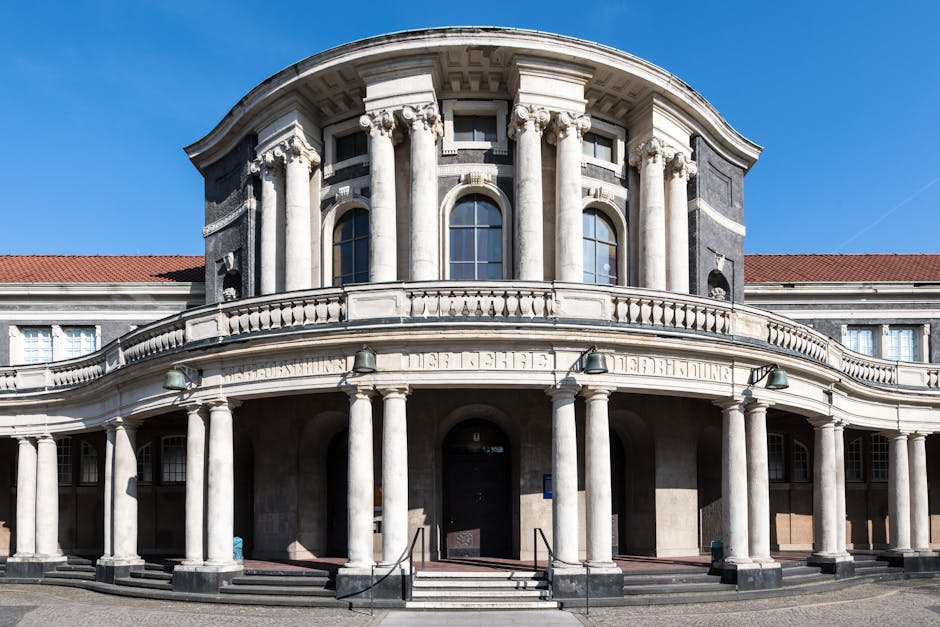
As you may have already noticed, the Technion is much more than just a university: it’s a real springboard for your professional future.
- A world-renowned university in international rankings: the Technion, a renowned Israeli university, regularly ranks among the world’s top institutions, particularly in the fields of science and engineering. As an institute of excellence, it is recognized for the quality of its academic programs and cutting-edge research.
- An exceptional research environment: located in Haifa, the Technion is a true center of innovation and research. With its many top-level laboratories and research centers, the university offers an ideal setting for students with a passion for science and technology. It’s a place where creation and innovation come to life, with projects that shape the future.
- A dynamic, lively city: Haifa, Israel’s third largest city, is a vibrant port metropolis, renowned for its cultural richness and cosmopolitan atmosphere. As a Technion student, you’ll have the chance to live in a stimulating environment, between Mediterranean beaches and varied cultural activities, offering an enriching and unique university experience.
- A springboard for the future: graduating from Technion opens many doors in the professional world, particularly in the high-tech sector. Technion graduates are sought after internationally for their expertise and capacity for innovation.
A unique entrepreneurial ecosystem
The Technion has always placed innovation and entrepreneurship at the heart of its project. It was the first Israeli university to set up a technology transfer office, demonstrating its commitment to transforming research into concrete, marketable solutions.
- Tailor-made programs: the institution offers a multitude of programs and courses dedicated to entrepreneurship, ranging from theoretical classes to practical experimentation.
- A breeding ground for talent: every year, many students from all over the world(France, USA, China, etc.) join the Haifa campus to benefit from cutting-edge teaching and develop their projects.
- Significant economic impact: Technion graduates are behind thousands of innovative start-ups, some of which are now listed on NASDAQ.
The university counts many Nobel Prize winners among its alumni and professors, a testament to the excellence of its teaching and research.
What are the options for short stays at the Technion?
Are you planning to study at the Technion but still hesitating? Why not start with a short stay? It’s the ideal opportunity to discover the campus, attend classes, meet students from all over the world and immerse yourself in Israeli culture. These stays are an excellent way to test the water before embarking on a full course of study.
- Intensive courses: take short courses in various fields of science and technology, such as engineering, life sciences, mathematics, etc.
- Summer programs: take part in intensive summer programs designed for undergraduates and high school students, combining academic courses, cultural activities and excursions.
- Internships: gain work experience in a research laboratory or a Technion partner company.
How to organize your stay?
For more information on the different options for short stays at the Technion, please visit the university’s official website: https://www.technion.ac.il/en/home-2/
See also our articles on Tel Aviv University and Reichman University.
We’re here to help you succeed in your application.
Our Services
Bachelor & Master Admission Coaching
Complete support to build a winning application.
IELTS & TOEFL Preparation
One-on-one tutoring to reach the score your target university requires.
Admission Test Preparation
SAT, ACT, GMAT, GRE, LNAT, MAT: targeted prep to hit the right score.
Academic Tutoring
International academic support (IB, A-Levels, AP) for students aiming abroad.
Studying in Israel: explore more
- Reichman University (IDC Herzliya)
- Tel Aviv University
- Studying in Israel: the complete guide
- Talk to our admissions team about studying in Israel
Studying at the European University of Madrid
A springboard to success in Spain and around the world!

Founded in 1989, the European University of Madrid (UEM) is a private Spanish university renowned for its academic excellence and resolutely international approach. Located on two dynamic campuses in Madrid and Alcobendas, UEM attracts more than 18,000 students from all over the world every year.
Values and a mission at the heart of the student experience:
Guided by its founding values of innovation, excellence and commitment, the UEM’s mission is to prepare its students to become responsible, high-performance players in a constantly changing world. To achieve this, the university emphasizes an active, professional approach to teaching, encouraging learning by doing and the acquisition of cross-disciplinary skills essential to professional success.

Why choose the European University of Madrid?
- A wide choice of training courses :the EMU offers more 200 programs undergraduate, master’s and doctoral degrees in a variety of fields, including the humanities, social sciences, health sciences, engineering, business and economics.
- A stimulating international environment : with over 40% international students, UEM offers a multicultural study environment conducive to open-mindedness and the acquisition of intercultural skills.
- A top-notch teaching staff : The UEM is supported by a faculty composed of researchers and recognized professionalsin their fields, guaranteeing students quality teaching and cutting-edge knowledge.
- Personalized support : The UEM offers its students a wide range of support and guidance services, including orientation, tutoring and help with finding a job.
- A modern, dynamic campus :the EMU campuses, located in Villaviciosa de Odón and Alcobendas, offer modern infrastructures and state-of-the-art facilities for an optimal learning environment.
Ranking and reputation of the European University of Madrid
The European University of Madrid (UEM) has established itself as a leading institution of higher education, both nationally and internationally. Its reputation for academic excellence and commitment to pedagogical innovation have earned it growing recognition from students, employers and specialist ranking bodies.
- Classement des institutions selon Scimago : UEM also stands out in the Scimago Institutions Rankings, which assesses the performance of scientific research. The university ranks among the 681 of the world’s best institutions en research, demonstrating the quality and impact of its work in various fields.
- Classement mondial des universités QS : the EMU is consistently among the Spain’s 5 best private universities in the QS World University Rankings, confirming its position of excellence in the Spanish university landscape.
- U-Ranking : le classement U-Ranking des universités espagnoles place l’UEM dans le top 10 des universités privées du pays, soulignant sa performance remarquable dans l’ensemble des domaines d’enseignement.

A full range of training courses to match your ambitions
The European University of Madrid (UEM) offers a wide range of bachelor’s, master’s and doctoral programs in a multitude of fields of study, enabling you to find the ideal course to fulfill your professional aspirations.
License
With over With more than 80 undergraduate programs, the UEM offers students a vast and diverse choice of courses. You can specialize in fields such as :
- Humanities and Social Sciences : psychology, education, communication, journalism, law, political science.
- Health Sciences : medicine, pharmacy, physiotherapy, nursing.
- Engineering Sciences :Computer Science, Civil Engineering, Electrical Engineering, Telecommunications.
- Economics and management: business administration, marketing, finance, accounting.
- Arts and letters: translation and interpreting, fine arts, design.
Master
The UEM offers over 60 master’s programs designed to deepen your knowledge and acquire specialized skills in your field of expertise. In particular, you can choose to study :
- Research: Research Master’s degree in Human and Social Sciences, Research Master’s degree in Health Sciences.
- Professionals: Master of Digital Marketing, Master of MBA, Master of Project Management.
- Teaching: Master MEEF, Master Sciences de l’Education.
PhD
The EMU encourages research and innovation by offering doctoral programs in various fields of study. You’ll be able to devote yourself to a doctoral research project and become a recognized expert in your discipline.


Admission requirements
1. Application deadlines
Application deadlines vary from program to program. It is important to consult the admissions calendar specific to the course you are interested in. You can find this information on the UEM website or by contacting the admissions department directly.
2. Registration procedures
The registration procedure is carried out online via the EMU web portal. Candidates must create an account, complete the application form and provide the required supporting documents. Applications can be submitted in several stages.
3. application form
The application form is the main document required to apply to the EMU. It must be completed online and includes the following information:
- Personal information: Last name, first name, nationality, date of birth, address, etc.
- Academic information: diplomas, transcripts, etc.
- Information on the desired training program: choice of program, level of study (bachelor’s, master’s, doctorate), etc.
- Cover letter: explaining why you are applying to EMU and the program you have chosen.
- Curriculum vitae: detailing your academic and professional background.
- Recommendations: Two letters of recommendation from professors or professionals may be required for certain programs.
Other documents
Depending on your situation and the training program you have chosen, you may also need to provide other documents, such as :
Proof of your financial situation: if you are applying for a scholarship, you will need to provide proof of your financial situation.
English language test: if the program is taught in English, an English language test (TOEFL, IELTS, etc.) may be required.
Proof of Spanish proficiency: if you wish to study in Spanish, proof of your language level may be required.
Medical certificate: A medical certificate attesting to your good health may be required for certain programs.

Tuition fees
Tuition fees at UEM vary according to the program, the level of study (bachelor’s, master’s, doctorate) and the student’s nationality. Details of tuition fees for each program can be found on the UEM website.
Bachelor’s degree: annual tuition fees for Bachelor’s degree programs are generally between 10,000 and 15,000 euros.
Master’s: annual tuition fees for Master’s programs are generally between 12,000 and 18,000 euros.
Doctorate: annual tuition fees for doctoral programs are generally between 5,000 and 10,000 euros.
Scholarships at the European University of Madrid
The European University of Madrid (UEM) recognizes that access to higher education can be a barrier for some talented students. That’s why the university offers a wide range of scholarships to support deserving students and those in financial difficulty.
Types of scholarships
The EMU offers various types of scholarships, divided into two main categories:
- Merit-based scholarships: these are awarded to students with the best academic results. They may cover all or part of tuition fees.
- Social grants: these grants are intended for students in financial difficulty. They can cover all or part of tuition fees and living expenses.
Eligibility criteria
Eligibility criteria for scholarships vary according to the type of scholarship and the training program chosen.
- Merit-based scholarships: in general, students must have an excellent academic record and/or outstanding results in scientific competitions or olympiads.
- Social grants: students must be in a precarious financial situation and meet nationality and residency criteria.
Application process
The application procedure for scholarships is carried out online via the EMU web portal. Students must create an account, complete the application form and provide the required supporting documents. The application deadline varies according to the type of scholarship.
Student life at the European University of Madrid
The European University of Madrid (UEM) offers a stimulating environment for its students, with enriching services and activities.
Housing
- University residences in Villaviciosa de Odón and Alcobendas: modern rooms, communal areas, catering.
- Private rentals: assistance in finding studios, apartments and flatshares.
Catering
- Cafeterias and restaurants: a variety of affordable dishes.
- Vending machines and supermarkets nearby.
Transport
- Bus and metro services are available on campus.
- Free shuttles between campuses.
Extracurricular activities
Social commitment: volunteering and solidarity actions.
Sport: modern facilities, competitions.
Culture: concerts, exhibitions, conferences.

Are you ready to study at Madrid’s European University?
We’re here to help you


How can we support you in your application?
European University of Madrid : frequently asked questions
What is the European University of Madrid (UEM)?
Universidad Europea de Madrid (UEM) is a large private university in Spain, known for its health programmes (medicine, dentistry, physiotherapy, veterinary) and sports, with a strong international community.
Does UEM teach in English?
UEM offers programmes in both Spanish and English; the language of instruction depends on the specific degree.
How do I apply to UEM?
Admission is based on your academic record (with no French-style numerus clausus), sometimes with a test or interview, and adequate Spanish or English depending on the programme.
Are UEM degrees recognised?
Yes : degrees from UEM, a recognised Spanish university, are valid across the EU, subject to the relevant steps for regulated professions.
Studying at Oxford University
Academic excellence and international reputation

Other notable figures include Stephen Hawking, Albert Einstein, Oscar Wilde and J.R.R. Tolkien, dozens of Nobel Prize winners who came to study or teach at Oxford, and a Rhodes Scholar who went on to become very famous.
President William J. Clinton. With such a storied past, the Oxford campus has no shortage of stories to tell: whether it’s the two fauns decorating the door of the office where C.S. Lewis (author of The World of Narnia) worked, the lawns accessible only to PhD holders, the impressive Radcliffe Camera, a spherical-shaped library, the Bridge of Sighs, reminiscent of its Venetian namesake, or the nearby Turf Tavern, Oxford is never short of illustrious places to discover!
The University of Oxford has been awarded first place in the Times Higher Education international ranking of universities. Founded in 1096, or even earlier, Oxford is certainly one of the oldest universities in the world, as well as one of the most prestigious and selective.
Located less than two hours from London, the historic city of Oxford, nicknamed “The City of Dreaming Spires”, is home to 24,000 students, half of whom are undergraduates. Oxford University is often associated with its historic rival, Cambridge University, to the extent that the two institutions are referred to as “Oxbridge”.
Oxford’s most famous graduates include no fewer than 27 British Prime Ministers, including Margaret Thatcher, Tony Blair and Theresa May.
Schooling
At Oxford, semesters are actually 3 blocks of 8 weeks, shorter than at most universities, which explains why work is particularly intensive during term time.
Students spend most of their time on academic work and, more often than not, are required to hand in one essay or solve a series of problems per week.
In addition to courses, Oxford University offers an original method, unique to Oxford and Cambridge. This is called “tutoring”, and consists of small teaching groups (generally between 1 and 5 people) led by a tutor, usually a world-renowned expert in the field being studied.
To consult the complete list of courses offered, click here
Assess your chances for Oxford or Cambridge
One hour with an Oxford or Cambridge graduate who reviews your profile for your chosen course, gives you a written assessment grid, and a prioritised action plan before the 15 October UCAS deadline.
€150 · 1 hour online · written grid included
Book my assessmentStudent life
But students don’t devote all their time to work! The college organization encourages friendships between students of different nationalities and backgrounds, as well as the study of a variety of subjects.
The school offers a wide range of activities, from traditional debates and lectures by leading figures (politicians, academics, civil society and business personalities) to team sports. In this field, the best elements have the opportunity to wear Oxford’s colors in inter-university tournaments. Rowing is particularly popular at the college and university levels.
The city of Oxford also offers visitors many quaint old buildings and libraries, a wide range of restaurants, cafés and bars, large green spaces and several great museums, such as the Ashmolean Museum of Art and Archaeology, the Natural History Museum and the Pitt Rivers Museum of Anthropology.
With a city of this size and a university of this nature, it’s impossible to get bored! At the same time, Oxford remains a city on a human scale, home to an authentic, close-knit community.
How can I apply?
Oxford, one of the most selective universities in the world, demands excellent academic results and rigorous preparation. Applications to Oxford are almost entirely concerned with the academic aspects of the student’s profile.
Please note that it is forbidden to apply for an undergraduate degree at Oxforden at the same time as at Cambridge. You will therefore first have to choose between applying to Oxford University or Cambridge. It’s important to note that some programs are only offered at one of the two universities (“Philosophy, Politics and Economics” [PPE]at Oxford or “Human, Social and Political Sciences” at Cambridge, for example).

How do I apply?
They can be broken down into several stages:
- Application on UCAS
- Written test
- Selection interview
- Conditional offer of admission
- Admission
Details of these steps are given below.

The application process in detail
What is the student profile at oxford university?
Because the university is highly selective, we recommend that you apply to this university only if you can justify excellent academic results and are sure of obtaining a “Très Bien” mention in your Baccalauréat.
What’s more, as the selection process involves interviews, you’ll also need to demonstrate an excellent command of the English language. Some Oxford University programs, such as “PPE” (“Philosophy, Politics and Economics”), “Economie et Management” or “English literature” receive a particularly high number of applications, so the selection process is even tougher for them.


When should you start preparing?
Students are strongly advised to start preparing their application as early as the end of Seconde or the beginning of Première. If possible, start reading and thinking about your >personal statement as early as possible. Some applicants, particularly those with weaker English skills, may need to start preparing even earlier. Click on the following link for information for foreign applicants.
Students are advised to focus on the aspects of their chosen course that really interest them and to think actively about why they want to study the subject further : after all, they aspire to study it full-time for at least three years.
Is it possible to visit the campus?
Oxford Open Days take place on July 3-4 and September 20. Registration is not required, but may be necessary for sessions that attract large numbers of students. For further information, click here.

Tuition fees
The deadline for applying to Bath en Bachelor is January 15 of your final year.
However, given the amount of preparatory work required for admission to Bath, we strongly advise you to start preparing your application as early as your 1ère year, to maximize your chances of admission.
| Students from the United Kingdom | EU and international students | |
| Licence tuition fees | £9,250 per year for all courses | £24,750 : £34,678 depending on course of study (see website for details)International fees for undergraduate medicine: £27,240 per annum for first 3 years (preclinical) £37,445 per annum for 5th and 6th years (clinical) |
| College fees | £0 | International students must also pay a “College fee” of £7,570. |
*Tuition fees are set to rise over the next few years in line with inflation.
When you consider the cost of any university, you must also consider the cost of living. On its website, Oxford University has produced an estimate of the cost of living for international students:
Oxford’s advice is to budget between £1,058 and £1,643 for each month of residence in Oxford (between 6 and 9 months, depending on where the student stays during the vacations). This represents an estimated annual cost of around £10,567, including accommodation, transport and personal expenses.
Ready to study at Oxford University?
We’re here to help!

Our Services
Studying at the University of Pennsylvania
Recognized for its academic excellence, cutting-edge research and considerable influence on international education.

Founded in 1740 by Benjamin Franklin, the University of Pennsylvania (often referred to as Penn) is one of the oldest members of the prestigious Ivy League.
The world-renowned institution of higher learning is located in the heart of Philadelphia, Pennsylvania. It is renowned for its academic excellence, cutting-edge research and considerable influence on international education.
The university is ranked among the best in the world according to several international criteria and rankings, including ShanghaiRanking and URAP.

Academic excellence and rankings
The University of Pennsylvania (Penn) stands out as one of the world’s top universities, attracting brilliant students from all over the world every year. Its reputation for academic excellence is reflected in its prestigious rankings and selective admissions process.
A top ranking !
Penn consistently ranks among the top universities in recognized international rankings, such as:
- QS World University Rankings : ranked 12th in the world in 2024.
- Times Higher Education World University Rankings : ranked 13th in the world in 2023.
- U.S. News & World Report Best Colleges Rankings : ranked 4th private university in the United States in 2024.
These rankings testify to the outstanding quality of teaching and research at Penn, as well as the university’s international reputation.
Schools and faculties
- Wharton School : renowned for its MBA and economics research programs.
- College of Arts and Sciences : offers courses in natural sciences, humanities and social sciences.
- School of Engineering and Applied Science : programs in engineering, computer science and advanced technologies.
- Perelman School of Medicine : first-rate medical training, focused on clinical research.
- School of Nursing : nursing and clinical research.
- School of Dental Medicine : high-quality dental training programs.
- Law School : combining legal theory and practice.
- Graduate School of Education : prepares students for careers in teaching and educational administration.
- School of Social Policy & Practice : social work and social policy.
- School of Veterinary Medicine : advanced research and clinical practice in veterinary medicine.
- Annenberg School for Communication : communication and media programs.
- Stuart Weitzman School of Design : Architecture, urban planning and design.
Methodology and teaching
Penn’s professors use advanced teaching methodologies, encouraging the practical application of knowledge. Students benefit from innovative teaching techniques.
Research and reputation
Penn stands out for its research results, with numerous academic citations in leading articles. The university’s academic reputation is further enhanced by its high rankings on a variety of teaching and research quality criteria.
Salary and income of graduates
According to PayScale, University of Pennsylvania graduates have some of the highest starting salaries and career earnings compared to graduates of other universities. This strong salary performance contributes to Penn’s high reputation in terms of return on investment for its students.
A selective admissions process
Admission to Penn is selective, with an acceptance rate of only 5.9% for the Class of 2024. Admitted applicants typically have outstanding academic records, high standardized test scores and remarkable involvement in extracurricular activities.
Undergraduate application
Application form
- Online application form available on Penn’s official admissions website : https://www.upenn.edu/admissions
- Official school record transcribed by your lycée.
- Standardized test scores (SAT or ACT). Penn requires high standardized test scores.
- Two letters of recommendation from teachers or mentors who can attest to your academic ability and potential.
- An original and convincing personal essay that allows the admissions committee to get to know you better.
- An application supplement that answers specific questions about your experience, interests and aspirations.
- Non-refundable application fee.
Application deadlines :Early decision: November 1stRegular decision: January 5
Tips on applying for an undergraduate degree
- Start the application process early. It’s important to start preparing your application as early as your first year of high school.
- Respect the deadlines scrupulously. Application deadlines are strict, and it’s important to respect them.
- Pay particular attention to the quality of your application. Make sure that all the documents in your file are complete and well presented.
- Ask for letters of recommendation from people who know you well. Choose people who can attest to your strengths and potential.
- Write a convincing and original personal essay. The personal essay is your chance to stand out from the crowd. Take the time to write it carefully and proofread it thoroughly.
- Prepare carefully for standardized tests (SAT or ACT). If you’re taking the SAT or ACT tests, it’s important to prepare thoroughly. Many resources are available to help you prepare for these tests.
- Make sure you understand the specific requirements of the program you are applying for. Each study program has its own requirements. Read the information on the program that interests you carefully.
- Please feel free to contact Penn’s admissions office with any questions. The Admissions Office is here to help you throughout the application process.

Graduate school applications
Application process
The graduate application process varies according to the program of study chosen. In general, applicants must submit the following documents:
- Online application form available on the program website.
- Official academic record transcribed by your higher education institution.
- Standardized test scores (GRE, GMAT, etc., if required). Some programs require standardized test scores.
- Three letters of recommendation from teachers or mentors who can attest to your research skills and potential.
- A statement of intent describing your research interests and career goals.
- Samples of written work that demonstrate your
- research and writing skills. These samples can include published articles, dissertations, research projects, etc.
- A CV or curriculum vitae summarizing your professional and academic experience.
- Frais de dossier non remboursables.
- Application deadlines: Application deadlines vary according to the program of study you have chosen. It’s important to consult the website of the program you’re interested in to find out the exact dates.

Costs for students living on campus
The cost of attending the University of Pennsylvania, varies depending on the type of housing and personal needs of the students, but here is a general estimate for the 2024-2025 academic year based on where the student lives:
- Tuition: $60,920
- Fee: $7,766
- Accommodation: $12,640
- Food: $6,534
- Books and supplies: $1,358
- Transportation: $1,062
- Personal expenses: $2,008
- Total budget: $92,288
Costs for students living off-campus
- Tuition: $60,920
- Fee: $7,766
- Housing: $12,564 (allowance)
- Food: $5,796 (allowance)
- Books and supplies: $1,358
- Transportation: $1,062
- Personal expenses: $2,008
- Total budget: $91,474

Financial aid for international students
International students at Penn have limited options for need-based financial aid, and must apply for this aid at the time of admission. Penn is committed to covering 100% of the demonstrated financial need of admitted international students, primarily through grants and work-study programs. However, international students who do not receive financial aid in their first year are not eligible to apply for financial aid in subsequent years of their undergraduate degree.
Types of help available
- Institutional grants: These grants do not require repayment and are awarded on the basis of financial need. Penn uses the CSS profile and other financial documents to assess financial need.
- Loans: students can access federal and private loans. International students may require a U.S. cosigner for private loans. the university offers substantial financial aid for international students, including French students, to make education accessible to more talented students.
Types of financial assistance
- Need-based scholarships: Penn is committed to meeting 100% of international students’ demonstrated financial need. Applicants must submit the CSS Profile form and provide financial documentation to prove need.
- Merit-based scholarships: although less common, some schools within the university, such as the Wharton School, offer scholarships based on academic performance and leadership potential.
- Student employment: international students can participate in on-campus work-study programs, enabling them to earn money while pursuing their studies.

To go further, read our guide: Georgetown University: School Profile.
Alumni career success
Penn benefits from an active and engaged alumni network, extending the university’s influence around the world. Many Penn alumni have made significant contributions to society, including business leaders, politicians, researchers and innovators. The university regularly highlights these achievements through various articles and publications, highlighting how the education received at Penn has served as a springboard to many illustrious careers.
- Elon Musk : A graduate of the Wharton School at the University of Pennsylvania, Elon Musk has become an iconic entrepreneur known for founding companies such as SpaceX and Tesla, revolutionizing the aerospace and automotive industries.
- Donald Trump– Also a graduate of the Wharton School, Trump became the 45th President of the United States and is a well-known real estate and entertainment tycoon.
- Warren Buffett : Known as one of the world’s most successful investors, Warren Buffett attended the Wharton School before transferring to the University of Nebraska. His management of Berkshire Hathaway solidified his reputation as a major force in the financial world.
- John Legend: A multi-Grammy Award-winning artist, John Legend graduated from the University of Pennsylvania with a degree in English and African-American Literature. In addition to his musical career, he is actively involved in social and educational causes.
- Sheryl Sandberg: Former COO of Facebook, Sheryl Sandberg is a Wharton graduate who has made a significant impact in technology while promoting the empowerment of women in the workplace.

Ready to study at the University of Pennsylvania?
We’re here to help you

Studying at Reichman University
Renowned for its academic excellence and commitment to innovation and entrepreneurship, the university offers a dynamic, international environment for students.

Reichman University, formerly known as IDC Herzliya, is a private university located in Herzliya, Israel. Founded in 1994, it has rapidly become one of the country’s most respected universities, renowned for its excellence in teaching and research.
Reichman University is ranked among the world’s top 1000 universities by Times Higher Education and QS, and stands out as one of Israel’s best young universities and entrepreneurship training centers.

Why study at Reichman University
Reichman University is for ambitious, motivated students looking for a quality higher education experience.
- Innovative pedagogical approach: the university emphasizes experiential learning and preparing students for real-world challenges. It offers rigorous and stimulating programs of study, as well as unique internship and entrepreneurial opportunities.
- Renowned faculty: Reichman attracts internationally renowned professors and researchers who are experts in their respective fields. They provide students with invaluable expertise and contribute to cutting-edge research in a variety of fields.
- Commitment to research: the university fosters a dynamic research culture and actively supports its researchers. It boasts cutting-edge research centers in fields such as social sciences, exact sciences, humanities and law.
- International environment: Reichman welcomes students and professors from all over the world, fostering a multicultural and enriching learning environment. The university also offers numerous international exchange programs and partnerships with prestigious institutions.
It offers a wide range of undergraduate, master’s and doctoral programs in a variety of fields, enabling students to develop the skills and knowledge they need to succeed in their future careers.
Programs of study
If you would like to study in Israel, Reichman University offers a wide range of undergraduate and graduate programs in the following fields:
- Law
- Business
- IT
- Psychology
- Government
- Communication
- Economy
- Sustainable development
MBA Reichman
This program, aimed at executives and future business leaders, includes basic courses in general management. Students can specialize in AI and Big Data or innovation and entrepreneurship.
Reichman Law Program
This undergraduate program takes an interdisciplinary approach and offers double degrees, combining J.D. with a B.A. in business administration, psychology or government.
Reichman Computer Science Program
Preparing students for careers in software development and technology entrepreneurship, this three-year program is offered in Hebrew and English and covers a variety of subjects, from computer science to mathematics.
Reichman psychology program
This program combines theory and practice to help students develop relevant skills.
Reichman’s government, diplomacy and strategy program
This program prepares students for careers in public policy, administration and diplomacy, offering specializations such as Diplomacy and Global Affairs, Security Studies and Counter-Terrorism, and Contemporary Middle East.

Tuition fees
As a private institution, tuition fees at Reichman University are higher than those at Israel’s public universities.
- Bachelor’s degree: annual tuition starts at around 53,000 shekels.
- Master’s: tuition fees vary according to the program, but are generally between 53,000 and 90,000 shekels per year.
- Doctorate: doctorate fees vary according to the program and the student’s status (Israeli or international resident).
It is important to note that these tuition fees only cover the tuition itself. Students must also plan to pay additional costs such as living expenses, books and school materials.

Scholarships and financial aid
Reichman University offers several scholarship and financial aid options for French students wishing to pursue their higher education there.
Merit-based scholarships:
- International Excellence Scholarships: these scholarships are offered to outstanding international students who demonstrate strong academic and leadership potential. Scholarships can cover up to 50% of tuition fees.
- Undergraduate scholarships: These scholarships are offered to French students admitted to an undergraduate program at Reichman University. The amount of the scholarship varies according to the program of study and the student’s financial needs.
Financial assistance :
- Housing assistance: Reichman University offers housing assistance to French students in need. Assistance is provided in the form of a monthly grant, the amount of which varies according to the type of accommodation and the student’s financial needs.
- Emergency scholarships: Reichman University offers emergency scholarships to French students facing unforeseen financial difficulties. These scholarships are designed to help students cover essential living expenses.
Eligibility requirements :
Eligibility requirements for scholarships and financial aid vary according to the program of study and the student’s nationality. French students must generally have an excellent academic record, demonstrate financial need and meet other specific criteria.

Student life at Reichman University in Israel
Reichman welcomes students from all over the world, creating a multicultural environment conducive to exchange and intercultural learning.
The university offers its students a wide range of support services, including guidance, psychological counseling and job search assistance.
Eh encourages participation in community life by offering a wide choice of clubs, associations and student events.
The university has a modern, well-equipped campus, offering students a living environment conducive to study and relaxation, and cultivates close links with business and industry, enabling students to gain practical experience and develop their professional network.
Employment after studies
At Reichman University in Israel, the post-graduation employment rate is strongly supported by the university’s Career Center. The center offers a full range of services designed to prepare students and alumni for the job market. The Career Center offers career counseling, workshops on professional skills, and arranges meetings with potential employers.
The Career Center also plays a key role in connecting students and graduates with a network of local and international employers. This network is regularly updated with job offers, maximizing opportunities for students and alumni. In addition, employers are invited to participate in recruitment events and job fairs, facilitating the professional integration of graduates.
If you’re still hesitating, find out more about Tel Aviv University and its exceptional academic opportunities.
Are you ready to study at Reichman University in Israel?
We’re here to help you

Reichman University : frequently asked questions
What is Reichman University?
Reichman University (formerly IDC Herzliya) is a leading private university in Herzliya, Israel, known for its English-taught international programs in business, computer science, government, psychology and law.
Does Reichman University teach in English?
Yes. Reichman University offers a range of full degree programs taught entirely in English through its Raphael Recanati International School.
How do I apply to Reichman University?
You apply directly to Reichman University’s international school with your academic transcripts, proof of English proficiency (TOEFL/IELTS), and the program-specific requirements.
Is Reichman University a good university?
Yes : it is one of Israel’s top private universities, particularly well regarded for entrepreneurship, business and computer science, with a strong international community.
Studying in Israel: explore more
- Studying in Israel: the complete guide
- Studying at Tel Aviv University
- Study at the Technion (Israel Institute of Technology)
- Talk to our admissions team about studying in Israel
Studying at Tel Aviv University
Tel Aviv University, a renowned institution in Israel where students from all over the world come to benefit from diversified study programs, cutting-edge research opportunities and a dynamic student life in an international setting.

Tel Aviv University (UTA), located in the heart of Israel, is one of the world’s leading universities. Founded in 1956, it has rapidly evolved into a major center of teaching and research. UTA is renowned for its innovative programs and interdisciplinary studies, offering students first-rate training in a variety of fields.
If you’re interested in studying in Israel, the university offers a wide range of programs in science, medicine, engineering, management, and the humanities and social sciences. Students can choose from courses in Hebrew, English and even French, making the university accessible to an international audience. In addition to traditional academic programs, UTA offers continuing education courses and special programs such as Massa, which attract students from all over the world.
Tel Aviv University study programs
Tel Aviv University (UTA) is one of the most prestigious academic institutions in Israel and the world. It offers a variety of study programs at all levels, providing students with quality training and outstanding research opportunities. Here’s a detailed overview of the different study programs available at UTA.
Undergraduate programs
Faculty of Exact Sciences
Students can choose from programs in mathematics, physics, chemistry, life sciences and earth sciences. These programs emphasize research and innovation, preparing students for careers in science and engineering.
Faculty of Medicine
The faculty offers an internationally recognized undergraduate program in medicine (MD). Students follow theoretical and practical courses, with internships in affiliated hospitals.
Faculty of Social Sciences
Programs include psychology, sociology, political science and economics. These studies offer an interdisciplinary perspective, integrating research and analysis of social phenomena.
Faculty of Arts
Students can study fine arts, music, film and theater. The faculty encourages creativity and artistic expression through practical and theoretical courses.
Faculty of Engineering
Engineering programs include electrical, mechanical, biomedical and computer engineering. Students acquire advanced technical skills and participate in research projects.
Graduate programs
Master’s and PhD
UTA offers Master’s and PhD programs in all the fields mentioned. Graduate students benefit from state-of-the-art research resources and work alongside renowned researchers. Programs are available in Hebrew and English, facilitating access for international students.
Massa program
The Massa program enables international students to take courses in English while discovering Israeli culture. This program is ideal for those seeking an enriching international experience.
Specialized programs
MBA and management
UTA offers MBA programs that are recognized worldwide. Courses include management, marketing, finance and entrepreneurship. These programs prepare students for leadership roles in the business world.
Faculty of Education
Programs include teacher training and special education. Students learn innovative teaching methods and take part in practical work placements.
Tel Aviv University admissions process
Admission requirements
Admission requirements at UTA vary according to program of study and academic level. In general, prospective students must meet the following criteria:
- High school diploma: applicants must have a bachelor’s degree or equivalent.
- Language proficiency: depending on the program, proficiency in Hebrew or English is required. Language tests such as TOEFL or IELTS may be required for programs in English.
- Specific prerequisites: some programs, particularly in science, engineering and medicine, may require specific prerequisite courses or skills.
Application deadlines
Application deadlines vary by program and faculty. Here are some general points to consider:
Special programs: specific programs such as Massa may have different deadlines. It is essential to check the dates on the UTA website.
First semester: applications for the first semester should generally be submitted between January and April of the previous year.
Second semester: for programs starting in the second semester, applications are often accepted until November of the previous year.

Required documents
To apply to UTA, French students must submit several documents:
- Application form: complete the online form available on the university website.
- Diplomas and transcripts: provide certified copies of your bachelor’s degree and transcripts.
- Proof of language proficiency: results of language tests such as TOEFL or IELTS, if required.
- Cover letter: explain why you want to study at UTA and how your chosen program aligns with your academic and professional goals.
- Recommendations: Letters of recommendation from professors or employers may be required for some graduate programs.
- CV: a curriculum vitae detailing your academic and professional background.
- Portfolio: For arts programs, a portfolio of your work may be required.
Selection process
Entrance exam: for some programs, particularly in medicine and engineering, an entrance exam may be required.
Academic evaluation: applications are evaluated on the basis of transcripts and academic qualifications.
Interviews: Some programs may require an interview, either in person or online.
Tuition fees and scholarships at Tel Aviv University for French students
To help French students finance their studies at UTA, the university offers a variety of scholarships and financial aid.
Tuition fees
Tuition fees at UTA vary according to the program of study and the course of study. In general, French students can expect to pay between US$4,000 and US$15,000 per year for a Bachelor’s program and between US$5,000 and US$30,000 per year for a Master’s program. Doctorate fees are generally covered by the university.
Scholarships
UTA offers several scholarships to French students, including :
- Excellence scholarships: these are awarded to French students with outstanding academic records.
- Need-based scholarships: these scholarships are available to French students who demonstrate financial need.
- French government scholarships: the French government also offers scholarships to French students wishing to study abroad.
Additional financial assistance
In addition to scholarships, UTA also offers other forms of financial aid, such as student loans and on-campus employment.
How to apply
French students can apply for UTA scholarships and financial aid via the university’s website. Application deadlines vary according to the scholarship or financial aid applied for.
Student life at Tel Aviv University: a dynamic campus in the heart of Israel
A vibrant campus in the heart of the metropolis
Located in the heart of the vibrant city of Tel Aviv, UTA offers students a unique living environment. The modern, well-equipped campus houses state-of-the-art teaching and research facilities, as well as green spaces, cafés and restaurants, fostering a rich and dynamic student life.
A wide range of study programs
As you will have gathered, UTA offers a wide range of undergraduate and graduate programs in over 100 fields, covering the sciences, social sciences, arts, humanities, engineering, law, management and medicine. The programs are taught by internationally renowned researchers and are constantly adapted to the latest advances in their respective fields.
A rich community and sports life
The UTA actively encourages participation in sports and community life. The university has over 200 student associations covering a wide range of interests, from sport and music to the arts and voluntary work. Modern sports facilities on campus enable students to practice a wide variety of sports.
An international environment
UTA attracts students from all over the world, creating an enriching multicultural environment. The university offers study programs in English and Hebrew, as well as support services for international students.
Integrating French students
The UTA has set up specific initiatives to facilitate the integration of French students. Hebrew courses for beginners are offered, as well as individualized support for administrative procedures and settling in.
A top ranking
A top ranking
The UTA consistently ranks among the best universities in Israel and the world. Here are some notable rankings:
- 1st place for Israel in the three major world university rankings for 2024 (ARWU, QS World University Rankings and Times Higher Education World University Rankings)
- Among the 201-250 best universities in the world according to the Times Higher Education World University Rankings 2024
- 56th best university in the world and 4th in Israel according to the Center for World University Rankings 2023
A reputation for excellence in every field
UTA offers a wide range of undergraduate and graduate programs in a multitude of disciplines, including the sciences, social sciences, arts, humanities, engineering, law, management and medical sciences. Its programs are renowned for their academic rigor and relevance to today’s world.
The University has particularly distinguished itself in areas such as :
- Life sciences and medicine: UTA is home to leading faculties of medicine and dentistry, as well as cutting-edge research programs in biology, biochemistry, neuroscience and related fields.
- Social sciences and humanities: UTA is renowned for its programs in psychology, economics, sociology, history and other social science and humanities disciplines.
- Engineering and technology: UTA’s School of Engineering is one of the largest in Israel, offering cutting-edge programs in electrical engineering, computer science, mechanical engineering and other fields.
A gateway to a promising future
UTA graduates are highly sought after by employers worldwide. They are renowned for their critical and analytical skills, and their ability to adapt to constantly changing environments. UTA gives you the tools and knowledge you need to succeed in your career and make a positive contribution to society.
Tel Aviv University has been privileged to count among its students and professors many personalities who have marked their field of expertise and influenced the world in various ways. Here are a few notable examples:
Arts and letters:
- Etgar Keret: Israeli writer and filmmaker renowned for his short stories and dark humor.
- Galia Sabar: Israeli poet, playwright and translator, winner of the Chernichovsky Prize.
- Talya G. A. Solan: Israeli historian and archaeologist, specializing in the history of women in antiquity.
Science and technology:
- Daphne Barak-Erez: internationally renowned Israeli social psychologist, known for her work on leadership and motivation.
- Ilan Ramon: first Israeli astronaut, tragically killed during the Columbia space mission in 2003.
- Ghil’ad Zuckermann: Israeli linguist, known for his work on revitalizing endangered languages and linguistic diversity.
And many more:
In addition to these famous names, Tel Aviv University has produced many other graduates who have excelled in various fields, such as politics, law, business and entrepreneurship.
If you’re still on the fence, check out Reichman University in Israel to explore other outstanding academic opportunities.
Ready to study at Tel Aviv University?
We’re here to help