
Study at the University of Bath
A university with a global outlook in an exceptional setting

The University of Bath is nestled in the region of Somerset, England, one hour by train from London on a hilltop overlooking the town of Bath.
Bath is one of the top universities in England and in 2018 it took the 6th spot in national rankings in The Guardian and the 160th place in the QS World University Ranking.
In 2014, it also achieved the title of ‘Best Campus University in England’ in the Times, a list that it continues to appear on. So what makes this place so special?
Our Google reviews
A few key figures about Your Dream School
Our students admitted to Bath
Reassurance is what matters most when choosing your guidance.
« I decided to apply to university in England for my Bachelor’s and I asked Your Dream School to support me. I’m so glad I did! I’m excited to go to London to study next year! »
« I felt their authentic and personal engagement and involvement when it came to my daughter, which was extremely precious throughout the process. »
« Your Dream School offers very thorough support: help with drafting essays, preparation for English exams and interviews. I wholeheartedly recommend Your Dream School. »
« Thanks to Your Dream School, the work was perfectly well done, which allowed us to have an intelligent dialogue with our son. »
The city of Bath

With around 90,000 year-round residents, Bath just may be the most charming city in England. The Telegraph agrees saying that the city, which is a World Heritage Site, “pretty much ticks all the boxes”.
Tourists come from far away to visit the famed Roman Baths as well as more modern spas the city’s full name is Bath Spa after all. The Bath Abbey and the Royal Crescent and Circus : both beautiful Georgian architectural feats inspired by the city’s Roman heritage the Jane Austen Centre, beautiful green parks… these are just a few of the most popular landmarks!
Students will find that the city, located a short bus ride down the hill from the University of Bath’s campus, also offers plenty of eateries, bars, nature activities, cultural events and stunning scenery.
The campus
The main campus of the university, reminiscent of many American college campuses, is situated in the periphery of Bath, and was constructed in 1964 in the modernist style of the era. The University’s proximity to such a charming city and its academic excellence make it a great alternative to London’s universities (an hour away by train) if you’re hoping for a campus university experience. Regarding accommodation, first-year students are guaranteed on-campus housing in the first year while afterwards they tend to move off campus to live with friends.
Academic matters

Over 17,000 university students study in one of Bath’s four faculties (Engineering and Design, Humanities and Social Sciences, Management, and Science). Since it opened in 1966, Bath has been particularly reputed for engineering (electronic, electric and mechanical in particular), physical sciences, mathematics and technology. Today, Bath is also well known for management, humanities, architecture and the social sciences especially psychology. See the full list of course offerings here.
Bath aims to help students gain professional experience and in many of its courses offers the chance to take a year to work in industry in order to acquire professional experience before graduating.
Moreover, Bath’s campus is in a state of constant improvement and has benefited from an investment of £450 million over the past 10 years. A five-storey library has room for individual study, group work, and engineering and design space and more. Plus, it’s open 24 hours a day, even in exam term, which proves useful for night owls and early birds alike! Among other recent developments are a brand new Psychology building that houses one of the University’s most highly-ranked programs. Equally acclaimed is the School of Management whose new building will be opening in 2021. In addition, The Edge, a building for both management and arts, offers concerts as well as events, and the Sports Training Village, which includes a range of sports facilities including indoor tennis courts and a swimming pool, weight rooms, and an indoor as well as an outdoor track. With such great facilities, it may not come as a surprise that Bath also enjoys a reputation as one of the leading UK universities for athletics, offering all kinds of sport activities from American football to Canoe Club, Dodgeball, Jiu Jitsu, Latin and Ballroom dancing and Windsurfing!
Outside of competitive programs, sports, arts activities and ample green spaces on campus and around the city, students at the university can also join a range of other student associations to make the most of their campus experience and contribute to continuing to make Bath one of the UK’s top campus universities!
How do I apply?
To apply to the University of Bath, as with other UK universities, you will need to submit a candidate file on UCAS, including a Personal Statement, teacher’s letter of recommendation, proof of English proficiency where necessary (by sitting a standardised test), predicted results for your current studies (or grades already achieved) as well as your contact information and details on any past work experience you have completed.
See Your Dream School’s tips for applying for more information.
Also refer to the pages Applying for an undergraduate course or Applying for an graduate course on the University of Bath’s website.
For more detail, see also: Why study in the UK? (Part 1): What do you aspire to?
Are there any specific requirements?
Each subject will have its own specific entry requirements. This information will be detailed on the course page for your specific course.
For more detail, see also: Loughborough University: Admissions & Requirements.
When do you have to start preparing for the University of Bath?
The deadline for applying to Bath for the Bachelor’s is fixed at January 15th of your final year.
In all cases, take into account the preparation work necessary for admission to Bath, we strongly advise you to start preparing your application from your penultimate year in order to maximize your chances of being accepted.
For more detail, see also: Brighton and Sussex: Admissions, Requirements & Fees.
What is the profile of the students at the University of Bath?
Given the high selectivity of the university, we recommend that you only apply to this university if you can show excellent academic results and that you are sure of obtaining high grades in your end-of-year exams in the International Baccalaureate, A Levels or equivalent.
Moreover, you must also show an excellent command of the English language.
Certain programs at Bath like engineering and management receive a huge number of applications annually and generally require A grades at A Level, or in equivalent qualifications.
Related reading: University of Sheffield: Admissions & Requirements.
Are you ready to study at the University of Bath?
We’re here to help you succeed in your application.
Our Services
Bachelor & Master Admission Coaching
Complete support to build a winning application.
IELTS & TOEFL Preparation
One-on-one tutoring to reach the score your target university requires.
Admission Test Preparation
SAT, ACT, GMAT, GRE, LNAT, MAT : targeted prep to hit the right score.
Academic Tutoring
International academic support (IB, A-Levels, AP) for students aiming abroad.
Study at theUniversity of York
A beacon of cultural and historical diversity
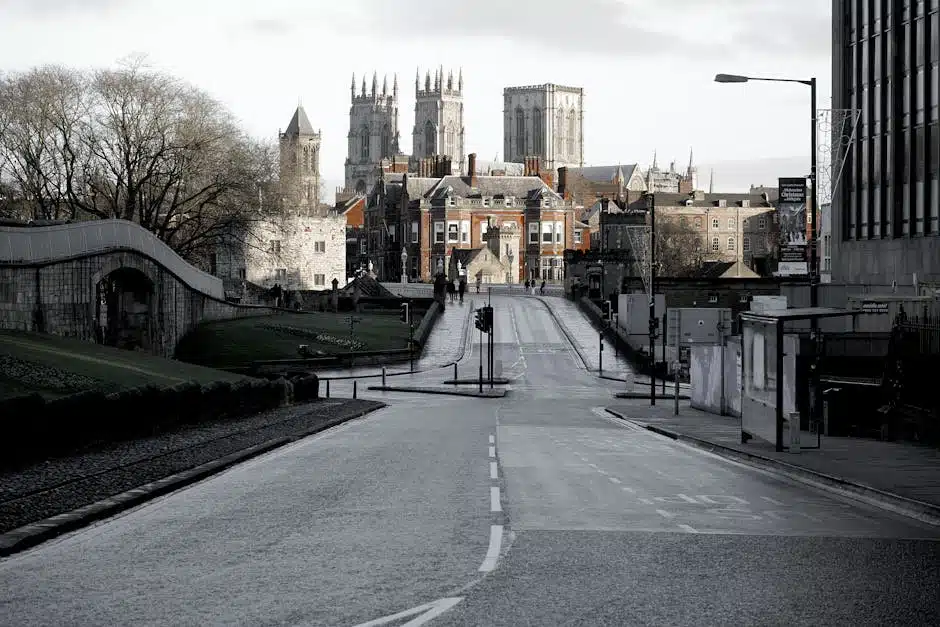

The University of York is a collegiate plate glass research university. After opening its doors in 1963 and now has over 17,900 students who study in thirty academic departments. It is a campus university, covering over 500 acres of land just south-east of the city of York in Northeast England.
The University has two campuses called Heslington West and Heslington East, respectively. It has nine residential colleges that are spread out between the 2 campuses.
The latter campus only opened in 2009 and is home to 3 of the 9 colleges and a sports village, whilst the former campus houses 6, and also incorporates York Science Park and the National Science Learning Centre. This makes for a very green and open campus!
York has produced many alumni who have been active in politics, including at least 15 Members of the United Kingdom Parliament, 5 members of the House of Lords, 2 Members of the Scottish Parliament, 1 Member of the European Parliament and a handful of ministers of other governments around the world.
Academic matters
The University of York is a highly selective institution, with the average student at the University achieving a UCAS Tariff of 430, the 19th highest in the UK. Only 78.5% of applicants receive offers of admission, which is the joint 15th lowest amongst the Russell Group, a self-selected association of 24 public research universities in the United Kingdom.
The Times University Guide said of York that “The university is increasingly recognised as a permanent fixture in the top rank of British higher education” and that “No university had a better record for teaching quality.”
Incidentally, it was ranked 12th in the UK both for the quality of its research, and also in the general national rankings in 2019 by The Guardian.
Student Life
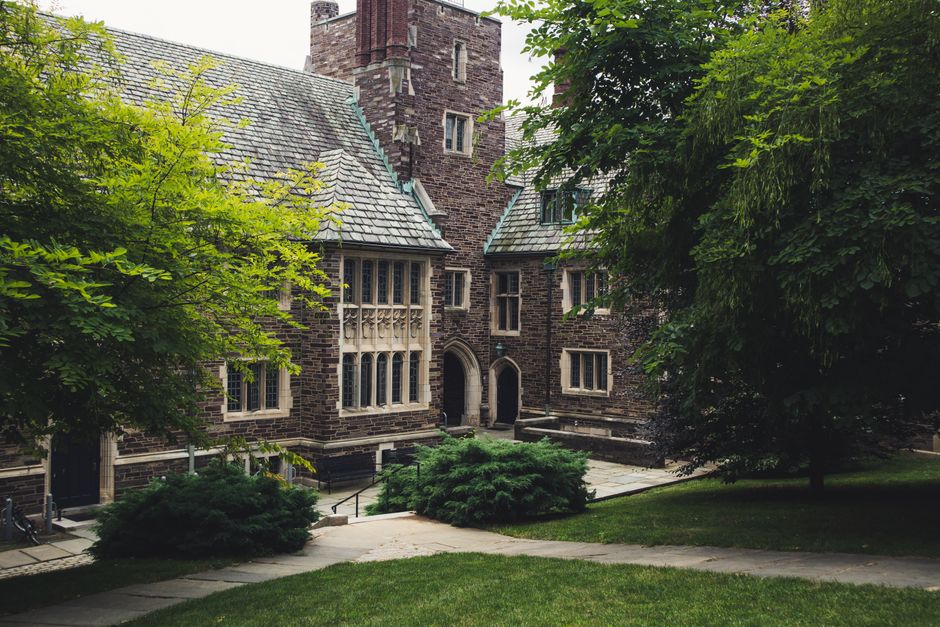
The collegiate system at York creates a lively social atmosphere. Each student is randomly assigned a college to which they belong for the rest of their degree. Most colleges have a Junior Common Room for undergraduate students, which is managed by the elected Junior Common Room Committee, and a Graduate Common Room for post-graduate students, as well as a Senior Common Room, which is managed by elected representatives of the college’s staff. The Sunday Times asserted, “The colleges are tight-knit communities within the university and enjoy a healthy rivalry.”
The students’ union at the University of York plays an important role, with its membership consisting of the entire student population. There are over 200 societies on offer, from ‘Hummus Appreciation Society’ to ‘Opera Society’. What’s more, each College has its own JCRC or students’ association which provides many services, including organising college events and student welfare services.
Interestingly, the University of York is home to both the oldest student television station, and the oldest independent radio station in the United Kingdom. In addition, York’s student newspaper, Nouse, also won many Guardian Student Newspaper awards, due to its website and its outstanding journalists. Moreover, the University of York Music Society and the University of York Drama Society are 2 of the University’s largest societies, and both put on performances and/or concerts every week during term time. Naturally, due to all of these achievements and societies, there is a real culture of creativity, artistic enquiry, and journalism at the University.
Combining the features of a collegiate university with a rich history of political and cultural engagement, and the features of a modern and trendy university, York is one of a kind!
How do I apply?
For students wishing to apply to York, strong academic results and rigorous preparation are needed.
What are the different stages of the application?
There are several steps:
- Apply on UCAS
- Receive a conditional offer
- Meet requirements from your offer
- Confirm your acceptance
The details of these steps are covered below and on the University’s website.
How to begin an application:
Candidates apply via the British online platform UCAS, and upload a letter of motivation (Personal Statement), their predicted exam marks, and a letter of recommendation from one of their teachers. Students may only submit one Personal Statement for all the universities they apply for (maximum of 5 choices). The Personal Statement, no more than 4,000 characters, should explain why students want to study their chosen course, what aspects particularly interest them, what steps they have already taken to engage with the subject (reading, conferences, internships etc), and, if possible, what aspects they are looking forward to studying.
Conditional offer and acceptance:
If students succeed in all these stages, in January they will receive a ‘conditional offer’ of admission. This means that they will be accepted if they attain the required marks (most often a high grade in your end of high school studies, and in a standardized English exam: 7.5 in the IELTS for example).
What is the deadline for applying?
Deadlines:
The deadline for applications to the University of York is the 15th January of a students’ final year of secondary school or sixth-form college (Year 13).
When do you have to start preparing for the University of York?
It is strongly recommended that students begin preparing from the end of Year 11 or beginning of Year 12. If possible, start any reading and thinking about what to write about in a Personal Statement as early as possible. Some candidates, particularly those with a weaker level of English, need to consider preparing even earlier. See this link for useful information for international candidates.
It is recommended that students try to find aspects of their chosen course that genuinely interest them and to think deeply about why they wish to study this subject : after all, students are applying to study this subject full time for at least 3 years.
Is it possible to visit the campus?
To check the upcoming visit days at York see this page.
What is the profile of the students at the University of York
Before deciding to apply to York, we recommend you review the specific academic requirements of the academic course you are interested in. Occasionally, students may be required to attend an interview as part of the application process.
Fees
The UK government has confirmed that as of 2021/22 entry EU, other EEA and Swiss nationals will no longer be eligible for home fee status and financial support from Student Finance England. You can see more here.
Tuition fees vary depending on whether your course is laboratory or classroom-based. If your course is both laboratory and classroom-based you will pay the higher fee.
When taking into account the cost of any university, you should also consider the cost of living.
York provides an estimate for the cost of living, which can be found on its website: they provide a detailed list of costs you can expect to incur including housing and social costs.
You might predict an annual average budget of around £10,000 per year, including accommodation, transport, personal expenses etc.
Are you ready to study at University of York?
We’re here to help!
We’re here to help you succeed in your application.
Our Google reviews
A few key figures about Your Dream School
They got in with Your Dream School
Reassurance is what matters most when choosing your guidance.
« Thanks to Your Dream School, the work was perfectly well done, which allowed us to have an intelligent dialogue with our son. »
« I was very satisfied with the care delivered, with the mentoring and the administrative procedures, particularly drafting the personal statement. I highly recommend this mentoring. »
« Being supported by Your Dream School gave me a framework and a structure. I was accepted to the majority of the universities I applied to : very happy to start studying in London next year! »
« …I managed to get my offer to UCL in London, one of the best English universities, which was my first choice. Their support was consistent and personal. »
Our Services
Bachelor & Master Admission Coaching
Complete support to build a winning application.
IELTS & TOEFL Preparation
One-on-one tutoring to reach the score your target university requires.
Admission Test Preparation
SAT, ACT, GMAT, GRE, LNAT, MAT : targeted prep to hit the right score.
Academic Tutoring
International academic support (IB, A-Levels, AP) for students aiming abroad.
University of York acceptance rate
The University of York is moderately selective: around 74% of undergraduate applicants receive an offer, with roughly 6 applicants for every place (source: University of York admissions statistics). Acceptance is far more competitive in certain subjects : medicine-related programmes and law sat at about 15-16% in 2025. Meeting the typical A-level/IB entry requirements and a strong personal statement are essential.
Aiming for York or another UK university? Talk to our admissions team for a free consultation on your application.
Study at UCL (University College London)
A global university at the heart of London


University College London (UCL) is ‘London’s Global University.’ Located in the heart of London, but with over 18,000 students from outside of the UK (out of around 39,000 in total), the University is one of the most international in the UK. Founded in 1826, UCL was the first university in the United Kingdom to be secular, accepting candidates regardless of religion, and awarded the first 4 bachelor’s degrees to British women in 1880.
Famous alumni include Mahatma Gandhi, Kwame Nkrumah (the founder of modern Ghana), and members of the band Coldplay. Today, it is one of the top universities in the UK, and hovers near the top 10 # worldwide (Times Higher Education World University Rankings 2019, QS World University Rankings 2019). It is the third-largest university in the UK, part of the ‘Russell Group’ of elite British universities, and part of the Golden Triangle (including Oxford and Cambridge) of research-intensive universities.
Our Google reviews
A few key figures about Your Dream School
Our students admitted to UCL
Reassurance is what matters most when choosing your guidance.
« …I managed to get my offer to UCL in London, one of the best English universities, which was my first choice. Their support was consistent and personal. »
« Thanks to Your Dream School, the work was perfectly well done, which allowed us to have an intelligent dialogue with our son. »
« I decided to apply to university in England for my Bachelor’s and I asked Your Dream School to support me. I’m so glad I did! I’m excited to go to London to study next year! »
« I felt their authentic and personal engagement and involvement when it came to my daughter, which was extremely precious throughout the process. »
Life at UCL
On campus, students can enjoy a brand new student center, the or find a quiet corner in the beautiful law library. There are several green areas in this bustling part of London including the charming Gordon Square and the larger Russell Square, both popular for picnicking. The much larger Regent’s Park is about 10 minutes away. To help create a community feel each department has its own common room, where students from the same course, or different ones, can meet, relax, or study together.
Related reading: City, University of London: Admissions & Requirements.
Accommodation
UCL guarantees housing in residential halls to all first year students. Accommodation can be catered and most halls are centrally located and within walking distance or a short bus or tube ride from the main campus.
UCL offers two catered halls: Ifor Evans and Ramsay Hall but students can also choose to stay in an Intercollegiate hal (International Hall, Garden Halls, Lilian Penson Hall) where they will be mixed with students from other London universities.
On the same topic, see our article: Royal Holloway: Admissions, Requirements & Fees.
Academic Matters
Increasingly well known and consistently highly ranked internationally as noted above, UCL offers a constantly evolving range of courses. Recently added, the BASc Arts & Sciences course allows students to discover a broader range of subjects, while Law, Biomedical Science, Economics and Computer Science continue to be the most popular (and most selective!) courses. See the full of list of bachelor’s and master’s courses on UCL’s website.
Considered highly selective, UCL is one of a few universities in the UK not to offer courses in Clearing as reported by THE.
Master’s degrees can be either taught or research programs and include a wide range of programs including architecture, economics, education and philosophy. Find out more about all courses on offer here.
How to apply:

Bachelor Candidates
Undergraduate candidates apply via the British online platform UCAS, and upload a letter of motivation (Personal Statement), predicted grades for the Baccalaureate in each subject, and a letter of recommendation from one of their teachers. Note that students send only 1 Personal Statement for all the universities they apply for (maximum of 5 choices.
The Personal Statement, maximum 4,000 characters, should explain why students want to study a chosen course, what aspects particularly interest them, what steps they have already taken to engage with the subject (reading, conferences, internships etc), and, if possible, what aspects they are looking forward to studying. For advice on how to write a Personal Statement please see here.
Generally, UCL asks for a ‘bien’ grade in the Baccalaureate. However, the most popular courses require a minimum of 15.5/20 in the Baccalaureate as well as an assessment day, where students may have to sit exams and have an interview.
If you succeed in all these stages, you will receive a ‘conditional offer’ of admission. This means that you will be accepted if you attain the required marks (most often a bien in the Baccalaureate and in a standardized English test.
Related reading: Imperial College London: fees, admission (2026).
When should students start preparing?
It is strongly recommended that students begin preparing in from the end of Year 11 or beginning of Year 12. If possible, start any reading and thinking about what to write about in a Personal Statement as early as possible.
It is recommended that you try to find aspects of your chosen course that genuinely interest you and to think deeply about why you wish to study this subject : after all, you are applying to study this subject full time for at least 3 years.
The deadline for application to UCL is 15th January of Year 13.
Due to the coronavirus (COVID-19) pandemic, all UCL open days will now take place online.
UCL’s Undergraduate June Virtual Open Days are live. For more informations, please see this page.
On the same topic, see our article: London Metropolitan University: Admissions & Requirements.
Masters & PhD Candidates
Graduate candidates generally apply directly to the program that they are targeting. Admissions are rolling, which means there is no deadline, however, when a course is full, no further students can apply. Responses are generally given with 6 weeks of application submission.
The Application must include:
- Academic transcript
- Application Fee
- English language requirement
- Personal statement
- 2 Letters of reference
- Research Proposal (PhD candidates only)
Depending on the course, students may need to submit additional materials such as GRE scores or a portfolio. See this page for more information.
To go further, read our guide: University of Essex: Admissions, Requirements & Fees.
When do you have to start preparing for UCL?
The deadline to apply for a Bachelor’s at UCL is at the end of your final year.
Always bear in mind the preparation work needed for admission to UCL, it is therefore strongly recommended that you start preparing your application at the start of your final year to maximize your chances of success.
A year of tuition at UCL ranges from just over €20,000 to €24,000 depending on the course. The University offers some Financial aid opportunities, which may cover up to 100% of enrollment fees. Students may apply for IE Loans, IE Scholarships or outside funding and should do so by completing their Financial Aid application.
To go further, read our guide: University of Westminster: Admissions & Requirements.
Are you ready to study at UCL?
We’re here to help you succeed in your application.
Our Services
Bachelor & Master Admission Coaching
Complete support to build a winning application.
IELTS & TOEFL Preparation
One-on-one tutoring to reach the score your target university requires.
Admission Test Preparation
SAT, ACT, GMAT, GRE, LNAT, MAT : targeted prep to hit the right score.
Academic Tutoring
International academic support (IB, A-Levels, AP) for students aiming abroad.
UCL : frequently asked questions
What are the tuition fees at UCL?
Tuition for international undergraduates varies by course, generally between £30,000 and £40,000 per year. Check UCL’s official website for the exact figure.
What is UCL ranked?
University College London (UCL) is regularly ranked among the world’s top 10 universities in the QS World University Rankings.
How do I get into UCL?
You apply through UCAS with an excellent academic record, a personal statement, references and an English test (IELTS/TOEFL). UCL is highly selective.
Is UCL a good university?
Yes : UCL is one of the UK’s most prestigious and international universities, renowned for research across many fields.
UCL acceptance rate: how selective is it really?
For 2024/25 entry, UCL received 97,818 undergraduate applications and made around 30,500 offers : an overall offer rate of roughly 31%, or 3.2 applicants per place (source: UCL official admissions data). But selectivity varies enormously by programme: Computer Science runs at 8.8 applicants per place (5,549 applications for 633 offers), Architecture at 8.1, Law at 7.8, Medicine at 4.8, while Economics sits at 3.3. In practice, a strong application matters far more for the flagship programmes than the headline rate suggests.
Study at the University of Warwick
Coaching pour admission en Bachelor et Master et préparation aux tests par une équipe d’experts
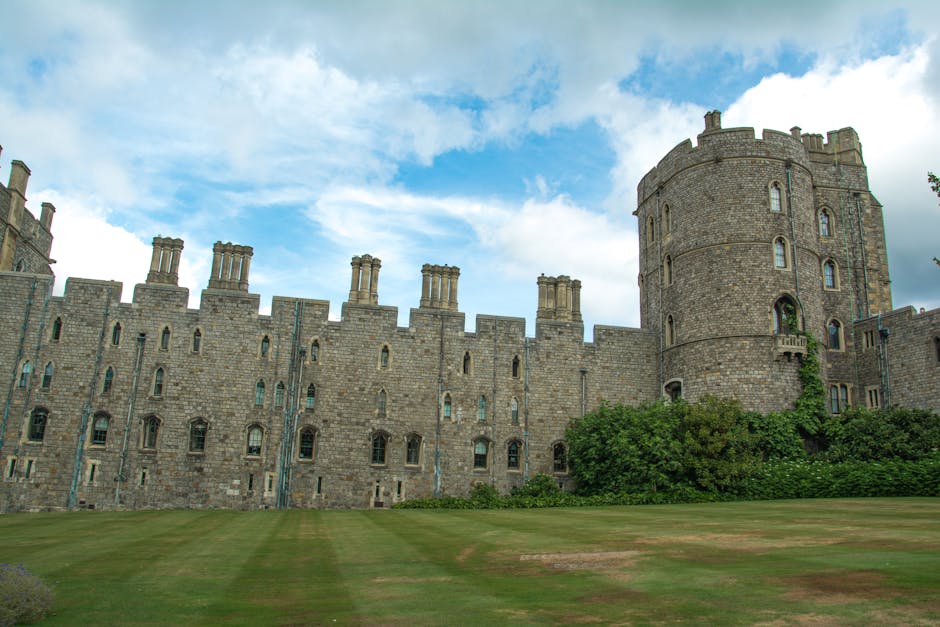

Located 5.5 kilometers outside of the center of Coventry, England, the green campus of the University of Warwick covers 290 ha (720 acres). Although the university was founded in 1965, it quickly found its way to the top 10 of UK for its undergraduate student experience, based on teaching quality and learning resources, academic level of accepted students, employment prospects, research quality and retention rates (The Complete University Guide). Moreover, it joined the prestigious Russell Group of 24 public research universities in 1994.
Additionally, the University of Warwick joined the prestigious Russell Group of 24 Public Research Universities in 1994.
Warwick boasts 25,600 full-time students and 2,400 academic and research staff. About 27% of the student body comes from overseas and over 114 countries are represented in the student body. About 6,300 students live in housing across a range of undergraduate and postgraduate residences. All of the residences provide a dining, residential tutors and a warden responsible for student welfare.
A Few Words About The University of Warwick

Academics at Warwick are organized into the Faculties of Arts, Medecine, Science and Social Sciences, which together have 29 academic departments. The University of Warwick excels in several academic disciplines and is particularly well reputed for economics and management.The Complete University Guide ranked Warwick’s Economics department 3rd overall in its rankings for 2019. Fully 19 of the 27 subjects offered by Warwick were ranked within the top 10 nationally in 2019, with Creative Writing taking first place.
In 2015 revealed that the university received 25,071 undergraduate applications and made 18,380 offers in 2014-15 for an acceptance rate of 15.8%. Particular competitive courses include Law, Economics and courses within the Warwick Business School.
In 2017, the university was one of only a few universities (along with Cambridge, >Imperial College, >LSE, Oxford, >St Andrews, and >UCL) to have no courses available in Clearing, a process that matches students with available courses late in the summer before starting university. As you might expect, Warwick is very selective and it is necessary to achieve at least a ‘mention bien’ in the baccalaureat, or A Levels grades AAB-A*AA in order to be considered for entry.
The campus has seen impressive growth over the past several years as Warwick has inaugurated a new Mathematics and Statistics Building, a new Computer Science Building, new Business School buildings, the Digital Laboratory, the new Heronbank Residences and an expanded Sports Center, and the projects continue. Campus life is lively and the University of Warwick Students’ Union is one of the largest students’ unions in the UK. It currently has over 260 societies and 67 sports clubs including basketball, rowing and ice hockey. Students also run a radio station Radio Warwick (RAW) and publish a student newspaper, The Boar.
University House is one of the main student-centered buildings housing both University administration and the “Learning Grid”, the self-described “innovative and flexible work space”.
Warwick is also open to the community, the country and the world. The Warwick Arts Centre, a multi-venue arts complex in the university’s main campus, is the largest venue of its kind in the UK outside London. It attracts around 300,000 visitors a year to over 3,000 individual events spanning contemporary and classical music, drama, dance, comedy, films and visual art. The Warwick Business School offers some degree programs in The Shard in central London. In addition, Warwick is the only European university participating in the Center for Urban Science and Progress, an applied science research institute led by >New York University and NYU-Poly. Finally, Warwick students benefit from a number of opportunities to study abroad and may even obtain a double degree. The University’s partners include Columbia, >UC Berkeley, HKU, Peking University and Sciences Po Paris.
Notable Warwick alumni include Nobel Prize in Chemistry (1975) winner Sir John Cornforth who was a Professor at Warwick, Guðni Th. Jóhannesson, President of Iceland, Chief Economist at the Bank of England; David Davis, and Tony Wheeler, creator of the Lonely Planet travel guides
For more detail, see also: Loughborough University: Admissions & Requirements.
When do you have to start preparing for the University of Warwick
The deadline for applying to the University of Warwick is fixed at January 15th in your final year.
Always bear in mind the work involved in the preparation needed for the admission to Warwick, it is strongly recommended start preparing your candidate file from the beginning of your final year in order to maximize your chances of success.
To go further, read our guide: University of Essex: Admissions, Requirements & Fees.
How do I apply?
The selection process at the University of Warwick is divided into multiple steps that we describe to you below :
- Passing a standardised English testYou will also be asked to demonstrate an excellent control of the English language and you must therefore pass a standardized English test like the IELTS.
- The Conditional Offer in AdmissionFinally, if your application is accepted in the selection process, you will then receive a ‘conditional’ admissions offer. This means that you will only definitely be admitted on the condition that you obtain the minimum result at Baccalaureate (most often a ‘Good’ reference in the French Baccalaureate) and in a standardized English test (generally between 6.5 and 7.5 in the IELTS).
- The candidate file on UCASYou must first submit your application on the UCAS platform, the equivalent of Parcoursup in England. This file comprises a cover letter (Personal statement) as well as a letter of recommendation from one of your teachers.
Related reading: Brighton and Sussex: Admissions, Requirements & Fees.
What is the profile of the students at the University of Warwick?
Because of the high selectivity of the university, we recommend that you only apply for these universities if you can get solid academic results and if you are sure to obtain at least a reference of “Bien” at the Baccalaureate.
Furthermore, you must also demonstrate an excellent control of the English language.
Certain courses at Warwick like Engineering and Management receive a great number of applications every year and therefore demand in general a minimum of 15 or 16/20 at Baccalaureate
On the same topic, see our article: University of Sheffield: Admissions & Requirements.
Are you ready to study at Warwick?
We’re here to help you succeed in your application.
Our Google reviews
A few key figures about Your Dream School
They got in with Your Dream School
Reassurance is what matters most when choosing your guidance.
« Being supported by Your Dream School gave me a framework and a structure. I was accepted to the majority of the universities I applied to : very happy to start studying in London next year! »
« …I managed to get my offer to UCL in London, one of the best English universities, which was my first choice. Their support was consistent and personal. »
« I decided to apply to university in England for my Bachelor’s and I asked Your Dream School to support me. I’m so glad I did! I’m excited to go to London to study next year! »
« I felt their authentic and personal engagement and involvement when it came to my daughter, which was extremely precious throughout the process. »
Our Services
Bachelor & Master Admission Coaching
Complete support to build a winning application.
IELTS & TOEFL Preparation
One-on-one tutoring to reach the score your target university requires.
Admission Test Preparation
SAT, ACT, GMAT, GRE, LNAT, MAT : targeted prep to hit the right score.
Academic Tutoring
International academic support (IB, A-Levels, AP) for students aiming abroad.
For a student view of life on campus and of the engineering course, read our interview with Matthew, engineering student at Warwick.
Study at Durham University
Tout ce qu’il faut savoir pour réussir votre admission

The University of Durham is #4 in the UK, according to The Sunday Times Good University Guide 2018, and is one of the ‘Russell Group’ of elite British universities. Founded in 1832, Durham is recognized as the 3rd oldest university in England. It is situated in the historic city of Durham in North East England, a town which also boasts a famous castle and magnificent cathedral. Due to its academic excellence, historic setting, and college system, Durham is sometimes grouped with the universities of Oxford and Cambridge, colloquially referred to as ‘Doxbridge.’ Famous alumni include the current Archbishop of Canterbury, the head of the Church of England, former “James Bond” actor Roger Moore, and one of England’s first feminist authors, Anne Brontë.
Our Google reviews
A few key figures about Your Dream School
Our students admitted to Durham
Reassurance is what matters most when choosing your guidance.
« I decided to apply to university in England for my Bachelor’s and I asked Your Dream School to support me. I’m so glad I did! I’m excited to go to London to study next year! »
« Your Dream School offers very thorough support: help with drafting essays, preparation for English exams and interviews. I wholeheartedly recommend Your Dream School. »
« Thanks to Your Dream School, the work was perfectly well done, which allowed us to have an intelligent dialogue with our son. »
« I was very satisfied with the care delivered, with the mentoring and the administrative procedures, particularly drafting the personal statement. I highly recommend this mentoring. »
Academic Matters

The University of Durham has a wide range of study options, from Anthropology to Physics to Sports Science to Finance.
Students in their first year also can choose ‘open modules’ either inside or outside their main department. So, for example, a student of Biosciences could take a module in Chinese language or Middle Eastern history. This is an invaluable opportunity to deepen a particular interest in your own subject, or to learn about something completely different from your main course of study and so widen your general knowledge and culture. For a list of current ‘open modules’ please see here.
Students at Durham also have the opportunity to study abroad for a year, as the University has links with over 120 universities across the world. To read some testimonials from students who have spent a year abroad, please see this page.
The main university library holds over 1.6 million items and access to over 6 million e-books and e-journals, and in exam season is open 24/7.
Teaching at Durham is within your department rather than your college.
To order the 2020 undergraduate prospectus, please click here.
Campus Life
The college system, almost unique in British universities, provides a close-knit community and easy opportunities to socialise and make close friendships. There are 16 colleges, each with their own share cooking and social spaces.
For more organized social activities, the University has over 200 Student Union Societies, and 26 theatre organisations who put on some 90 productions every year. For sport-inclined students, there are college and university sports teams which practice 18 different sports. Musicians are well catered for: The Times and Sunday Times Good University Guide 2019 and Complete University Guide 2019 both list the University of Durham as having the #1 music department in the country, and there are a wide range of ensembles, from choir to DJing, with over 80 concerts performed annually.
There is really something for everyone.
How to Apply to Durham University
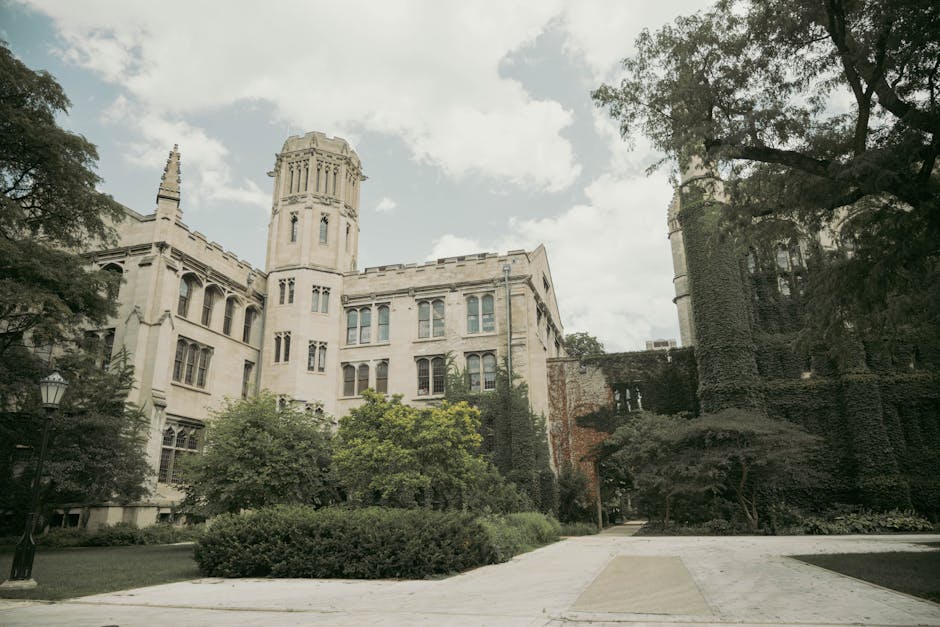
The University of Durham, along with Oxford and Cambridge, is a collegiate university, and has 16 colleges. Applicants apply to a college (or can make an open application, where they are assigned a college). The list of colleges and their codes can be found here.
As with all UK universities, candidates apply through UCAS. On UCAS, candidates upload a letter of motivation (Personal Statement); one of their teachers must also upload a letter of recommendation and provide predicted exam marks for the student. Students may only submit one Personal Statement for all the universities they apply for (maximum of 5 choices). The Personal Statement, no more than 4,000 characters, should explain why students want to study their chosen course, what aspects particularly interest them, what steps they have already taken to engage with the subject (reading, conferences, internships etc), and, if possible, what aspects they are looking forward to studying.
International students will also need to send a scan of their qualifications, including English language tests, to the Recruitment and Admissions Office, along with their UCAS personal identification number and date of birth. Evidence of a recognised standardised English language proficiency test may include the IELTS or the TOEFL.
For the specific requirements of your choice of degree programme, please visit the course page of your chosen course.
Can I visit the university of Durham?
To register your interest to attend an Open Day, click here.
Fees
Following the UK’s exit from the European Union, students from the EU, EEA and Swiss nationals will no longer be eligible for host fee status or financial support from Student Finance England (more information here).
EU students in 2025/2026 will pay the overseas fee for the duration of their course.
When taking into account the cost of any university, you should also consider the cost of living.
Durham provides an estimate for the cost of living, which can be found on its website. Students should plan to budget between £1,000 and £1,600 for each month of living and studying in Durham. This amount should be budgeted for 6-9 months of the year, depending on whether you will stay at Durham during the holidays.
From this, you might predict an annual average budget of around £10,000 per year, including accommodation, transport, personal expenses etc.
On the same topic, see our article: Why study in the UK? (Part 1): What do you aspire to?
Are you ready to study at Durham?
We’re here to help you succeed in your application.
Our Services
Bachelor & Master Admission Coaching
Complete support to build a winning application.
IELTS & TOEFL Preparation
One-on-one tutoring to reach the score your target university requires.
Admission Test Preparation
SAT, ACT, GMAT, GRE, LNAT, MAT: targeted prep to hit the right score.
Academic Tutoring
International academic support (IB, A-Levels, AP) for students aiming abroad.