
Study at EDHEC Business School
Tout ce qu’il faut savoir pour réussir votre admission

Why Study at EDHEC Business School?

EDHEC Business School has established itself as one of France’s most dynamic and internationally oriented grandes écoles. Founded in 1906 in Lille, EDHEC has evolved from a regional commerce school into a global powerhouse with campuses spanning three continents. What sets EDHEC apart from its French peers, HEC, ESSEC, and ESCP, is its distinctive focus on the intersection of academic research and professional practice, particularly in financial economics, risk management, and entrepreneurship.
EDHEC holds the prestigious Triple Crown accreditation from AACSB, EQUIS, and AMBA : a distinction held by fewer than 1% of business schools worldwide. The school consistently ranks in the top 10 in Europe in the Financial Times Masters in Management ranking, and its MSc in Finance regularly appears in the global top 5. For international students, EDHEC offers an attractive combination of world-class education, multi-campus flexibility (you can study in France, the UK, or Singapore), and significantly lower tuition costs compared to equivalent programmes in the US or UK.
The school’s research centres, particularly the EDHEC-Risk Institute, are globally recognised in the finance industry. EDHEC graduates are actively recruited by the world’s leading financial institutions, consulting firms, and technology companies. The alumni network includes over 50,000 graduates across 130 countries, providing a strong professional foundation for your post-graduation career.
EDHEC is notably more accessible than HEC or ESSEC, with a higher acceptance rate and lower tuition : while still offering comparable career outcomes in finance and consulting. It is one of the best value-for-money options among France’s elite business schools.
Related reading: Best Business Schools in France for International Students.
EDHEC Programmes and Degrees
The Grande École Programme (Master in Management)
EDHEC’s flagship Grande École programme is a 2-to-3-year Master in Management (MiM) that accepts students both from French classes préparatoires and through international admissions. The programme is structured in two phases: a foundation year covering core business disciplines (finance, marketing, strategy, operations), followed by one or two years of specialisation. Students choose from tracks including Financial Economics, Business Management, and Global Business : and can complete exchanges at over 280 partner universities worldwide. The programme includes mandatory professional internships totalling 12-18 months, providing substantial real-world experience before graduation. International students can apply directly after completing a bachelor’s degree, and the programme offers both French-taught and fully English-taught options.
MSc Programmes
EDHEC offers 8 specialised MSc programmes, each designed for graduates seeking deep expertise in a specific field. The most prestigious is the MSc in Finance, which consistently ranks in the top 5 globally by the Financial Times : graduates of this programme are heavily recruited by bulge-bracket investment banks, hedge funds, and asset management firms. Other popular MSc tracks include Financial Markets, Corporate Finance and Banking, Marketing Management, Strategy, and Data Analytics and Artificial Intelligence. All MSc programmes are taught entirely in English and include a 6-month professional internship. Many MSc students complete their internship abroad, leveraging EDHEC’s international partner network.
Related reading: Choosing your business school.
Campus Life at EDHEC
🏢 Multi-Campus Advantage
EDHEC’s multi-campus model is one of its greatest strengths. The main campus in Lille offers a purpose-built, state-of-the-art facility in the heart of northern France’s economic capital, with excellent transport links to Paris (1 hour by TGV), Brussels, and London. The Nice campus provides a Mediterranean environment, ideal for the MBA programme and MSc specialisations. The Paris campus, centrally located, hosts executive education and certain MSc tracks. International campuses in London and Singapore extend the EDHEC experience globally, allowing students to spend semesters in different countries without leaving the EDHEC system.
🌍 International Experience
With students representing over 110 nationalities, EDHEC is one of the most internationally diverse business schools in France. Every programme includes an international component : whether through exchange semesters (EDHEC has 280+ partner universities), dual-degree programmes (including options with schools in the US, China, South Korea, and India), or multi-campus mobility. The International BBA in particular is designed for maximum global exposure, with students studying across at least three countries during their 4-year degree. EDHEC also offers dedicated French language courses for non-francophone students and an international student buddy system to help newcomers integrate into French campus life.
For more detail, see also: Alliance Manchester Business School: Admissions & Fees.
EDHEC Admissions Requirements
Grande École (International Track)
- Bachelor’s degree (any discipline)
- GMAT 650+ or GRE equivalent (recommended)
- TAGE MAGE 300+ (for French-system candidates)
- English proficiency: IELTS 6.5+ or TOEFL 90+
- Motivation letter and CV
- Admissions interview (online or in-person)
- Application fee: €100
MSc and MBA Programmes
- Bachelor’s degree (MSc) or 3+ years experience (MBA)
- GMAT 680+ for MSc Finance (avg admitted score)
- Strong academic transcript and GPA
- English proficiency: IELTS 7.0+ or TOEFL 100+
- Professional references (1-2)
- Video or in-person interview
- Application fee: €100-€170
EDHEC Acceptance Rate and Selectivity
EDHEC’s acceptance rate varies significantly by programme. For the Grande École programme through the concours (classes préparatoires track), EDHEC admits approximately 500 students from around 6,000 candidates who rank EDHEC among their top choices : making the effective acceptance rate around 8-10% for the prépa track. For international direct admissions to the Grande École, the acceptance rate is higher at approximately 25-30%, though this varies by year and the quality of the applicant pool. The MSc in Finance, EDHEC’s most competitive specialised programme, admits roughly 15-20% of applicants, with an average admitted GMAT score of approximately 690. The International BBA has an acceptance rate of around 20-25% for international candidates. Overall, while EDHEC is more accessible than HEC Paris (which admits fewer than 5% of international applicants), it remains a highly selective institution where a strong academic profile and test scores are essential for admission.
Cost of Studying at EDHEC
EDHEC offers a comprehensive range of financial support. The EDHEC Excellence Scholarship covers up to 100% of tuition for top-performing students. Need-based grants (bourses sociales) are available for French and EU students through CROUS. International students can apply for the EDHEC International Scholarship (up to €8,000/year), the Eiffel Excellence Scholarship (French government-funded, covering living expenses for non-EU students), and various programme-specific merit awards. MBA students may be eligible for Forté Foundation Fellowships (for women) and the EDHEC Alumni Foundation grants. French banks also offer preferential student loans (prêts étudiants) with very favourable terms, often requiring no repayment until after graduation. Additionally, EDHEC’s apprenticeship track (alternance) allows students to have their tuition fully paid by a corporate partner while earning a salary : a uniquely French advantage.
Related reading: EDHEC BBA Admission 2026: Requirements & How to Apply.
Career Outcomes and Employment After EDHEC
EDHEC graduates are consistently recruited by top-tier employers across finance, consulting, technology, and luxury goods. For Grande École graduates, the leading recruitment sectors are finance and banking (approximately 30% of the class, with firms like BNP Paribas, Société Générale, Rothschild, and Lazard among top recruiters), management consulting (20%, including McKinsey, BCG, Bain, Oliver Wyman, and Deloitte), technology and digital (15%, with Google, Amazon, Microsoft, and L’Oréal Digital frequently hiring), and consumer goods and luxury (10%, led by LVMH, L’Oréal, and Kering).
EDHEC’s particular strength in finance is reflected in its MSc in Finance graduates, who achieve some of the highest starting salaries of any European programme : averaging over €55,000, with top performers in investment banking and quantitative finance earning significantly more. The EDHEC-Risk Institute’s reputation in the finance industry opens doors that few other schools can match, particularly in asset management, risk management, and financial engineering roles. EDHEC’s Career Centre organises over 200 corporate events per year, including dedicated recruitment fairs, networking events, and case study competitions. The school also has a strong entrepreneurship ecosystem: the EDHEC Entrepreneurs incubator has supported hundreds of startups, and the school runs the annual EDHEC Startup Academy.
Related reading: Why is it worth doing a Master’s degree abroad?
Visa and Work Permits for International Students
International students accepted to EDHEC receive dedicated support from the school’s International Relations office for visa and residence permit applications. Non-EU students will need a long-stay student visa (VLS-TS), which functions as your residence permit for the first year. During your studies, you can work up to 964 hours per year (roughly 20 hours per week), which many EDHEC students use for part-time consulting projects or internships. After graduating, you are eligible for a one-year post-graduation job-seeker visa (Autorisation Provisoire de Séjour, or APS), allowing you to work full-time while seeking employment in France. If you secure a job with a salary above approximately €40,000 per year, you can convert to a full work permit. EDHEC’s location in Lille is particularly advantageous for international career seekers : the city has a growing tech and finance hub, and its proximity to Brussels, London, and Paris via high-speed rail means you can access employment markets across multiple European capitals.
To go further, read our guide: Bayes Business School (Cass): Admissions & Fees.
Get Expert Guidance for Your EDHEC Application
Your Dream School offers personalised EDHEC admissions coaching
Our expert consultants have guided hundreds of students through the EDHEC admissions process : from Grande École to MBA and MSc programmes. We provide comprehensive support including TAGE MAGE and GMAT preparation, essay and motivation letter review, interview coaching, and application strategy. Whether you are applying from a French prépa or an international university, we know exactly what EDHEC looks for and how to position your candidacy for success.
Explore More About Studying in France
Study in France Guide
Complete guide to studying abroad in France as an international student.
Study at HEC Paris
France’s #1 business school : programmes, admissions, and careers.
TAGE MAGE Guide 2026
Everything about the test required for French business school admission.
Our Google reviews
A few key figures about Your Dream School
They got in with Your Dream School
Reassurance is what matters most when choosing your guidance.
« Being supported by Your Dream School gave me a framework and a structure. I was accepted to the majority of the universities I applied to : very happy to start studying in London next year! »
« …I managed to get my offer to UCL in London, one of the best English universities, which was my first choice. Their support was consistent and personal. »
« I decided to apply to university in England for my Bachelor’s and I asked Your Dream School to support me. I’m so glad I did! I’m excited to go to London to study next year! »
« I felt their authentic and personal engagement and involvement when it came to my daughter, which was extremely precious throughout the process. »
Our Services
Bachelor & Master Admission Coaching
Complete support to build a winning application.
IELTS & TOEFL Preparation
One-on-one tutoring to reach the score your target university requires.
Admission Test Preparation
SAT, ACT, GMAT, GRE, LNAT, MAT : targeted prep to hit the right score.
Academic Tutoring
International academic support (IB, A-Levels, AP) for students aiming abroad.
ESCP Business School: Acceptance Rate and Requirements
Tout ce qu’il faut savoir pour réussir votre admission

Why Study at ESCP Business School?

ESCP Business School stands as an unparalleled institution with a claim no other business school can match: it is the world’s first business school, founded in 1819 in Paris as the École Spéciale de Commerce et d’Industrie. Over two centuries later, ESCP has evolved from its Paris roots into a truly European powerhouse, with campuses in six major cities across the continent : Paris, London, Berlin, Madrid, Turin, and Warsaw. This multicampus model is one of ESCP’s defining strengths and a fundamental differentiator from competitors like HEC, ESSEC, and EDHEC, which operate primarily from a single country base or limited locations.
ESCP holds the prestigious Triple Crown accreditation from AACSB, EQUIS, and AMBA, placing it among the world’s top 1% of business schools. The institution is consistently ranked among the top 10 in Europe and maintains an impressive global ranking of #6 in the Financial Times Masters in Management 2025. What truly distinguishes ESCP is not just its historical significance and strong rankings, but its unique value proposition for international students seeking a genuinely European education. At ESCP, you don’t simply study abroad in one city : you experience business education across multiple European capitals, with the flexibility to choose your campus each semester. This European breadth means you gain exposure to different business cultures, regulatory environments, and economic systems while building a truly continental professional network.
The school’s commitment to European integration sets it apart in an increasingly globalized business landscape. ESCP’s curriculum emphasizes comparative business practices across European markets, European law and regulation, and cross-cultural management : making graduates exceptionally well-prepared for careers in multinational corporations, international organisations, and European-focused roles. The school educates leaders from over 140 nationalities across its six campuses, creating a genuinely international community within a distinctly European framework. For students interested in building careers across Europe, whether in London’s financial markets, Berlin’s tech scene, Madrid’s growing startup ecosystem, or Paris’s corporate headquarters, ESCP provides unmatched geographic flexibility and local market expertise.
ESCP’s six-campus model is genuinely unique among top French business schools : you can study simultaneously in Paris, London, Berlin, Madrid, Turin, and Warsaw without changing institutions. This multicampus flexibility, combined with lower tuition than Anglo-American equivalents and strong European employment prospects, makes ESCP the top choice for students seeking a truly continental business education with career optionality across Europe.
To go further, read our guide: Best Business Schools in France for International Students.
Our Google reviews
A few key figures about Your Dream School
Our students admitted to ESCP
Reassurance is what matters most when choosing your guidance.
« Your Dream School offers very thorough support: help with drafting essays, preparation for English exams and interviews. I wholeheartedly recommend Your Dream School. »
« …I managed to get my offer to UCL in London, one of the best English universities, which was my first choice. Their support was consistent and personal. »
« I decided to apply to university in England for my Bachelor’s and I asked Your Dream School to support me. I’m so glad I did! I’m excited to go to London to study next year! »
« I felt their authentic and personal engagement and involvement when it came to my daughter, which was extremely precious throughout the process. »
ESCP Programmes and Degrees

The Grande École Programme (Master in Management)
ESCP’s flagship Grande École programme is a 2-to-3-year Master in Management that represents the gold standard of European business education. The programme is unique in its structure: students spend their first year at one campus (most commonly Paris, though London and Berlin are increasingly popular), the second year at a different European campus, and the third year (for those taking the extended track) at a third location. This campus-rotation model is genuinely distinctive : you receive education in multiple European business contexts, gain fluency in different regulatory and market frameworks, and build a pan-European professional network. The programme covers core business disciplines including finance, strategic management, marketing, operations, and business law, with specialization options in Entrepreneurship, Digital Transformation, Luxury Management, Finance, and European Business. Mandatory professional internships total 12-18 months, typically split between structured work placements across your study years. International students can apply directly after a bachelor’s degree, and the programme offers both French and English-language tracks with full flexibility between them.
MSc Programmes
ESCP offers 12 specialized MSc programmes, each delivered across multiple European campuses, allowing you to choose your study location while maintaining the same degree programme. The portfolio includes MSc in Management with 12 specialisation options: Finance, Luxury & Heritage Management, Digital Business Strategy, Entrepreneurship & Innovation, International Business, Supply Chain Management, Data Analytics & Artificial Intelligence, Corporate Finance, Marketing Analytics, Business Analytics, International Hospitality Management, and Sustainable Finance. All MSc programmes are taught in English, typically combine 12 months of coursework with a 6-month professional internship, and emphasize practical business skills alongside theoretical knowledge. Most MSc students complete their internships at major multinational corporations across ESCP’s European cities or internationally. The flexibility to study in Berlin, London, Paris, Madrid, Turin, or Warsaw, depending on the programme, provides significant geographic advantages and allows you to tailor your education to specific European business ecosystems.
On the same topic, see our article: Choosing your business school.
Campus Life at ESCP
🌍 Six European Campuses
ESCP’s six-campus network is unmatched in the business school world. The Paris campus, located in the 5th arrondissement’s Latin Quarter, places you at the heart of France’s capital and European business hub. London offers access to Europe’s premier financial centre and tech ecosystem. Berlin’s campus sits in the epicentre of Germany’s startup revolution and digital transformation movement. Madrid connects you to Spain’s rapidly growing entrepreneurship scene and expanding multinational corporate presence. Turin provides access to Northern Italy’s manufacturing and luxury goods sectors. Warsaw opens doors to Central and Eastern Europe’s fastest-growing markets. Each campus features modern facilities, dedicated student communities, and local industry connections. Students can study at different campuses semester-by-semester, creating truly personalized European educational journeys. The six-city network also means that wherever you want to work after graduation, London’s finance sector, Berlin’s tech startups, Paris’s luxury conglomerates, or elsewhere, you’ve already built local connections and campus networks.
🤝 Truly International Community
With students representing 140+ nationalities across its European campuses, ESCP is one of the world’s most internationally diverse business schools. Every classroom, project, and social event brings together perspectives from across Europe, Asia, Africa, and the Americas. This genuine diversity is fundamental to ESCP’s educational approach: European business education rooted in a global perspective. The school actively supports international students through multi-language orientation programmes, buddy systems across campuses, and English-language support services. The student body is significantly older and more experienced than at undergraduate institutions : many arrive with 2-4 years of professional experience : creating a sophisticated, mature learning environment. ESCP also runs extensive student clubs and organizations across all campuses, from case competition teams to entrepreneurship clubs to cultural societies, ensuring you build meaningful international friendships alongside your studies.
ESCP Admissions Requirements
Grande École (International Track)
- Bachelor’s degree (any discipline)
- GMAT 660+ or GRE equivalent (recommended)
- TAGE MAGE 310+ (for French-system candidates)
- English proficiency: IELTS 6.5+ or TOEFL 90+
- CV and motivation letter highlighting European interests
- Two professional or academic references
- Video interview (initial screening)
- In-person or video interview (assessment stage)
- Application fee: €100
MSc and Executive MBA
- Bachelor’s degree (MSc) or 5+ years experience (EMBA)
- GMAT 700+ recommended (MSc Finance and competitive programmes)
- Strong academic transcript or professional achievements
- English proficiency: IELTS 7.0+ or TOEFL 100+
- Two professional references required
- Statement of purpose highlighting European career goals
- Video presentation (some programmes)
- Admissions interview (panel-based for EMBA)
- Application fee: €100-€200
ESCP Acceptance Rate and Selectivity
ESCP maintains a competitive but relatively accessible admissions process compared to top-tier competitors. For the Grande École programme, the overall acceptance rate is approximately 15-20%, though this varies significantly by admission track. International direct admissions to the Grande École have an acceptance rate of approximately 20-25%, making ESCP more selective than EDHEC (25-30%) but notably more accessible than HEC Paris (under 5% for internationals). The school receives approximately 8,000 applications annually for its Grande École programme across all tracks, with roughly 1,200-1,500 offers extended globally. For MSc programmes, the acceptance rate ranges from 18-30% depending on programme selectivity : specialized tracks like MSc in Finance and MSc in Luxury & Heritage Management are more competitive. The Executive MBA, targeting mid-career professionals with significant work experience, has an acceptance rate of approximately 30-40%. ESCP uses a rolling admissions process across most programmes, meaning earlier applications have higher acceptance chances. The school takes a holistic approach, considering not just test scores and GPA but also professional experience, motivation, extracurricular activities, and demonstrated interest in European business education.
On the same topic, see our article: Bayes Business School (Cass): Admissions & Fees.
Cost of Studying at ESCP
ESCP offers diverse scholarship opportunities including Merit Scholarships (covering 20-100% of tuition for top applicants), Need-Based Grants (available to EU and some international students), the ESCP Excellence Scholarship for high-achieving international students (up to €10,000/year), and the Eiffel Excellence Scholarship from the French government (covering living expenses for non-EU students). The school also participates in EMBA-specific funding programmes and offers payment plans allowing tuition to be spread across multiple years. International students may qualify for country-specific scholarships through their home governments’ education agreements with France. Additionally, ESCP partners with several banks offering preferential education loans to students; many French banks provide student loans with post-graduation repayment options. Finally, the Alternance (Work-Study) track allows students to have full tuition covered by a company sponsor while earning a salary : an increasingly popular option for Grande École students.
For more detail, see also: Study Abroad: Find the Ideal Master’s Degree for Your Career.
Career Outcomes and Employment After ESCP
ESCP graduates command strong positions across Europe’s leading employers in finance, consulting, technology, luxury, and international business. Grande École graduates show the following employment distribution: finance and banking (28% of graduates, with leading recruiters including Goldman Sachs, JP Morgan, Rothschild, BNP Paribas, and Deutsche Bank), management consulting (22%, including McKinsey, BCG, Bain, Deloitte, and Oliver Wyman), technology and digital (18%, with Google, Amazon, Apple, Microsoft, and European tech leaders frequently recruiting), luxury and consumer goods (15%, led by LVMH, Kering, Richemont, and L’Oréal), and multinational corporations across sectors (17%). ESCP’s European multicampus model creates a distinctive career advantage: graduates have local networks in all six European cities, making them exceptionally attractive to multinational firms seeking employees with cross-European knowledge and pan-European professional relationships.
The school’s Career Development Centre is extraordinarily active, organizing 300+ campus recruitment events and networking activities annually. Major investment banks and consulting firms conduct dedicated ESCP recruitment tours across all campuses. ESCP maintains particularly strong relationships with leading European corporations headquartered in Paris (Danone, Sanofi, Société Générale), London (HSBC, Unilever), Berlin (Siemens, SAP), Madrid (Telefónica, Inditex), and across the continent. MSc graduates in specialized programmes achieve even higher salaries : MSc in Finance graduates average €58,000+ starting salary, with top graduates in investment banking and quantitative roles earning significantly more. The EMBA programme produces graduates with substantial career acceleration, typically seeing 40-50% salary increases within two years. ESCP’s strong entrepreneurship ecosystem has also produced hundreds of successful alumni entrepreneurs; the school runs incubators and startup acceleration programmes on multiple campuses.
To go further, read our guide: Alliance Manchester Business School: Admissions & Fees.
Visa and Work Permits for International Students
ESCP provides dedicated support for international students navigating visa and work permit processes across its European campuses. For non-EU students studying in France (Paris campus), you’ll need a long-stay student visa (Visa Long Séjour Temporaire, VLS-TS), which serves as your residence permit for the first year and is renewable annually. If you’re studying at the London campus, UK student visa rules apply. For Berlin, Madrid, Turin, and Warsaw campuses, EU or bilateral student visa agreements typically apply depending on your nationality and the specific campus. During your studies, regulations vary by country: in France, non-EU students can work up to 964 hours per year; in the UK, post-Brexit restrictions apply; in Germany and other EU locations, more generous work arrangements typically apply. ESCP’s International Relations office provides comprehensive support for understanding requirements specific to your campus choices. After graduation, you’re eligible for different post-study work arrangements depending on which campus you complete your degree from : French-based graduates cantypically access a one-year job-seeker visa (APS), while UK-based graduates may access Graduate Route visas or Skilled Worker sponsorships. ESCP’s position across multiple European labour markets is a significant advantage for international graduates seeking to build post-graduation careers across Europe.
To go further, read our guide: Why is it worth doing a Master’s degree abroad?
Get Expert Guidance for Your ESCP Application
Your Dream School offers personalised ESCP admissions coaching
Our expert consultants have guided hundreds of students through the ESCP admissions process : from Grande École to MSc and EMBA programmes. We provide comprehensive support including TAGE MAGE and GMAT preparation, essay and motivation letter crafting, interview coaching (both video and in-person), and strategic guidance on campus selection for your goals. Whether you’re applying from a French prépa, an international university, or with professional experience for an MSc or MBA, we know exactly what ESCP looks for and how to position your application for success across all six European campuses.
Explore More About Studying in France
Study in France Guide
Complete guide to studying abroad in France, visas, costs, and top institutions.
Study at HEC Paris
France’s #1 business school with programmes, admissions, and career guidance.
TAGE MAGE Guide 2026
Master the entrance exam required for French business school admission.
Our Services
Bachelor & Master Admission Coaching
Complete support to build a winning application.
IELTS & TOEFL Preparation
One-on-one tutoring to reach the score your target university requires.
Admission Test Preparation
SAT, ACT, GMAT, GRE, LNAT, MAT : targeted prep to hit the right score.
Academic Tutoring
International academic support (IB, A-Levels, AP) for students aiming abroad.
Study at HEC Paris
Tout ce qu’il faut savoir pour réussir votre admission

Why Study at HEC Paris?

HEC Paris stands in a class of its own among French and European business schools. Founded in 1881 by the Paris Chamber of Commerce and Industry, it has consistently held the top position in French rankings and competes head-to-head with London Business School, INSEAD, and the Ivy League schools in global prestige. For international students considering France, HEC Paris represents the absolute pinnacle of business education in the country.
The school’s campus in Jouy-en-Josas, a leafy suburb about 20 km southwest of central Paris, offers a residential experience rare among European business schools. The 140-hectare wooded campus includes student residences, sports facilities, restaurants, and a vibrant associative life with over 100 student clubs. This creates an immersive, cohort-driven community experience that is often compared to elite US business schools. Despite the suburban setting, Paris and its professional ecosystem are easily accessible via the RER C train line (approximately 35 minutes to central Paris).
What truly distinguishes HEC Paris is its unmatched network. The HEC alumni association counts over 70,000 members worldwide, including a disproportionate number of Fortune 500 CEOs, heads of state, and entrepreneurs. In France, the “HEC” brand opens virtually every door : from strategy consulting firms like McKinsey and BCG to luxury conglomerates such as LVMH and Kering, investment banks including Rothschild and Lazard, and the highest levels of the French civil service. Internationally, HEC Paris is the most recognised French school by far, with strong employer connections across Europe, Asia, the Middle East, and North America.
HEC Paris is extremely selective. The Grande École programme admits approximately 380 students per year, with the international track (administered separately from the French concours) seeing acceptance rates below 10%. Strong GMAT/GRE scores, excellent academics, and meaningful extracurricular or professional experience are essential. The MBA programme is even more selective, accepting roughly 260 students from over 4,000 applicants annually.
HEC Paris Programmes for International Students

The Grande École Programme : HEC’s Flagship
The Grande École programme (officially the Master in Management, or MiM) is HEC Paris’s signature offering and the most sought-after business degree in France. Ranked #1 worldwide for Masters in Management by the Financial Times in multiple years, this programme is the fast track to elite careers in consulting, finance, luxury, technology, and entrepreneurship. It runs over two to three years, with the first year covering core management fundamentals and the second dedicated to specialisations and professional experience.
International students can enter the Grande École through the international admissions track, which is separate from the French classe préparatoire concours. This track evaluates candidates based on academic transcripts, a competitive GMAT or TAGE MAGE score, motivation letters, and a rigorous oral interview (typically conducted in Paris or by video). The average admitted GMAT score hovers around 710-730, while TAGE MAGE candidates generally need 350+ out of 600 to be competitive. HEC also values diverse profiles : students with engineering, science, humanities, or arts backgrounds are actively encouraged to apply.
MSc Specialised Programmes
HEC Paris offers several highly ranked MSc programmes taught entirely in English, each designed for students who want deep expertise in a specific business domain. These include MSc International Finance (ranked #1 globally by the Financial Times), MSc Strategic Management, MSc Marketing, MSc Sustainability and Social Innovation, MSc Data Science for Business (joint with École Polytechnique), and MSc Innovation and Entrepreneurship. Each programme lasts 10 to 16 months and includes a professional thesis or internship component. These MScs attract students from top universities worldwide and offer strong career outcomes, particularly in Paris, London, and global financial centres.
Campus Life at HEC Paris
🏛️ Campus & Facilities
The Jouy-en-Josas campus spans 140 hectares of parkland and features a state-of-the-art learning centre, the newly renovated “HEC Village” student housing, multiple restaurants and cafés, a gymnasium, tennis courts, and a lake. The campus has undergone significant investment in recent years, including new academic buildings and a digital learning hub. On-campus housing is available (and encouraged) for first-year Grande École and MBA students, fostering a tight-knit community atmosphere. The campus also hosts the HEC Innovation and Entrepreneurship Centre, where student startups are incubated.
🌍 International Student Experience
HEC Paris is profoundly international, with students from over 130 nationalities. The MBA programme is roughly 90% international, while the Grande École’s international intake has grown steadily and now represents about 40% of each cohort. English is the working language for most programmes and campus activities, though French proficiency is a significant advantage for career opportunities in France. The school runs a robust buddy system and orientation programme for international arrivals, and the International Student Association (BDE International) organises cultural events, trips, and networking. HEC also has exchange agreements with 120+ partner universities worldwide.
Admissions Requirements and How to Apply
Grande École (MiM) : International Track
- Bachelor’s degree (any discipline)
- GMAT (700+ recommended) or TAGE MAGE (350+ recommended)
- English proficiency: TOEFL 100+ or IELTS 7.0+
- Motivation letter and CV
- Two academic or professional references
- Oral interview (30 min, in-person or remote)
- Application fee: €150
- Rounds: typically 4 rounds, October-May
MBA Programme
- Bachelor’s degree (any discipline)
- GMAT (average 690, 730+ preferred) or GRE equivalent
- Minimum 3 years professional experience (average: 6 years)
- English proficiency (TOEFL/IELTS if non-native)
- Two professional recommendation letters
- Video essay (online platform)
- Panel interview (in-person or virtual)
- Rolling admissions with 4 rounds
Tuition Fees and Cost of Living at HEC Paris
HEC Paris offers extensive financial support. For the Grande École, need-based and merit-based scholarships can cover up to 100% of tuition : the HEC Foundation awards over €12 million annually in grants. MBA students can access the HEC MBA Scholarship (up to €24,000), Forte Foundation Fellowships (for women), and the Eiffel Excellence Scholarship (French government-funded, covering living expenses for international students). MSc students are eligible for programme-specific merit awards. Additionally, French banks offer preferential student loans (prêts étudiants) at very low rates, often with no repayment until after graduation.
Career Outcomes and Employment After HEC Paris
HEC Paris consistently delivers some of the strongest career outcomes of any business school in Europe. For Grande École graduates, the top-recruiting sectors are management consulting (approximately 30% of the class, with firms like McKinsey, BCG, and Bain hiring heavily from HEC), finance and banking (20%, including Goldman Sachs, JP Morgan, Rothschild, and Lazard), technology (15%, with Google, Amazon, and Microsoft among top recruiters), and luxury and consumer goods (10%, led by LVMH, L’Oréal, and Kering). HEC’s Career Centre organises over 200 company events per year, from on-campus presentations to networking dinners and case study competitions.
For MBA graduates, the salary uplift is substantial : the average post-MBA salary reaches approximately €125,000 three years after graduation, representing a significant return on the programme investment. HEC MBA alumni frequently move into C-suite and senior leadership roles within 10-15 years. The school’s entrepreneurship track is also world-renowned: HEC-founded startups collectively raise hundreds of millions in venture funding each year, and the HEC Incubator has supported over 600 startups since its creation. Notable HEC alumni include François-Henri Pinault (CEO of Kering), Pascal Soriot (CEO of AstraZeneca), and multiple French presidents and ministers.
Visa and Work Permits for International Students
International students accepted to HEC Paris receive support from the school’s dedicated International Affairs office for visa and residence permit applications. Non-EU students will need a long-stay student visa (VLS-TS), which serves as your residence permit for the first year. During your studies, you can work up to 964 hours per year (roughly 20 hours per week). After graduating, you are eligible for a one-year post-graduation job-seeker visa (Autorisation Provisoire de Séjour, or APS), which allows you to work full-time while seeking employment in France. If you secure a job offer with a salary above approximately €40,000 per year (roughly 1.5x the French minimum wage), you can convert to a full work permit. HEC’s strong employer relationships mean that many international graduates successfully transition from student visa to professional status in France.
Get Expert Guidance for Your HEC Paris Application
Your Dream School offers personalised HEC Paris admissions coaching
Our expert consultants have guided hundreds of students through the HEC Paris admissions process : from Grande École to MBA and MSc programmes. We provide comprehensive support including TAGE MAGE and GMAT preparation, essay and motivation letter review, interview coaching, and application strategy. Whether you are applying from a French prépa or an international university, we know exactly what HEC looks for and how to position your candidacy for success.
Explore More About Studying in France
Study in France Guide
Complete guide to studying abroad in France as an international student.
Study at ESSEC
ESSEC Business School : programmes, admissions, costs, and careers.
TAGE MAGE Guide 2026
Everything about the test required for French business school admission.
Our Google reviews
A few key figures about Your Dream School
They got in with Your Dream School
Reassurance is what matters most when choosing your guidance.
« Helping me get an admit to the MiM at HEC Paris, LBS and ESCP. If you want the best business schools in the world, contact Your Dream School! »
« Being supported by Your Dream School gave me a framework and a structure. I was accepted to the majority of the universities I applied to : very happy to start studying in London next year! »
« …I managed to get my offer to UCL in London, one of the best English universities, which was my first choice. Their support was consistent and personal. »
« I decided to apply to university in England for my Bachelor’s and I asked Your Dream School to support me. I’m so glad I did! I’m excited to go to London to study next year! »
Our Services
Bachelor & Master Admission Coaching
Complete support to build a winning application.
IELTS & TOEFL Preparation
One-on-one tutoring to reach the score your target university requires.
Admission Test Preparation
SAT, ACT, GMAT, GRE, LNAT, MAT : targeted prep to hit the right score.
Academic Tutoring
International academic support (IB, A-Levels, AP) for students aiming abroad.
Studying at Oxford University
Academic excellence and international reputation

Other notable figures include Stephen Hawking, Albert Einstein, Oscar Wilde and J.R.R. Tolkien, dozens of Nobel Prize winners who came to study or teach at Oxford, and a Rhodes Scholar who went on to become very famous.
President William J. Clinton. With such a storied past, the Oxford campus has no shortage of stories to tell: whether it’s the two fauns decorating the door of the office where C.S. Lewis (author of The World of Narnia) worked, the lawns accessible only to PhD holders, the impressive Radcliffe Camera, a spherical-shaped library, the Bridge of Sighs, reminiscent of its Venetian namesake, or the nearby Turf Tavern, Oxford is never short of illustrious places to discover!
The University of Oxford has been awarded first place in the Times Higher Education international ranking of universities. Founded in 1096, or even earlier, Oxford is certainly one of the oldest universities in the world, as well as one of the most prestigious and selective.
Located less than two hours from London, the historic city of Oxford, nicknamed “The City of Dreaming Spires”, is home to 24,000 students, half of whom are undergraduates. Oxford University is often associated with its historic rival, Cambridge University, to the extent that the two institutions are referred to as “Oxbridge”.
Oxford’s most famous graduates include no fewer than 27 British Prime Ministers, including Margaret Thatcher, Tony Blair and Theresa May.

Schooling
At Oxford, semesters are actually 3 blocks of 8 weeks, shorter than at most universities, which explains why work is particularly intensive during term time.
Students spend most of their time on academic work and, more often than not, are required to hand in one essay or solve a series of problems per week.
In addition to courses, Oxford University offers an original method, unique to Oxford and Cambridge. This is called “tutoring”, and consists of small teaching groups (generally between 1 and 5 people) led by a tutor, usually a world-renowned expert in the field being studied.
To consult the complete list of courses offered, click here
Assess your chances for Oxford or Cambridge
One hour with an Oxford or Cambridge graduate who reviews your profile for your chosen course, gives you a written assessment grid, and a prioritised action plan before the 15 October UCAS deadline.
€150 · 1 hour online · written grid included
Book my assessmentStudent life
But students don’t devote all their time to work! The college organization encourages friendships between students of different nationalities and backgrounds, as well as the study of a variety of subjects.
The school offers a wide range of activities, from traditional debates and lectures by leading figures (politicians, academics, civil society and business personalities) to team sports. In this field, the best elements have the opportunity to wear Oxford’s colors in inter-university tournaments. Rowing is particularly popular at the college and university levels.
The city of Oxford also offers visitors many quaint old buildings and libraries, a wide range of restaurants, cafés and bars, large green spaces and several great museums, such as the Ashmolean Museum of Art and Archaeology, the Natural History Museum and the Pitt Rivers Museum of Anthropology.
With a city of this size and a university of this nature, it’s impossible to get bored! At the same time, Oxford remains a city on a human scale, home to an authentic, close-knit community.
How can I apply?
Oxford, one of the most selective universities in the world, demands excellent academic results and rigorous preparation. Applications to Oxford are almost entirely concerned with the academic aspects of the student’s profile.
Please note that it is forbidden to apply for an undergraduate degree at Oxforden at the same time as at Cambridge. You will therefore first have to choose between applying to Oxford University or Cambridge. It’s important to note that some programs are only offered at one of the two universities (“Philosophy, Politics and Economics” [PPE]at Oxford or “Human, Social and Political Sciences” at Cambridge, for example).


How do I apply?
They can be broken down into several stages:
- Application on UCAS
- Written test
- Selection interview
- Conditional offer of admission
- Admission
Details of these steps are given below.

The application process in detail
What is the student profile at oxford university?
Because the university is highly selective, we recommend that you apply to this university only if you can justify excellent academic results and are sure of obtaining a “Très Bien” mention in your Baccalauréat.
What’s more, as the selection process involves interviews, you’ll also need to demonstrate an excellent command of the English language. Some Oxford University programs, such as “PPE” (“Philosophy, Politics and Economics”), “Economie et Management” or “English literature” receive a particularly high number of applications, so the selection process is even tougher for them.


When should you start preparing?
Students are strongly advised to start preparing their application as early as the end of Seconde or the beginning of Première. If possible, start reading and thinking about your >personal statement as early as possible. Some applicants, particularly those with weaker English skills, may need to start preparing even earlier. Click on the following link for information for foreign applicants.
Students are advised to focus on the aspects of their chosen course that really interest them and to think actively about why they want to study the subject further : after all, they aspire to study it full-time for at least three years.
Is it possible to visit the campus?
Oxford Open Days take place on July 3-4 and September 20. Registration is not required, but may be necessary for sessions that attract large numbers of students. For further information, click here.

Tuition fees
The deadline for applying to Bath en Bachelor is January 15 of your final year.
However, given the amount of preparatory work required for admission to Bath, we strongly advise you to start preparing your application as early as your 1ère year, to maximize your chances of admission.
| Students from the United Kingdom | EU and international students | |
| Licence tuition fees | £9,250 per year for all courses | £24,750 : £34,678 depending on course of study (see website for details)International fees for undergraduate medicine: £27,240 per annum for first 3 years (preclinical) £37,445 per annum for 5th and 6th years (clinical) |
| College fees | £0 | International students must also pay a “College fee” of £7,570. |
*Tuition fees are set to rise over the next few years in line with inflation.
When you consider the cost of any university, you must also consider the cost of living. On its website, Oxford University has produced an estimate of the cost of living for international students:
Oxford’s advice is to budget between £1,058 and £1,643 for each month of residence in Oxford (between 6 and 9 months, depending on where the student stays during the vacations). This represents an estimated annual cost of around £10,567, including accommodation, transport and personal expenses.
Ready to study at Oxford University?
We’re here to help!


Our Services
Studying at the University of Pennsylvania
Recognized for its academic excellence, cutting-edge research and considerable influence on international education.

Founded in 1740 by Benjamin Franklin, the University of Pennsylvania (often referred to as Penn) is one of the oldest members of the prestigious Ivy League.
The world-renowned institution of higher learning is located in the heart of Philadelphia, Pennsylvania. It is renowned for its academic excellence, cutting-edge research and considerable influence on international education.
The university is ranked among the best in the world according to several international criteria and rankings, including ShanghaiRanking and URAP.

Academic excellence and rankings
The University of Pennsylvania (Penn) stands out as one of the world’s top universities, attracting brilliant students from all over the world every year. Its reputation for academic excellence is reflected in its prestigious rankings and selective admissions process.
A top ranking !
Penn consistently ranks among the top universities in recognized international rankings, such as:
- QS World University Rankings : ranked 12th in the world in 2024.
- Times Higher Education World University Rankings : ranked 13th in the world in 2023.
- U.S. News & World Report Best Colleges Rankings : ranked 4th private university in the United States in 2024.
These rankings testify to the outstanding quality of teaching and research at Penn, as well as the university’s international reputation.
Schools and faculties
- Wharton School : renowned for its MBA and economics research programs.
- College of Arts and Sciences : offers courses in natural sciences, humanities and social sciences.
- School of Engineering and Applied Science : programs in engineering, computer science and advanced technologies.
- Perelman School of Medicine : first-rate medical training, focused on clinical research.
- School of Nursing : nursing and clinical research.
- School of Dental Medicine : high-quality dental training programs.
- Law School : combining legal theory and practice.
- Graduate School of Education : prepares students for careers in teaching and educational administration.
- School of Social Policy & Practice : social work and social policy.
- School of Veterinary Medicine : advanced research and clinical practice in veterinary medicine.
- Annenberg School for Communication : communication and media programs.
- Stuart Weitzman School of Design : Architecture, urban planning and design.

Methodology and teaching
Penn’s professors use advanced teaching methodologies, encouraging the practical application of knowledge. Students benefit from innovative teaching techniques.
Research and reputation
Penn stands out for its research results, with numerous academic citations in leading articles. The university’s academic reputation is further enhanced by its high rankings on a variety of teaching and research quality criteria.
Salary and income of graduates
According to PayScale, University of Pennsylvania graduates have some of the highest starting salaries and career earnings compared to graduates of other universities. This strong salary performance contributes to Penn’s high reputation in terms of return on investment for its students.

A selective admissions process
Admission to Penn is selective, with an acceptance rate of only 5.9% for the Class of 2024. Admitted applicants typically have outstanding academic records, high standardized test scores and remarkable involvement in extracurricular activities.
Undergraduate application
Application form
- Online application form available on Penn’s official admissions website : https://www.upenn.edu/admissions
- Official school record transcribed by your lycée.
- Standardized test scores (SAT or ACT). Penn requires high standardized test scores.
- Two letters of recommendation from teachers or mentors who can attest to your academic ability and potential.
- An original and convincing personal essay that allows the admissions committee to get to know you better.
- An application supplement that answers specific questions about your experience, interests and aspirations.
- Non-refundable application fee.
Application deadlines :Early decision: November 1stRegular decision: January 5

Tips on applying for an undergraduate degree
- Start the application process early. It’s important to start preparing your application as early as your first year of high school.
- Respect the deadlines scrupulously. Application deadlines are strict, and it’s important to respect them.
- Pay particular attention to the quality of your application. Make sure that all the documents in your file are complete and well presented.
- Ask for letters of recommendation from people who know you well. Choose people who can attest to your strengths and potential.
- Write a convincing and original personal essay. The personal essay is your chance to stand out from the crowd. Take the time to write it carefully and proofread it thoroughly.
- Prepare carefully for standardized tests (SAT or ACT). If you’re taking the SAT or ACT tests, it’s important to prepare thoroughly. Many resources are available to help you prepare for these tests.
- Make sure you understand the specific requirements of the program you are applying for. Each study program has its own requirements. Read the information on the program that interests you carefully.
- Please feel free to contact Penn’s admissions office with any questions. The Admissions Office is here to help you throughout the application process.

Graduate school applications
Application process
The graduate application process varies according to the program of study chosen. In general, applicants must submit the following documents:
- Online application form available on the program website.
- Official academic record transcribed by your higher education institution.
- Standardized test scores (GRE, GMAT, etc., if required). Some programs require standardized test scores.
- Three letters of recommendation from teachers or mentors who can attest to your research skills and potential.
- A statement of intent describing your research interests and career goals.
- Samples of written work that demonstrate your
- research and writing skills. These samples can include published articles, dissertations, research projects, etc.
- A CV or curriculum vitae summarizing your professional and academic experience.
- Frais de dossier non remboursables.
- Application deadlines: Application deadlines vary according to the program of study you have chosen. It’s important to consult the website of the program you’re interested in to find out the exact dates.

Costs for students living on campus
The cost of attending the University of Pennsylvania, varies depending on the type of housing and personal needs of the students, but here is a general estimate for the 2024-2025 academic year based on where the student lives:
- Tuition: $60,920
- Fee: $7,766
- Accommodation: $12,640
- Food: $6,534
- Books and supplies: $1,358
- Transportation: $1,062
- Personal expenses: $2,008
- Total budget: $92,288
Costs for students living off-campus
- Tuition: $60,920
- Fee: $7,766
- Housing: $12,564 (allowance)
- Food: $5,796 (allowance)
- Books and supplies: $1,358
- Transportation: $1,062
- Personal expenses: $2,008
- Total budget: $91,474


Financial aid for international students
International students at Penn have limited options for need-based financial aid, and must apply for this aid at the time of admission. Penn is committed to covering 100% of the demonstrated financial need of admitted international students, primarily through grants and work-study programs. However, international students who do not receive financial aid in their first year are not eligible to apply for financial aid in subsequent years of their undergraduate degree.
Types of help available
- Institutional grants: These grants do not require repayment and are awarded on the basis of financial need. Penn uses the CSS profile and other financial documents to assess financial need.
- Loans: students can access federal and private loans. International students may require a U.S. cosigner for private loans. the university offers substantial financial aid for international students, including French students, to make education accessible to more talented students.
Types of financial assistance
- Need-based scholarships: Penn is committed to meeting 100% of international students’ demonstrated financial need. Applicants must submit the CSS Profile form and provide financial documentation to prove need.
- Merit-based scholarships: although less common, some schools within the university, such as the Wharton School, offer scholarships based on academic performance and leadership potential.
- Student employment: international students can participate in on-campus work-study programs, enabling them to earn money while pursuing their studies.

To go further, read our guide: Georgetown University: School Profile.
Alumni career success
Penn benefits from an active and engaged alumni network, extending the university’s influence around the world. Many Penn alumni have made significant contributions to society, including business leaders, politicians, researchers and innovators. The university regularly highlights these achievements through various articles and publications, highlighting how the education received at Penn has served as a springboard to many illustrious careers.
- Elon Musk : A graduate of the Wharton School at the University of Pennsylvania, Elon Musk has become an iconic entrepreneur known for founding companies such as SpaceX and Tesla, revolutionizing the aerospace and automotive industries.
- Donald Trump– Also a graduate of the Wharton School, Trump became the 45th President of the United States and is a well-known real estate and entertainment tycoon.
- Warren Buffett : Known as one of the world’s most successful investors, Warren Buffett attended the Wharton School before transferring to the University of Nebraska. His management of Berkshire Hathaway solidified his reputation as a major force in the financial world.
- John Legend: A multi-Grammy Award-winning artist, John Legend graduated from the University of Pennsylvania with a degree in English and African-American Literature. In addition to his musical career, he is actively involved in social and educational causes.
- Sheryl Sandberg: Former COO of Facebook, Sheryl Sandberg is a Wharton graduate who has made a significant impact in technology while promoting the empowerment of women in the workplace.

Ready to study at the University of Pennsylvania?
We’re here to help you

Étudier à l’université de Cornell
L’Université de Cornell se distingue comme un établissement de renommée mondiale, célèbre pour son excellence académique, ses programmes d’ingénierie de pointe.
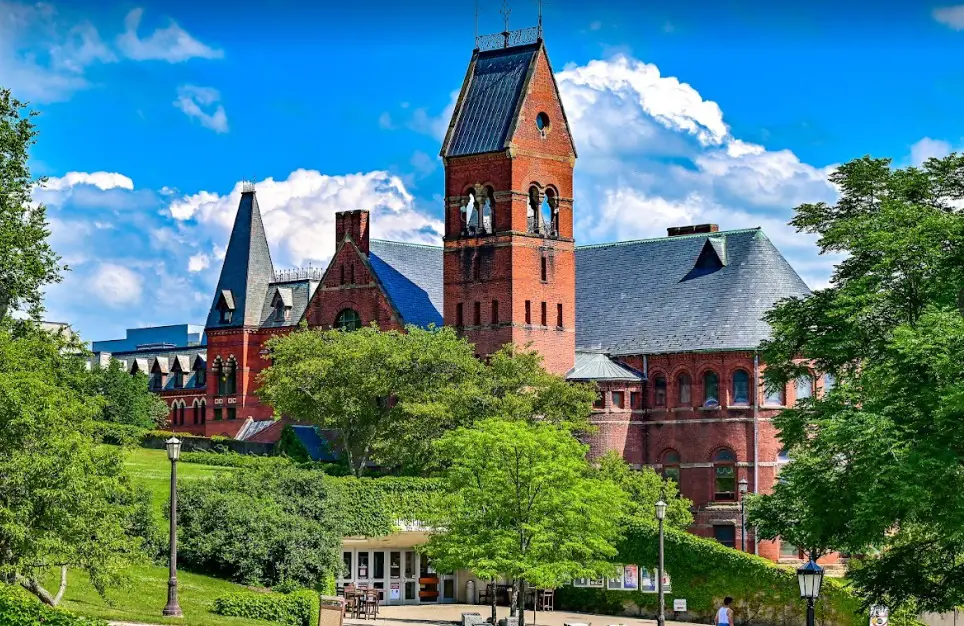
L’Université de Cornell se distingue comme un établissement de renommée mondiale, célèbre pour son excellence académique, ses programmes d’ingénierie de pointe, et une communauté étudiante dynamique. Fondée en 1865 à Ithaca, New York, cette institution membre de l’Ivy League continue d’incarner la tradition d’innovation et de leadership éducatif.
Histoire et fondation de Cornell
Dès sa création par Ezra Cornell et Andrew Dickson White, l’université a été envisagée comme un lieu où “toute personne peut trouver instruction dans n’importe quelle étude.” Cette vision progressiste de l’accessibilité et de la diversité académique reste au cœur de la philosophie de Cornell.
Programme académique à l’université de Cornell
L’Université de Cornell, située à Ithaca, New York, est reconnue mondialement pour son excellence académique et son classement parmi les meilleures universités du monde. Les programmes de Cornell sont diversifiés, couvrant de multiples disciplines académiques, allant des sciences humaines et sociales à l’ingénierie et les sciences appliquées.
Un large éventail de disciplines
Cornell offre une multitude de programmes à travers ses sept collèges de premier cycle et ses sept écoles supérieures, chacun étant un leader dans son domaine spécifique. Les étudiants peuvent choisir parmi environ 4 000 cours, offrant une flexibilité et une richesse académique inégalée. Parmi les domaines les plus prestigieux figurent les sciences de l’ingénierie, les sciences informatiques, la recherche en sciences biomédicales, et le droit.
Sciences et ingénierie
Le collège d’ingénierie de Cornell est particulièrement reconnu pour son engagement envers l’avancement de la recherche scientifique et technologique. Avec des programmes en génie civil, génie électrique, et informatique, ce collège favorise une approche multidisciplinaire pour résoudre des problèmes complexes du monde réel.
Droit et administration
Le Cornell Law School est réputé pour son excellente éducation juridique et son fort taux de placement dans des emplois de premier plan. Les étudiants en droit bénéficient d’une formation rigoureuse préparée par des professeurs renommés, avec un accent mis sur la pratique juridique internationale.
Sciences humaines et arts
Les étudiants intéressés par les sciences humaines trouveront une richesse de cours allant de la littérature anglaise aux études sur les médias, en passant par l’histoire et la philosophie. Le College of Arts and Sciences stimule la curiosité intellectuelle et permet aux étudiants de développer une pensée critique raffinée.


Innovation en recherche
La recherche est une pierre angulaire de l’éducation à Cornell, avec des contributions significatives dans des domaines comme le développement durable, la technologie quantique, et la santé globale. Le campus d’Ithaca, combiné avec les installations de recherche de Cornell à New York et au niveau mondial, fournit une toile de fond robuste pour l’exploration académique et la découverte.
Programmes d’études internationales
Cornell promeut également des opportunités d’études internationales, permettant aux étudiants d’acquérir une perspective globale dans leur domaine d’études. Les programmes d’échange et les stages à l’étranger sont encouragés, enrichissant ainsi l’expérience éducative des étudiants et les préparant à des carrières dans un environnement mondialisé.
Éducation progressive et personnalisée
L’approche éducative de Cornell est conçue pour s’adapter aux intérêts et aux ambitions individuelles des étudiants, leur permettant de personnaliser leur parcours académique. De la licence au doctorat, Cornell offre une formation qui n’est pas seulement axée sur l’acquisition de connaissances, mais aussi sur le développement de compétences pratiques et de leadership.
Bon à savoir :
Cornell est classée parmi les 20 meilleures universités mondiales dans plusieurs disciplines, affirmant son statut d’institution leader dans le domaine de l’éducation supérieure.
Admission à Cornell pour les candidats de premier cycle
L’admission à Cornell est hautement compétitive, attirant des candidats de premier plan de tout le monde. Pour les candidats de premier cycle, les exigences incluent d’excellentes notes, de fortes recommandations, et des essais personnels persuasifs. Les dates d’inscription varient selon les programmes, mais les candidatures sont généralement attendues pour début novembre pour les admissions anticipées.
1. Critères académiques
Pour être considéré pour l’admission en premier cycle, les candidats doivent présenter un dossier académique exceptionnel. Cornell recherche des étudiants ayant démontré une capacité à suivre et exceller dans un programme d’études avancées. Typiquement, cela inclut:
- Des notes élevées dans des cours de niveau avancé (AP, IB, ou le programme du diplôme national du baccalauréat français).
- Un GPA élevé (moyenne générale ajustée) : les candidats admis se situent souvent dans le top 10% de leur classe.
2. Scores standardisés
Bien que Cornell ait adopté une politique de test optionnel pour certaines admissions à cause de la pandémie de COVID-19, les scores SAT ou ACT étaient traditionnellement un composant clé des dossiers de candidature. Lorsqu’ils sont soumis, les scores médians se situent généralement autour de 1480-1560 pour le SAT et de 32-35 pour l’ACT.
3. Essais et lettres de recommandation
Les essais personnels offrent aux étudiants la possibilité de montrer leur personnalité, leurs aspirations et leur adéquation avec Cornell. De plus, les recommandations de professeurs ou de conseillers académiques jouent un rôle crucial en fournissant une perspective externe sur l’engagement académique et personnel de l’étudiant.
4. Exigences spécifiques par collège
Chaque collège au sein de l’Université de Cornell peut avoir des exigences supplémentaires. Par exemple, le College of Engineering exige des compétences avérées en mathématiques et en sciences, souvent démontrées par des résultats scolaires et des tests standardisés. En comparaison, le College of Arts and Sciences valorise une large palette d’intérêts académiques et une forte capacité en écriture.
5. Frais de scolarité et aide financière
Coûts d’éducation
Pour l’année académique 2025-2026, les frais de scolarité à Cornell s’élèvent à environ 60,000 USD, avec des coûts supplémentaires pour le logement, les repas, et d’autres dépenses estimés à 20,000 USD. Il est important de noter que ces chiffres peuvent varier selon les spécificités du programme et les besoins individuels des étudiants.
Aide financière
Cornell s’engage à rendre l’éducation accessible à tous les étudiants admis, indépendamment de leur situation financière. L’université offre une aide financière sous forme de bourses, de prêts et de programmes de travail-étude, basée sur les besoins financiers de l’étudiant.
Bon à savoir :
Environ 50% des étudiants de Cornell reçoivent une forme d’aide financière, avec un paquet d’aide moyen couvrant une grande partie des frais de scolarité annuels.
6. Stratégies pour les candidats
Préparation anticipée
Les futurs candidats devraient se concentrer sur l’excellence académique dès le début de leur scolarité secondaire, en prenant des cours avancés et en s’engageant dans des activités parascolaires pertinentes.
Conseils pour l’application
Soyez authentiques dans vos essais et mettez en avant des expériences uniques ou des défis que vous avez surmontés. La préparation pour les entretiens, bien que non obligatoire, peut également être bénéfique.

Processus d’admission pour les étudiants de cycle supérieur
1. Prérequis académiques
Pour intégrer un programme de cycle supérieur à Cornell, les candidats doivent posséder un diplôme de premier cycle dans un domaine pertinent à leur spécialisation envisagée. Un dossier académique exemplaire, avec un GPA (moyenne générale ajustée) de 3,5 ou supérieur, est souvent requis, particulièrement pour les domaines tels que les sciences, l’ingénierie, ou l’informatique.
2. Scores des tests standardisés
Les programmes à Cornell peuvent exiger des scores de tests standardisés comme le GRE (Graduate Record Examinations). Malgré la suspension temporaire de cette exigence pour certains programmes due à la pandémie, il est crucial de vérifier les besoins actuels avec le département concerné. Pour les programmes de gestion, le GMAT peut également être requis.
3. Déclarations personnelles et lettres de recommandation
Les candidats doivent soumettre des déclarations personnelles qui articulent clairement leur motivation à poursuivre des études supérieures à Cornell, en mettant en lumière leur expérience de recherche et leurs objectifs professionnels. Les lettres de recommandation de professeurs ou mentors qui connaissent bien les compétences de recherche du candidat sont également essentielles.
4. Expérience de recherche et publications
Pour les candidats aux programmes de doctorat, il est avantageux de démontrer une expérience de recherche solide ainsi que des publications pertinentes. Ces éléments soulignent la capacité du candidat à conduire des recherches indépendantes et à apporter une contribution significative à la communauté scientifique.
Frais de scolarité et options de financement
Coûts
Les frais de scolarité annuels pour les étudiants de cycle supérieur à Cornell varient entre 29,500 USD et 38,000 USD, en fonction du programme et du collège.
Options de financement
Cornell offre diverses possibilités de financement pour les étudiants de cycle supérieur, telles que des assistanats de recherche (RA) et d’enseignement (TA), qui couvrent souvent la majorité ou la totalité des frais de scolarité et incluent une allocation de subsistance.
Conseils pour les candidats
Alignement avec les intérêts de recherche
Il est crucial de démontrer un alignement entre vos intérêts de recherche et les spécialités des facultés du programme choisi. Entrer en contact avec des membres potentiels de la faculté avant de postuler peut être très bénéfique.
Préparation de la candidature
Il est recommandé de préparer soigneusement vos documents de candidature et de les soumettre bien avant la date limite pour permettre une révision approfondie.

Vie étudiante à Cornell
Infrastructure et installations
Cornell, réputée pour son campus pittoresque à Ithaca, offre des ressources modernes telles que la bibliothèque Uris et le Cornell Tech campus à New York. Ces installations de pointe soutiennent l’excellence académique des étudiants dans un cadre global reconnu.
Logement et vie résidentielle
Les résidences universitaires de Cornell offrent un environnement accueillant, favorisant l’intégration et le sentiment de communauté parmi les nouveaux étudiants. Pour les étudiants avancés, diverses options de logement sont disponibles, répondant aux besoins de ceux qui poursuivent une licence ou des études supérieures.
Activités et engagement étudiant
Avec plus de 1,000 clubs et organisations, les étudiants de Cornell s’engagent dans une variété de domaines, allant de l’informatique aux arts, enrichissant ainsi leur expérience universitaire et développant des compétences en leadership.
Sports et loisirs
Les installations sportives sur le campus, incluant des gymnases, piscines et terrains, facilitent une vie étudiante dynamique et saine. Ces ressources contribuent au bien-être général des étudiants, leur permettant de rester actifs tout au long de l’année académique.
Arts et culture
En tant que centre culturel, Cornell offre des théâtres, des galeries et des événements qui enrichissent l’expérience universitaire. Les étudiants peuvent participer à diverses productions artistiques, reflétant l’engagement de l’école envers les arts.
Soutien académique et professionnel
L’université met à disposition des étudiants des centres de tutorat, des ateliers d’écriture, et des conseils de carrière, aidant ainsi à préparer les diplômés pour le marché global. Ces ressources sont essentielles pour soutenir le parcours académique et professionnel des étudiants, du premier cycle jusqu’à l’obtention de leur diplôme.
Chaque aspect du campus de Cornell est pensé pour enrichir l’expérience éducative des étudiants, en les dotant des compétences nécessaires pour exceller dans leurs carrières futures. Avec son classement élevé et sa réputation mondiale, Cornell continue d’attirer des étudiants de tous les États et de l’étranger, prouvant son statut comme une des premières universités du monde en termes de science, enseignement, et recherche.

Anciens élèves célèbres
Cornell a produit un nombre impressionnant de diplômés qui ont significativement influencé leur domaine, y compris des lauréats de prix Nobel, des chefs d’entreprise de premier plan, et des politiciens influents. Cette tradition d’excellence continue de motiver les étudiants actuels.
1. Toni Morrison (1931-2019)
Toni Morrison, lauréate du prix Nobel de littérature en 1993, a obtenu son master en anglais à Cornell en 1955. Ses œuvres, profondément ancrées dans la culture afro-américaine, ont exploré les complexités de la race et de l’identité en Amérique. Morrison est surtout connue pour ses romans tels que “Beloved”, “Song of Solomon” et “The Bluest Eye”.
2. Ruth Bader Ginsburg (1933-2020)
Diplômée de Cornell en 1954, Ruth Bader Ginsburg a été la deuxième femme nommée à la Cour suprême des États-Unis. Elle est célèbre pour son travail de défense des droits des femmes et des minorités, et a laissé une empreinte indélébile dans le domaine juridique.
3. E. B. White (1899-1985)
Elwyn Brooks White, diplômé de Cornell en 1921, est un célèbre écrivain américain, connu pour ses contributions en tant que rédacteur à “The New Yorker” ainsi que pour ses ouvrages pour enfants, tels que “Charlotte’s Web” et “Stuart Little”.
4. Dr. John O. Agwunobi
John O. Agwunobi a obtenu son MBA à Cornell et a une carrière distinguée dans la santé publique et l’administration. Il a servi comme Assistant Secretary for Health sous l’administration de George W. Bush et est actuellement PDG de Herbalife.
5. Sandra Steingraber
Biologiste reconnue et écologiste, Sandra Steingraber a reçu son doctorat en biologie de Cornell. Elle est célèbre pour son activisme et ses écrits sur les questions environnementales et la santé publique, notamment son livre influent “Living Downstream”.
6. Myron Rolle
Ancien joueur de football américain de la NFL et boursier Rhodes, Myron Rolle a obtenu son master en sciences médicales à Cornell. Après sa carrière dans le sport professionnel, il a poursuivi ses études en neurochirurgie.
Pourquoi choisir Cornell ?
Choisir Cornell, c’est choisir une éducation qui va au-delà du savoir académique. C’est choisir une communauté qui promeut la diversité, l’innovation, et l’excellence. Chaque programme, chaque cours est conçu pour préparer les étudiants à être non seulement des penseurs et des leaders compétents, mais aussi des citoyens responsables et éclairés du monde.
Bon à savoir :
Cornell offre des opportunités uniques de participer à des recherches de pointe dès le premier cycle, permettant aux étudiants de contribuer à des projets innovants qui ont un impact réel.
En conclusion, l’Université de Cornell continue de se distinguer par son engagement envers l’excellence académique et sa contribution significative à la société. Pour ceux qui cherchent une éducation qui défie les normes et encourage la croissance personnelle et professionnelle, Cornell représente un choix sans pareil.

Vous êtes prêt(e) à étudier à l’université de Cornell ?
Nous sommes là pour vous aider


Nos services
Admission Cornell 2026 : taux par college
Cornell est la plus grande des Ivies avec 16000 undergraduates, et la plus accessible : taux global 7,9 pourcent (promotion 2029). Mais les taux varient par college : College of Arts & Sciences 7 pourcent, Engineering 9 pourcent, Hotel Administration 10 pourcent, AAP Architecture 10 pourcent, ILR 11 pourcent, Human Ecology 12 pourcent, CALS 15 pourcent.
Admis : SAT median 1500 (range 1440-1550), ACT 34. Cornell attend Mention Tres Bien au Bac, avec specialites adaptees au college vise : Maths + Physique-Chimie pour Engineering, HGGSP pour ILR, Maths + SVT pour CALS.
Frais Cornell 2026 et aide financiere need-aware
Cout complet Cornell 2025-2026 : 92000 USD par an (85000 euros). Contrairement a Harvard/Yale/Princeton, Cornell est need-aware pour les candidats internationaux (votre demande d’aide peut influer sur l’admission). Mais Cornell couvre 100 pourcent des besoins des admis internationaux avec bourse moyenne 62000 USD par an. 47 pourcent des etudiants recoivent une aide.
Choisir le bon college Cornell pour candidater
Tres important : vous candidatez a UN college Cornell specifique, pas a Cornell en general. Les 7 colleges : College of Arts & Sciences (polyvalent), Engineering (maths/physique/info), Hotel Administration (hospitality, unique en Ivy), CALS (agriculture + Dyson business), ILR (relations du travail, droit du travail), Human Ecology, AAP (architecture). Cornell Tech a Roosevelt Island est uniquement pour les Masters.
Étudier à l’université de Leeds
Un établissement britannique à la réputation mondiale, idéal pour ses études à l’international.
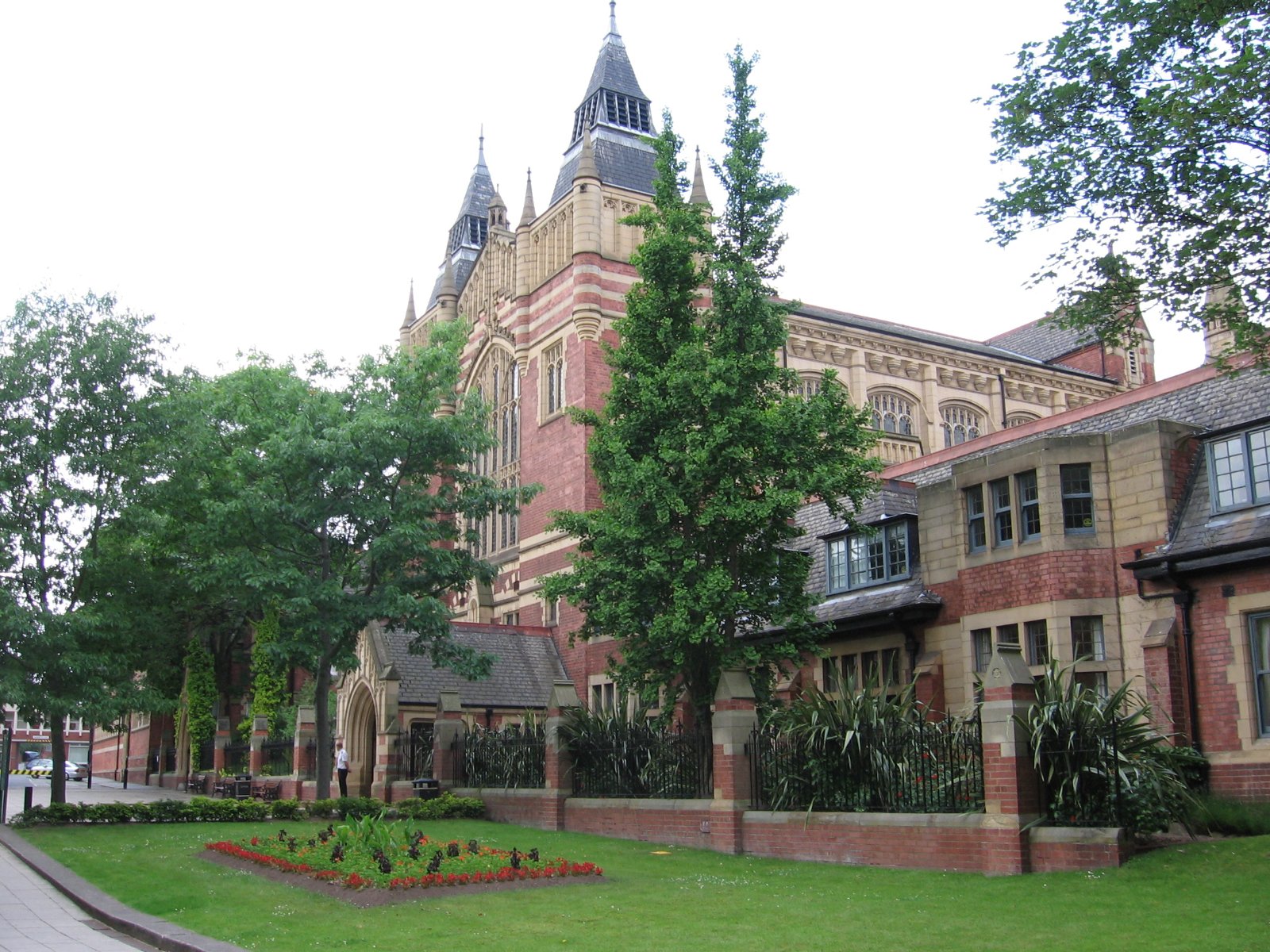
L’université de Leeds est reconnue comme l’une des plus prestigieuses universités du Royaume-Uni. Positionnée dans le top des 100 meilleures universités au monde, l’établissement a été fondée en 1904, et fait partie des membres fondateurs du Russell Group.
Cette grande école figure régulièrement dans les classements mondiaux des meilleures universités, aux côtés de prestigieuses institutions telles que Harvard, Cambridge ou encore l’École Polytechnique. Son excellence académique attire de nombreux doctorants et étudiants en quête d’une formation de haut niveau.
Chaque année, l’Université de Leeds accueille de nombreux étudiants étrangers, qui viennent se former ou continuer leurs études, au cœur d’une des universités les plus connues en Europe.
Très axée sur la recherche scientifique, l’université s’impose comme l’une des meilleures en ingénierie, mais brille également parmi les écoles de commerce.
Histoire et description de l’université
Située dans la région de Leeds au Royaume-Uni, l’université, appelée de l’autre côté de la manche “University Of Leeds”, loge plus de 10 000 étudiants durant leurs études. Elle est reconnue pour ses formations de pointe, qui mènent à une insertion professionnelle rapide et réussie dans le monde du travail.
Très appréciée des recruteurs, l’Université de Leeds est un établissement à la fois dynamique et international. Il se concentre sur l’employabilité de ses élèves, ainsi que l’enseignement des compétences nécessaires au marché de l’emploi.
Excellence académique
L’excellence académique de l’Université de Leeds n’est plus à démontrer. L’établissement se classe parmi les meilleures universités, que ce soit au Royaume-Uni, en Europe ou dans le monde.
L’université détient la 75e position mondiale, et la 30e position des meilleures universités d’Europe. En Angleterre, le QS World University Rankings 2025 a classé l’université en 11e position.
Mais si l’université est célèbre, c’est également grâce à certaines matières ou elle excelle. Le Shanghai Ranking classe l’University Of Leeds en pole position des meilleures universités en Business Administration.
Reconnue pour son école de commerce, l’University Of Leeds détient la triple accréditation de l’Association des MBA, l’Advance Collegiate Schools of Business et l’European Quality Improvement System.
Les différents programmes de l’université de Leeds
L’Université de Leeds propose de nombreux diplômes, que ce soit pour les étudiants en premier cycle ou en cycle secondaire. Que vous cherchiez à commencer une licence ou un bien continuer vers un master, l’University Of Leeds propose de nombreuses spécialisations au sein de ses facultés.
Le campus de l’université est divisé en huit facultés :
La faculté des arts
La Leeds Arts University propose pas moins de 19 bachelors et diplômes de premier cycle. Elle peut se vanter d’être l’une des meilleures universités spécialisées en Arts au nord de l’Angleterre. Elle propose des bachelors et des masters d’acteurs, d’écriture créative ou encore de comics et Concept Art.
L’ecole de commerce
La Leeds University Business School se positionne parmi les 1% des meilleures écoles de commerce dans le monde grâce à sa triple couronne qui lui permet de décerner trois types d’accréditation.
Economie, finance, business international ou management et marketing, La Leeds University Business School propose divers bachelors, masters et MBA très appréciés des recruteurs.
La faculté de l’éducation, du droit et des sciences sociales
La faculté de droit, de l’éducation et des sciences sociales se divise en 4 écoles :
- L’ecole de droit : qui propose des diplômes en droit des finances, justice social, criminologie et d’autres.
- L’école de l’éducation : pour former à l’enseignement de tout âge et la psychologie de l’enseignement.
- L’école de politique et d’études internationale : pour former les étudiants aux relations internationales, à la diplomatie ainsi qu’à la politique économique.
- L’école de sociologie : qui offre un enseignement complet sur la culture, la recherche sociale, l’inclusion ou encore l’étude des genres.
La faculté de sciences biologiques
Le département des sciences biologiques est reconnu pour être une des universités de premier plan dans le domaine des sciences de la vie en termes de recherche et de diversité.
Celui-ci se décompose en trois écoles :
- L’ecole de biologie
- L’ecole de sciences biomédicales
- L’ecole de biologie moléculaire et cellulaire
Le faculté d’ingénierie et des sciences physiques
Parmi les trois domaines où se démarquent l’University Of Leeds, le milieu de l’ingénierie en fait partie. Tournée vers la recherche académique et scientifique, l’université propose différents diplômes : bachelors et master en génie chimique, civil, mécanique, masters en astrophysique, physique, chimie, mathématique…
La faculté de l’Environnement
Pour relever les défis majeurs de la société, le département Environnement de l’University Of Leeds est constitué d’une communauté de chercheurs tournés vers l’innovation et la recherche constante. Leur but ? Découvrir de nouveaux moyens de penser l’avenir.
La fac de l’Environnement se divise en quatre écoles :
- L’École de la Terre et de l’Environnement
- L’Ecole des sciences de l’alimentation et de la nutrition
- L’Ecole de géologie
- L’Institut d’études sur les transports
La fac de médecine et de santé
Enfin, le département de médecine propose des cours donnés dans un cadre dynamique et innovant. Engagée dans un travail d’égalité et d’inclusivité, l’école de médecine est également reconnue pour son cadre chaleureux.
Les élèves ont le choix entre :
- L’École de psychologie
- L’Ecole de médecine dentaire
- L’Ecole de santé
- L’Ecole de médecine
Outre ses formations initiales et ses programmes de bachelor, l’université propose également des doubles diplômes en collaboration avec des universités partenaires de renom, offrant ainsi une dimension internationale et une spécialisation adaptée au projet professionnel de chaque étudiant.
Les critères d’admission
L’Université de Leeds met l’accent sur la qualité de travail, la tendance à la hausse des notes et la détermination des étudiants.
Les critères d’admission varient d’un cours à l’autre, c’est pourquoi nous vous recommandons de vérifier sur le site de l’université les critères liés au cours que vous souhaitez intégrer.
En règle générale, les candidats français doivent :
- Maîtriser la langue anglaise
- Obtenir une note de 14 au moins au baccalauréat français s’ils souhaitent entrer en première cycle ;
- Avoir obtenu une licence (ou équivalent) avec mention, pour un niveau master.


Le processus de candidature au 1er cycle
Si vous commencez votre première année d’études supérieures (undergraduate), alors le dépôt de votre candidature doit passer par la plateforme UCAS, qui recense les principales universités du Royaume-Uni.
Étape 1 : choisir son cursus
Une fois sur la plateforme UCAS, sélectionnez votre université et le cours que vous souhaitez suivre.
Étape 2 : rédiger une lettre de motivation
La lettre de motivation, ou “personal statement” est une étape cruciale du processus de sélection. Vous devez appuyer votre candidature par une lettre à la fois claire, originale et persuasive.Pour rédiger une bonne lettre de motivation, n’hésitez pas à vous appuyer sur les recommandations de professeurs. Your Dream School vous accompagne également dans ce procédé, pour mettre toutes les chances de votre côté.
Étape 3 : fournir les documents demandés
Dépendamment de votre niveau ou de la formation que vous souhaitez intégrer, l’Université de Leeds peut vous demander des informations supplémentaires.
En règle générale, vous devrez fournir en version numérique ou scannée :
- Deux lettres de recommandation (dépendamment du cours choisi)
- Vos diplômes et /ou relevés de notes
- Une copie de votre permis d’étude ou visa
- Une lettre de motivation
- Un CV à jour
- Une preuve de maitrise d’anglais
- Un portfolio
- Un test de traduction

Le processus de candidature aux cycles supérieurs
Le dépôt de candidature pour le second cycle (en master) est presque identique à celui du premier cycle (undergraduate) . Celui-ci varie légèrement, principalement en ce qui concerne le lieu où envoyer sa candidature, qui n’est plus la plateforme UCAS mais l’Université de Leeds elle-même.
Étape 1 : trouver son programme de master
La première étape est de trouver votre programme de master, parmi les cours dispensés. Il faut noter que vous n’êtes pas obligés de faire un master dans la même spécialisation que votre licence. Vous pouvez aussi choisir de vous excentrer un peu, pour élargir vos connaissances et afficher un profil pluridisciplinaire.
Si vous ne savez pas quel programme de master choisir à l’Université de Leeds, Your Dream School est à vos côtés pour vous aider à emprunter le meilleur chemin pour une carrière réussie.
Étape 2 : vérifier les conditions d’éligibilité de votre cursus
Chaque cursus demande des prérequis qui lui sont propres. En second cycle, il faut évidemment veiller à :
- Détenir un diplôme de premier cycle dans un domaine précis
- Avoir un bon niveau d’anglais
Dans certains cas, des tests d’admission et concours sont nécessaires pour accéder à une formation particulière.
Étape 3 : constituer votre dossier et le déposer dans les temps
La troisième et dernière étape consiste à boucler son dossier d’admission. Pour cela, il faut fournir tous les documents demandés, en version numérique ou traduits et scannés.
Voici la liste des documents qui vous seront demandés pour votre dépôt de candidature en cycle master :
- Vos relevés de notes et diplômes
- Une lettre de motivation
- Une ou plusieurs lettres de recommandation
- Les résultats de vos tests d’admission
- Votre CV
Gardez à l’esprit que cette liste est non exhaustive, et que les documents demandés dépendent également de chaque université, ainsi que du programme que vous choisissez.Tous ces documents se doivent d’être traduits en anglais, par un traducteur assermenté. Vérifiez les délais de dépôt de candidature et commencez votre dossier à l’avance pour éviter les imprévus.
Une université ouverte aux étudiants internationaux
L’Université de Leeds plait, et elle le sait bien ! Comme nombre d’autres universités britanniques, elle attire de nombreux étudiants internationaux entre ses murs. En moyenne, 33% des élèves de l’université de Leeds sont étrangers .
Pour accompagner ces personnes dans leur voyage et leur implantation dans un nouveau pays, l’université a mis en place un programme de soutien aux étudiants internationaux.
Ce programme intègre une assistance linguistique, mais également des programmes culturels pour une meilleure adaptation, et des conseils sur les visas.
Leeds fait en sorte d’offrir à ses étudiants une belle expérience entre ses murs. Sa réputation n’est plus à faire, aussi bien sur le plan académique, que sur l’objectif de l’université d’être à la fois un incubateur de réussite, dans un environnement sain et chaleureux.
Les frais de scolarité et coûts de la vie à l’université de Leeds
D’après nos estimations, une année universitaire 2025-2026 à l’Université de Leeds coûte entre £20 000 et £30 000 .
Cela sans compter les frais annexes qui concernent le logement, la nourriture, les déplacements et bien d’autres.
Voici une estimation de vos frais en tant qu’étudiant par mois :
| Secteur de dépenses | Montant moyen estimé |
| Logement dans une résidence universitaire de l’université de Leeds | £600 |
| Nourriture | £150 |
| Forfaits téléphoniques | £20 |
| Transports | £40 |
| restaurants, bars, etc | £100 |
| Loisirs (Cinéma, activités, etc) | £20 à £100 |
| Salle de sport | £15 |
En bref, il faudra compter en moyenne £1100 par mois, soit l’équivalent de 1300€ pour vivre en Angleterre.

Les bourses disponibles pour étudier à Leeds
Ces frais vous semblent élevés ? Pas d’inquiétude, car l’Université de Leeds propose différentes bourses pour aider les étudiants étrangers à faire leurs études au Royaume-Uni.
Leeds propose de nombreuses bourses pour les étudiants britanniques ou étrangers .
On retrouve par exemple :
- Et d’autres bourses, données par le gouvernement anglais ou par l’Université de Leeds elle-même.
- La bourse de master de Leeds équivaut à £500, exemptés des frais de scolarité pour les étudiants internationaux en master.
- La Dean’s Excellence Business School Undergraduate International Scholarships, qui permet de réduire les frais d’études de 50% pour les étudiants en business et économie.


La vie étudiante à Leeds
Lorsqu’on connaît l’intérêt de l’Université de Leeds pour le bien-être de ses étudiants sur le campus, il est facile d’imaginer que l’établissement met la vie étudiante au cœur de ses préoccupations.
Les infrastructures pour les étudiants
Les installations et infrastructures de l’Université de Leeds sont reconnues à l’international.
L’université dispose en effet de plusieurs laboratoires modernes, idéal pour les étudiants et la recherche.
Le centre sportif Edge, au cœur de l’Université de Leeds, propose une salle de fitness, une piscine ainsi que d’un mur d’escalade, de cours de tennis et de différentes classes.
L’université dispose enfin d’une grande bibliothèque, la Brotherton Library, et d’une médiathèque pour les besoins et recherches des étudiants.
Les différentes activités de l’université de Leeds
L’Université de Leeds dispose de l’une des plus grandes unions estudiantines du pays avec plus de 300 clubs d’activités et sociétés.
Gérés par la LUU (Leeds University Union), vous pourrez intégrer des groupes divers et variés allant des clubs de sports classiques, à des clubs de danse k-pop ou encore de Canoë.
Ces personnalités célèbres qui ont étudié à Leeds
Étant donné sa réputation, c’est sans étonnement que de nombreuses personnalités célèbres, sportifs, acteurs ou politiques, ont été formés à Leeds.
- Matthias Maurer, astronaute
- Wole Soyinka, prix Nobel de littérature en 1986
- George Porter, prix Nobel de chimie 1967
- Nambaryn Enkhbayar, président de Mongolie
- Emma Macke, actrice franco-britannique

Augmentez vos chances d’étudier à la célèbre University Of Leeds avec Your Deam School
Vous rêvez d’aller à Leeds ? Your Dream School vous accompagne pas à pas dans vos démarches et vous conseille à chaque étape, pour une année universitaire réussie !
Nos services
Admission University of Leeds 2026 pour Francais
University of Leeds est Russell Group, 82eme QS 2026. Fondee en 1904, 38000 etudiants dont 26% internationaux. L’une des plus grandes universites UK avec un campus urbain dynamique dans le Yorkshire. Admission UCAS 29 janvier. Taux d’admission environ 65% global, 15% Medicine, 20% Dentistry. Pour Francais : Mention Bien minimum (15+ sur 20), Mention Tres Bien pour programmes selectifs. IELTS 6.0-7.0 selon programme.
Frais Leeds 2026 et vie etudiante
Frais Leeds International 2025-2026 : 24000-33000 livres par an. Arts/Humanities 24500, Engineering 29000, Medicine 33000 pre-clinique / 44000 clinique. Logement Leeds 450-700 livres par mois, cout de la vie 45% inferieur a Londres. Budget total annuel 38000-50000 livres (44000-58000 euros). Leeds Student Union tres active, 300+ societes.
Programmes phares Leeds : Business, Engineering, Media
Leeds excelle en Business School (LUBS, top 20 UK), Engineering, Media and Communication, Law, Medicine. Leeds Business School est accreditee Triple Crown. L’universite a produit 7 prix Nobel parmi anciens. Reputation pour sa vie sociale etudiante classee n1 UK par Times Higher Education. Post-Bachelor : Graduate Visa 2 ans.
Etudier à la London School of Economics and Political Sciences (LSE)
Étudier à la LSE
L’université de référence en sciences sociales
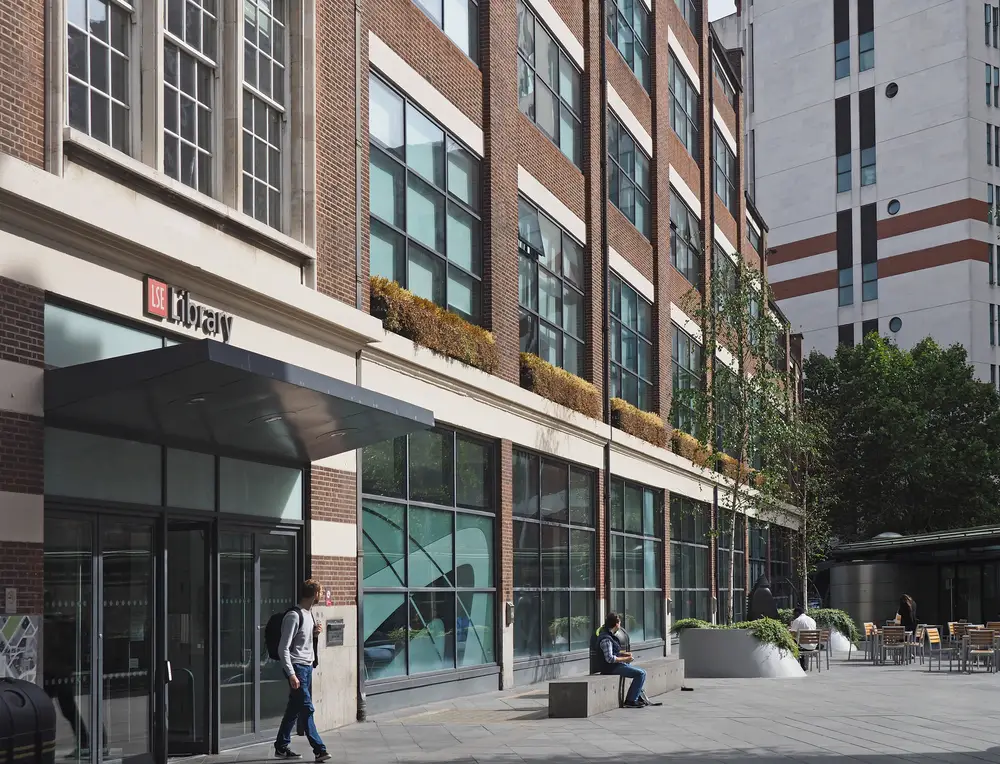
La London School of Economics and Political Sciences (LSE), est une université située en plein coeur du quartier Holborn, à proximité de la City de Londres. Fondée en 1895, la LSE est, dans le domaine des sciences sociales et politiques, reconnue comme une des universités les plus réputées du monde.
Elle a d’ailleurs été classée 2ème université mondiale en sciences sociales dans le Classement QS World University Ranking en 2018.
La London School of Economics (LSE) en quelques mots
La LSE est réputée pour former de nombreux leaders dans le monde des affaires et de la politique, mais aussi dans les domaines du droit, de l’histoire, de l’économie, de la philosophie et des médias. 19 de ses anciens élèves et professeurs ont ainsi reçu le prix Nobel (dont 13 en économie, 3 Nobel de la Paix et 2 en Littérature) et 52 sont devenus chefs d’État.
L’université dispose aussi de la plus grande bibliothèque des sciences économiques et sociales du monde.
Elle fait également partie du “Golden Triangle” (Triangle d’Or) des universités anglaises, avec Oxford, Cambridge, UCL, Imperial College et King’s College, la LSE.
Ressemblant à Sciences Po Paris par de nombreux aspects, il est possible d’y étudier de nombreuses disciplines en lien avec les sciences sociales et politiques, le droit, l’économie, la finance, la gestion, les relations internationales, l’histoire, ou encore la philosophie.
Vie étudiante
Cette université très prestigieuse s’adresse donc à des étudiants avec un très fort intérêt pour les sciences sociales et politiques ainsi que de brillants résultats académiques.
Quel est le processus de sélection à la London School of Economics (LSE)
Le processus de sélection à la LSE est divisé en plusieurs étapes que nous vous décrivons ci-dessous :
LE DOSSIER DE CANDIDATURE SUR UCAS
Vous devrez tout d’abord soumettre votre dossier de candidature sur la plateforme UCAS, l’équivalent de Parcoursup en Angleterre. Ce dossier comprend une lettre de motivation (Personal statement) ainsi qu’une lettre de recommandation d’un de vos professeurs.
LE PASSAGE D‘UN EXAMEN D’ANGLAIS STANDARDISÉ
Il vous sera également demandé de démontrer une excellente maîtrise de la langue anglaise et vous devrez donc généralement passer un examen d’anglais standardisé comme l’IELTS.
L‘OFFRE CONDITIONNELLE D’ADMISSION
Enfin, si votre dossier est retenu à l’issue du processus de sélection, vous recevrez alors une offre “conditionnelle” d’admission. Cela signifie que vous ne serez définitivement admis qu’à condition d’obtenir des résultats minimum au Baccalauréat (le plus souvent une mention “ Bien” au Baccalauréat français) et à un examen d’anglais standardisé (généralement entre 6.5 et 7.5 à l’IELTS).
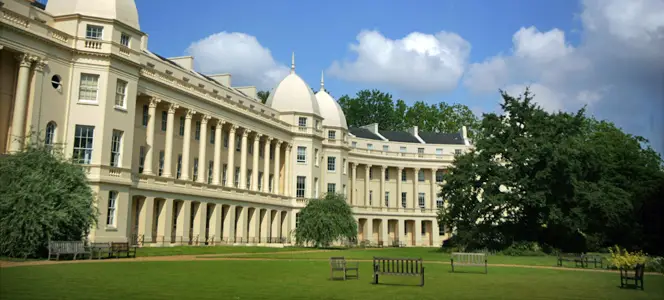
Quand faut-il commencer à vous préparer pour la London School of Economics (LSE) ?
La date limite pour postuler à la London School of Economics (LSE) est fixée au 15 janvier de l’année de Terminale.
Quel est le profil des étudiants de la London School of Economics (LSE) ?
La LSE est une université très sélective. Nous vous recommandons de candidater à cette université si vous pouvez justifier d’excellents résultats académiques et que vous êtes assuré d’obtenir une mention « Bien » ou “Très Bien” au Baccalauréat.
Vous êtes prêt(e) à étudier à la London School of Economics (LSE) ?
Nous sommes là pour vous aider
Queen Mary University of London
Academic excellence in a centrally located London campus

Calling all international students
The university is a great destination for international students looking to study in the UK. Queen Mary promotes diversity and therefore prides itself on having its doors open to people of all backgrounds: 44% of students are from overseas and its diverse community of staff and students represent over 160 different countries from around the world.
History and campus

The university was formed from the merger of 4 historic London institutions: Queen Mary College, Westfield College, St Bartholomew’s Hospital Medical College and The London Hospital Medical College, which means that its five campuses span such different and diverse areas of England’s capital as Whitechapel, Charterhouse Square, West Smithfield and Regent’s Canal. A university experience in the heart of London … what else could you want?
Well, there’s more to get excited about! Queen Mary’s main campus, called Mile End, is one of the largest independent university campuses in London. Situated right by the Regent’s Canal, the campus offers a vast array of features: a 24-hour library, four computer labs, an arts quarter, as well as providing access to a plethora of bars, cafes and sports pitches. One student notes, “It’s nice having everything all in one location at the Mile End campus. There’s a real sense of community. Campus is almost like its own little village- our own little space in London” (Zoe : QMUL website). The main library of the university is also located on the Mile End campus, with Whitechapel and West Smithfield being host to the medical libraries.
Well, there’s more to get excited about! Queen Mary’s main campus, called Mile End, is one of the largest independent university campuses in London. Situated right by the Regent’s Canal, the campus offers a vast array of features: a 24-hour library, four computer labs, an arts quarter, as well as providing access to a plethora of bars, cafes and sports pitches. One student notes, “It’s nice having everything all in one location at the Mile End campus. There’s a real sense of community. Campus is almost like its own little village- our own little space in London” (Zoe : QMUL website). The main library of the university is also located on the Mile End campus, with Whitechapel and West Smithfield being host to the medical libraries.
The local area
It is worth noting that East London has been transformed in recent years given the large quantity of structural development and improvement as well as an influx of commercial and residential property investment. It has been tipped as “one of the most exciting parts of London” by British GQ magazine and boasts an unrivalled culinary and social hub for students. Queen Mary can offer guaranteed accommodation for all its first-year students in prime London location: each room comes with Internet access and an en-suite bathroom, and all have access to Wi-Fi across each of their five campuses using the eduroam network.
Academic Matters
On the academic side of things, Queen Mary thrives. According to the QS Subject Rankings 2018, the university places top 50 in the world in English, Drama and Law. Success in areas such as these, in combination with the international excellence that characterizes Queen Mary’s research department, should demonstrate the validity of the claim that this university poses as a first-choice pick for those applying to university and who are seeking to study in London.
STUDENT LIFE

Queen Mary home to one of the most successful Student Unions in the country, whose motto is “Together we improve students’ lives”. What the union has on offer may range from Sports and Fitness opportunities, through to an Academic Advice Service, as well as providing a host of social spaces: a multifaith centre, restaurants and a variety of lively drink spots such as The Griffin Inn bar and kitchen and The Shield.
The Union offers groups and societies that range from volunteering to the participation in sports teams. The societies and events that take place here in the Student Union are a starting point for others: in 2019, Queen Mary was lucky enough to welcome none other than Microsoft founder Bill Gates to come to speak on his roles as “world-leading technologist, business leader and philanthropist”, as The Complete University Guide 2019 notes. With figures such as Bill Gates gracing the grounds of Queen Mary you know the university means business! If the prospect of living and working in London seems attractive, then it may well be the university for you.
How do I apply?
Queen Mary University of London requires strong academic results and rigorous preparation is needed.
What are the different stages of the application?
There are several steps:
- Application
- Conditional offer
- Acceptance
The details of these steps are covered below.
To go further, read our guide: London Metropolitan University: Admissions & Requirements.
How do I apply?
How to begin an application:
Conditional offer and acceptance:
If students succeed in all these stages, in January they will receive a ‘conditional offer’ of admission. This means that they will be accepted if they attain the required marks (most often a high grade in your end of high school studies, and in a standardized English exam: 7.5 in the IELTS for example).
What is the deadline for applying?
Deadlines:
The deadline for applications to Queen Mary University of London is 15th January of a students’ final year of secondary school or sixth-form college (Year 12).
For more detail, see also: City, University of London: Admissions & Requirements.
When do you have to start preparing for Queen Mary University of London?
It is recommended that students try to find aspects of their chosen course that genuinely interest them and to think deeply about why they wish to study this subject : after all, students are applying to study this subject full time for at least 3 years.
Is it possible to visit the campus?
Open day at Queen Mary is 5th October 2019. Registration is not necessary, although students may need to register for the most popular sessions. For more information, see this page.
Related reading: Royal Holloway: Admissions, Requirements & Fees.
What is the profile of the students at QMUL?
Because of the high selectivity of the university, we recommend to apply to this university only if yo can show strong academic results and you are sure to obtain at least a Mention ‘Assez Bien’ grade in the Baccalaureate.
Moreover, you must also show an excellent command of the English language.
Fees
Fees 2019-2020*
*Tuition fees subject to increase with inflation in subsequent years
When taking into account the cost of any university, you should also consider the cost of living.
When taking into account the cost of any university, you should also consider the cost of living.
Oxford provides an estimate for the cost of living, which can be found on its website: they advise budgeting between £1,058 and £1,643 for each month that you are in Oxford. You should budget this amount for 6-9 months of the year, depending on whether you will be staying at Oxford during the holidays.
From this, you might predict an annual average budget of around £10,567 per year, including accommodation, transport, personal expenses etc.
Are you ready to study at Amsterdam University College ?
We’re here to help you succeed in your application.
Our Google reviews
A few key figures about Your Dream School
They got in with Your Dream School
Reassurance is what matters most when choosing your guidance.
« …I managed to get my offer to UCL in London, one of the best English universities, which was my first choice. Their support was consistent and personal. »
« I decided to apply to university in England for my Bachelor’s and I asked Your Dream School to support me. I’m so glad I did! I’m excited to go to London to study next year! »
« I felt their authentic and personal engagement and involvement when it came to my daughter, which was extremely precious throughout the process. »
« Your Dream School offers very thorough support: help with drafting essays, preparation for English exams and interviews. I wholeheartedly recommend Your Dream School. »
Our Services
Bachelor & Master Admission Coaching
Complete support to build a winning application.
IELTS & TOEFL Preparation
One-on-one tutoring to reach the score your target university requires.
Admission Test Preparation
SAT, ACT, GMAT, GRE, LNAT, MAT : targeted prep to hit the right score.
Academic Tutoring
International academic support (IB, A-Levels, AP) for students aiming abroad.
Study at NYU (New York University)
A campus in the heart of Manhattan

Based in one of the most globalized cities in the world, New York University (NYU) was founded in 1831 and now has campuses in Abu Dhabi and Shanghai in addition to a host of other centers across the globe. NYU was founded by Albert Gallatin, the Secretary of the Treasury in the cabinets of the 2nd and 3rd presidents of the US, James Madison and Thomas Jefferson, also the first president of NYU. Needless to say, its history is quite literally linked to the “Founding Fathers” of the United States.
Arguably reflecting the city’s reputation for diversity and acceptance, NYU has the particularity of having been non-denominational from the start : contrary to all other top American colleges at the time of their creation
New York University (NYU) in a few words

NYU now boasts over 26,000 undergraduate students and nearly as many graduates and in 2014, attracted more international students than any other American university, according to figures published in the “Open Doors” study by the Institute of International Education (IIE). In light of its growth and increasing popularity, the university has become more and more selective in part due to a nearly 100% increase in applications between 2007 and 2017. That year, NYU accepted 27% of its applicants. In 2017, that figure dropped to 19%.
The University has extremely strong ties with the city of New York, seen both in its use of its torch logo, like the Statue of Liberty, and also its location in central New York within the neighborhood Greenwich Village and more specifically, Washington Square. This area has for many years been known as a hub of cultural activity in New York was at one time home to historical figures as diverse as NYU chemistry Professor, creator of the telegraph and namesake of Morse code, Samuel Morse and abstract expressionist Jackson Pollock and cradle of the modern LGBT movement.
Academics
With more than 230 areas of study, NYU offers something for everyone. Its top ranked programs are social sciences (8th by the Academic Ranking of World Universities, 15th by the Times Higher Education World University Rankings,and 16th by the QS World University Rankings); psychology (11th by the QS World University Ranking).
Globally, NYU is ranked 18th in the Center for World University Rankings, 17th in International Colleges and Universities, 29th in the Academic Ranking of World Universities, 27th in the Times Higher Education World University Rankings, and 46th in the QS World University Rankings.
Campus Life
NYU is an open, urban campus, but students still claim the area around Washington Square as their own. Washington Square provides an outdoor space for students to meet and relax or study, as many university buildings like the Silver Center, home to the Faculty of Arts & Sciences, are concentrated around this area. The university also provides numerous student-only spaces like the 24 hour Bobst Library, the Kimmel Center for University Life or the NYU Global Center for Academic and Spiritual Life also on the square.
A range of activities are offered including competitive and intramural sports, fraternities and sororities known as “Greek life” on American campuses. As of 2014, about 13% of NYU students were members of these clubs.
Notable alumni include entertainment industry figures like Martin Scorsese, Adam Sandler and Dakota Fanning (class of 2018); business people such as the owner of Barnes & Noble books, Leonard Riggio and the founder of Ben & Jerry’s, Ben Cohen; authors including Suzanne Collins, author of The Hunger Games and politicians including Bill de Blasio, the current mayor of New York City.
For more detail, see also: Williams College: Admissions, Requirements & Fees.
How do I apply?
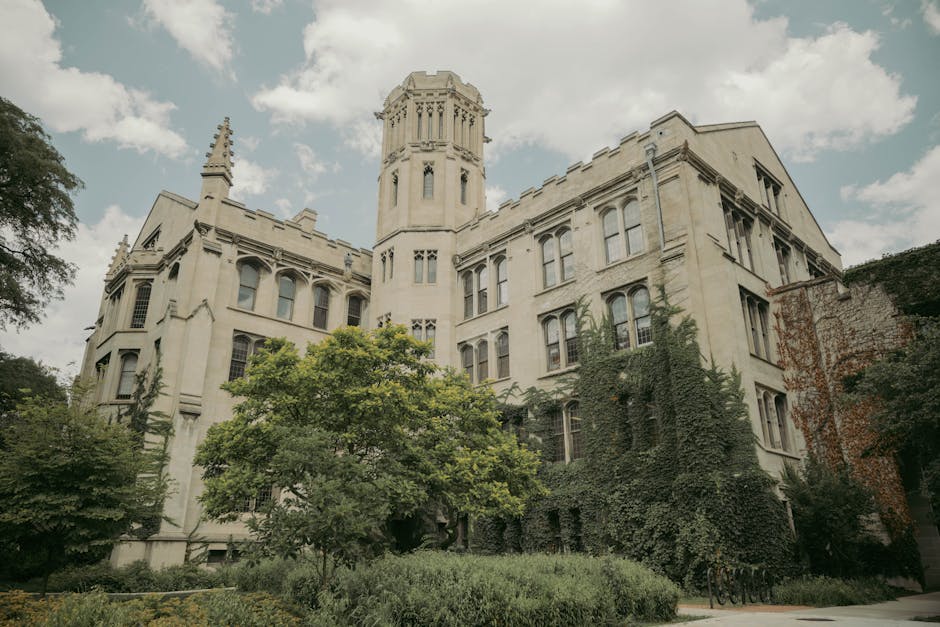
To apply to NYU, you will need to use the Common Application, a centralized platform through which you can apply to most American colleges and universities. You will need to fill in information about your family : including the occupation of your parents -, provide your transcript or high school grades, submit 1 teacher reference letter, submit one “school report”, draft a résumé or CV, send official test scores (SAT, SAT Subject Test scores, ACT and English language test scores), declare a major or intended area of study, describe your extracurricular activities and as with most highly selective colleges complete the essay questions on the Common App as well as answer additional essay questions specific to NYU. The NYU current question is “Why NYU?”. According to NYU, this is one of the most important parts of your application.
You must submit all your materials before the appropriate deadline. If you are sure that NYU is your first choice, then you may want to apply for Early Decision, which may increase your chances for admission. Early Decision 1 materials must be submitted by November 1st. NYU also offers Early Decision 2, which is due on the same day as Regular Decision, January 1st.
For more detail, see also: Study Abroad: Find the Ideal Master’s Degree for Your Career.
The Candidate
Your admission application for New York University (NYU) must comprise the following elements :
- Your results from the SAT and from the Subject Test
- Your results from the TOEFL, IELTS Academic or the PTE Academic Test
- Your candidate file and the NYU Supplement
- Your NYU Financial Aid Application
- School Report, Guidance Counselor Letter and Transcript
- Teacher Evaluation Form 1
- Teacher Evaluation Form 2
Related reading: Middlebury College: Admissions, Requirements & Fees.
When do you have to start preparing for NYU?
Taking into account the numerous specific requirements for American universities like taking exams; consistently participating in extra-curricular activities including clubs, music, sports, and side projects; and the numerous essays to write, we recommend that students begin start to think about their path to Stanford as soon as they begin high school. The application itself is typically completed during the fall semester of students’ last year in high school.
On the same topic, see our article: Boston University: Admissions, Requirements & Fees.
What is the profile of the students at NYU?
A few more facts and figures: The freshman (1st year) class entering in 2015-216 was made of 5,917 students, representing 49 states and 91 countries, with 19% as non-US citizens. Typically, most freshmen applicants have a typical unweighted, high school GPA of 3.5/A (90-95%) and are in the top 10% of their high school graduating class. For the freshman class of 2018-2019, the average SAT score for accepted students was 1460/1600 and between 32/36 on the ACT. The student-to-faculty ratio at the New York campus is 10:1
For graduate programs, as of 2016, the average MCAT score of students at the School of Medicine is 36/45, average GMAT score of graduate students at the School of Business is 710/800, average GRE quant score of graduate students at the School of Engineering is 169.3/170, and average LSAT score of students at the School of Law is 171/180.
For more detail, see also: Duke Fuqua: MBA Admissions, Requirements & Fees.
Affording NYU
In order to be eligible for financial aid as an international student, you must apply every year using your personalized CSS Profile.
The deadlines to submit your financial aid application are as follows: Early Decision 1, November 15th; Early Decision 2, January 15th; Regular Decision, February 15th.
The University claims that the average student financial aid award is ,000 for the first year. Tuition (without Room & Board) is about ,000 per year in 2018.
Related reading: LLM in the USA vs UK: Cost & Fees Compared 2026.
Are you ready to study at NYU?
We’re here to help you succeed in your application.
Our Google reviews
A few key figures about Your Dream School
They got in with Your Dream School
Reassurance is what matters most when choosing your guidance.
« I was very satisfied with the care delivered, with the mentoring and the administrative procedures, particularly drafting the personal statement. I highly recommend this mentoring. »
« Being supported by Your Dream School gave me a framework and a structure. I was accepted to the majority of the universities I applied to : very happy to start studying in London next year! »
« …I managed to get my offer to UCL in London, one of the best English universities, which was my first choice. Their support was consistent and personal. »
« I decided to apply to university in England for my Bachelor’s and I asked Your Dream School to support me. I’m so glad I did! I’m excited to go to London to study next year! »
Our Services
Bachelor & Master Admission Coaching
Complete support to build a winning application.
IELTS & TOEFL Preparation
One-on-one tutoring to reach the score your target university requires.
Admission Test Preparation
SAT, ACT, GMAT, GRE, LNAT, MAT : targeted prep to hit the right score.
Academic Tutoring
International academic support (IB, A-Levels, AP) for students aiming abroad.