
Study at the University of Oxford
Academic excellence and global reputation
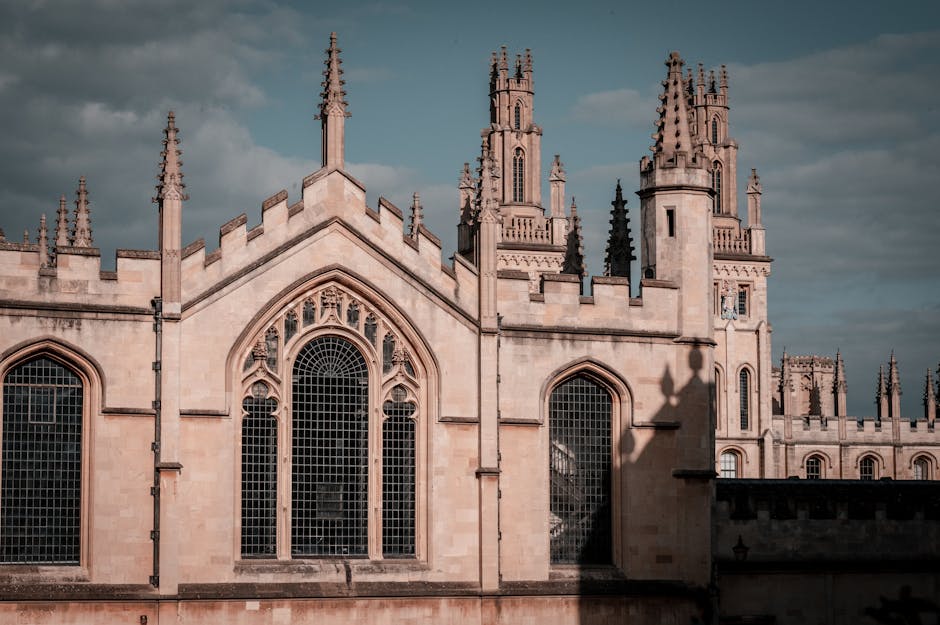

The University of Oxford consistently ranks among the world’s top universities, rivalling other prestigious institutions such as Harvard, Stanford and Cambridge. It topped the Times Higher Education world rankings for several consecutive years and sits at #3 in the QS World University Rankings 2026.
Founded around 1096, Oxford is one of the oldest universities in the world and one of the most prestigious and selective. The historic city of Oxford, nicknamed “the city of dreaming spires,” lies less than two hours from London and is home to roughly 24,000 students, half of them undergraduates.
Oxford is often paired with its historic rival, the University of Cambridge : the two are collectively known as “Oxbridge.” Among Oxford’s most famous alumni are 28 British Prime Ministers (Margaret Thatcher, Tony Blair, Theresa May, David Cameron, Boris Johnson, Rishi Sunak), several U.S. presidents and Rhodes scholars including Bill Clinton, dozens of Nobel laureates, and cultural figures such as Oscar Wilde, J.R.R. Tolkien, C.S. Lewis and Stephen Hawking (graduate work).
With this kind of history, Oxford’s campus is never short of stories to tell: the two fauns above the door of the office where C.S. Lewis worked, the lawns that only doctorate-holders may walk on, the spherical Radcliffe Camera library, the Bridge of Sighs echoing its Venetian namesake, or the nearby Turf Tavern : landmarks turn up around every corner.
Academic life
At Oxford, the academic year is made up of three terms of eight weeks each : shorter than at most universities, which is one reason the work is so intense during term. Students spend most of their time on academic work, typically submitting an essay or a problem set every week.
In addition to lectures and classes, Oxford uses a teaching method shared only with Cambridge: the tutorial system. Tutorials are small-group teaching sessions (usually one to five students) led by a tutor : most often a world-recognised expert in the subject. Tutorials are the heart of an Oxford education and where students learn to defend their thinking under expert questioning.
Oxford covers virtually every field, from classics and humanities to engineering, medicine, machine learning and biomedical research. View the full list of undergraduate courses.
Student life
Students don’t spend all their time studying. The college system fosters friendships across nationalities, backgrounds and disciplines. The university offers a wide range of opportunities for international students, including exchange programmes that broaden their network well beyond Oxford.
Beyond academics, Oxford runs a famously broad activities programme: traditional debates and lectures by leading public figures (politicians, scholars, business leaders), and competitive sport. The top athletes get to wear Oxford colours at inter-university tournaments : rowing is especially prominent, both at college and university level.
How do I apply?
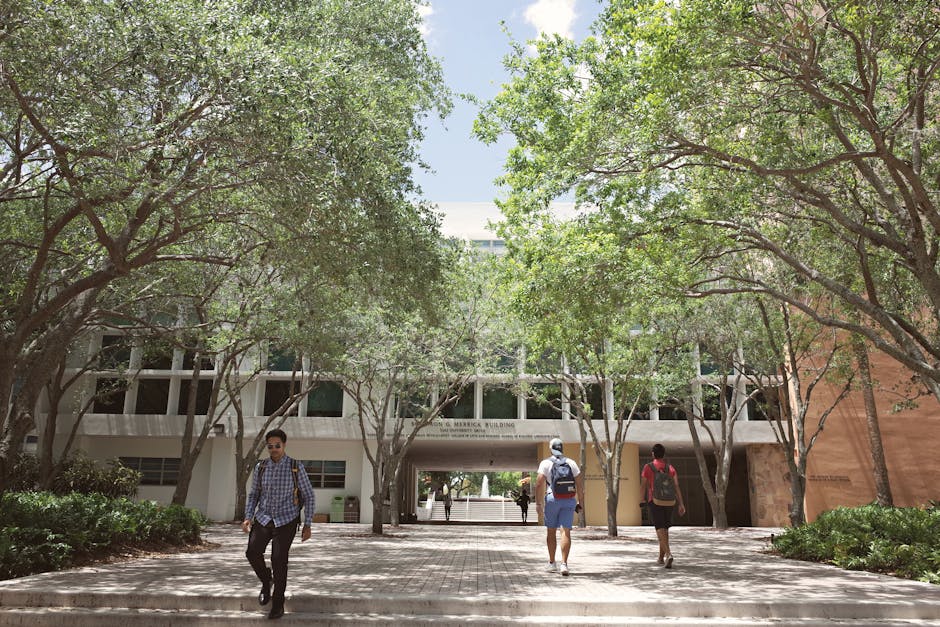
Oxford is one of the most selective universities in the world. Strong academic results and rigorous preparation are essential. The application focuses almost entirely on the academic side of an applicant’s profile.
One thing to know up front: you cannot apply to Oxford and Cambridge in the same UCAS cycle for undergraduate study. You have to choose. Some programmes are only offered at one of them : for example, Philosophy, Politics and Economics (PPE) at Oxford, or Human, Social and Political Sciences (HSPS) at Cambridge.
The application process at a glance
- UCAS application submission
- Written admissions test (course-specific)
- Interview
- Conditional offer
- Final admission once conditions are met
The UCAS application
You submit your application through UCAS, the UK’s central undergraduate application platform (analogous to Parcoursup in France). The file includes a personal statement and a teacher reference letter. Oxford’s UCAS deadline is 15 October : three months earlier than most other UK universities (which use 29 January).
The personal statement is a single text (4,000 characters maximum) used for all up to five UCAS choices. It should explain why you want to study the course you’ve chosen, what aspects of it interest you most, what you’ve already done to engage with the subject (reading, lectures, internships, projects), and where you want to go deeper.
Choosing a college
Oxford students apply to a college as well as to the university. Oxford has 39 colleges and six Permanent Private Halls. You can either name a preferred college on your application or submit an “open application” with no preference : in which case the university assigns you to a college that has space in your subject.
Your college becomes the base of your daily life and most of your social and academic activities : most of the people you’ll spend your Oxford years with will be from your college. Useful criteria when choosing: size, location, facilities, character, and the research interests of the tutors attached to it. The most competitive include Balliol, Magdalen and New College : but every college has its own strengths, and many students who end up in a college they didn’t pick fall in love with it anyway.
Admissions tests and interviews
Most courses require a subject-specific admissions test. Common ones include:
- MAT : Mathematics
- PAT : Physics and Engineering
- TARA : PPE, Experimental Psychology, Human Sciences
- LNAT : Law
- BMAT / UCAT : Medicine (check the current year’s requirement)
- STEP : sometimes used for Mathematics
If your application and test results clear the first cut, you’ll be invited to interviews in early December. Roughly 40% of applicants are shortlisted for interview. Interviews are conducted in English : fluency is essential. They focus on academic ability and intellectual curiosity. Tutors are interested in how you think, not in how much you can memorise. Expect to be pushed on points from your personal statement and given new problems to reason through on the spot.
Interviews are demanding and benefit substantially from preparation and practice.
The conditional offer
If you make it through interviews, you’ll receive a conditional offer in January. The offer becomes final once you meet the conditions, which typically include a minimum result in your school-leaving exams (usually a “Mention Très Bien” in the French Bac, A*A*A in A-levels, or equivalent in other systems) and a standardised English test (for example, IELTS 7.5 with no band below 7.0).
What does the typical Oxford student look like?
Given Oxford’s selectivity, we recommend applying only if you can show genuinely excellent academic results and are confident of finishing your secondary education with the equivalent of “Mention Très Bien.” Because the process includes interviews, you also need strong English. Competitive courses like PPE, Economics and Management, and English Language and Literature attract very high application volumes : selection within those courses is even tougher.
When should I start preparing?
Start in Première (Year 12), not Terminale. The deadline is 15 October of your final school year, which means your personal statement, test prep and interview practice all need to be substantially advanced by the summer before. Focus your reading and extra-curricular engagement on the aspects of your chosen course that genuinely excite you : you’ll be studying it full-time for at least three years.
Can I visit the campus?
Oxford holds open days for prospective applicants. Sessions on the most popular subjects can fill up : check the university’s official open days page for current dates and any registration requirements.
Tuition fees
Oxford charges UK and international students different fees, and international tuition varies by course.
- UK undergraduates: £9,250 per year (all courses)
- International undergraduates: approximately £33,000-£48,000 per year depending on course band : Arts and Humanities at the lower end, Medicine and Clinical years at the top
- College fee (international students): additional £8,000-£10,000 per year, covering accommodation, dining and college facilities
Fees rise annually with inflation : check the official fees page for the current year before budgeting.
Living costs in Oxford run roughly £1,100-£1,700 per month depending on accommodation and lifestyle, for the 6-9 months students typically live in the city during the academic year. Plan for a total annual budget (tuition + college fees + living) of around £55,000-£70,000 for international undergraduates.
Despite high fees, Oxford offers a wide range of scholarships and financial aid to attract top students globally, regardless of their financial background. The scholarship search is a good starting point.
Hear from an Oxford alumnus
Curious what an Oxford education actually looks like day-to-day? Read our interview with Arnault, a former YDS student now a graduate of Oxford’s Bachelor in Modern History.
Our Google reviews
A few key figures about Your Dream School
They got in with Your Dream School
Reassurance is what matters most when choosing your guidance.
« I felt their authentic and personal engagement and involvement when it came to my daughter, which was extremely precious throughout the process. »
« Your Dream School offers very thorough support: help with drafting essays, preparation for English exams and interviews. I wholeheartedly recommend Your Dream School. »
« Thanks to Your Dream School, the work was perfectly well done, which allowed us to have an intelligent dialogue with our son. »
« I was very satisfied with the care delivered, with the mentoring and the administrative procedures, particularly drafting the personal statement. I highly recommend this mentoring. »
Ready to apply to Oxford?
We’re here to help you succeed in your application.
Our Services
Bachelor & Master Admission Coaching
Complete support to build a winning application.
IELTS & TOEFL Preparation
One-on-one tutoring to reach the score your target university requires.
Admission Test Preparation
SAT, ACT, GMAT, GRE, LNAT, MAT : targeted prep to hit the right score.
Academic Tutoring
International academic support (IB, A-Levels, AP) for students aiming abroad.